Office of Vehicle Safety Compliance: Official Responsibilities and Contacts
The short answer
In the United States, the Office of Vehicle Safety Compliance (OVSC) is part of the National Highway Traffic Safety Administration (NHTSA), the federal agency responsible for motor vehicle safety. Its core job is to check whether new motor vehicles and regulated vehicle equipment meet the Federal Motor Vehicle Safety Standards (FMVSS), the federal minimum performance requirements for areas such as braking, lighting, occupant protection and crashworthiness.
One qualification changes the answer for many readers: the OVSC does not inspect or certify individual vehicles as roadworthy for registration. Periodic safety inspections and roadworthiness checks for vehicles already on the road are handled by state programs, and requirements vary by state. If you need an inspection certificate to register, sell or retitle a car, contact your state motor vehicle agency, not the OVSC.
How federal safety certification works
US vehicle safety regulation uses a self-certification system. The government does not pre-approve vehicles before sale. Instead, the manufacturer certifies that each vehicle or item of regulated equipment complies with all applicable FMVSS, and this certification is shown on a label permanently attached to the vehicle, typically on the driver's door jamb area.
The OVSC's role sits after that self-certification. It verifies compliance rather than granting approval in advance.
Main responsibilities
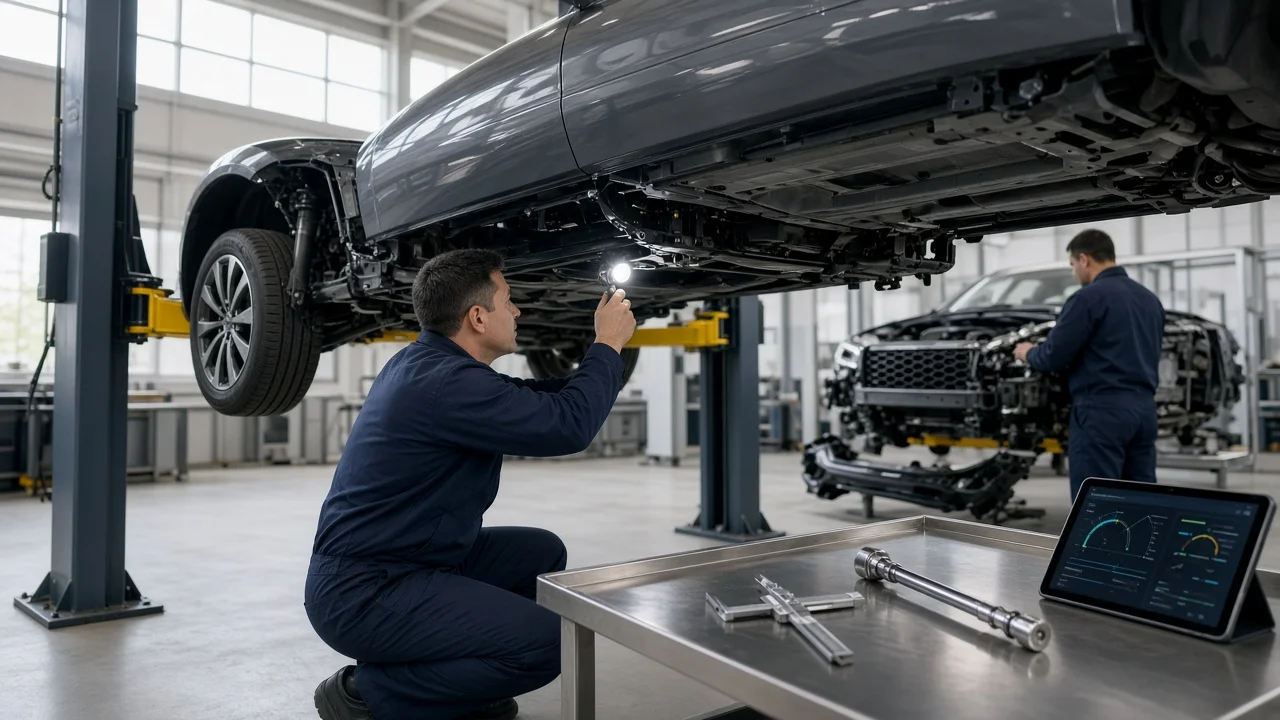
Compliance testing: selecting new vehicles and equipment and testing them against FMVSS requirements, generally through independent test laboratories working under contract to NHTSA. Investigating apparent noncompliance: when a test or other information suggests a product does not meet a standard, the office follows up with the manufacturer. Supporting remedies: a confirmed noncompliance can lead to a recall, in which the manufacturer must notify owners and provide a free remedy. Import compliance oversight: monitoring that vehicles imported into the US conform to federal safety standards, including vehicles brought into conformity by importers after manufacture.
The specific internal structure, current program size and annual testing volume were not available in the supplied material, so they are not stated here.
How it differs from related bodies
Body | Main focus | Typical reader need; Office of Vehicle Safety Compliance (NHTSA) | Whether new vehicles and equipment meet federal safety standards | Questions about FMVSS compliance, certification labels or imported vehicle conformity; Office of Defects Investigation (NHTSA) | Safety-related defects that arise in real-world use, even where a vehicle meets the standards | Reporting a suspected safety defect or checking a defect investigation; State motor vehicle or inspection agency | Periodic roadworthiness and emissions inspections for registered vehicles | Getting a vehicle inspected or certified for registration
The key distinction is between noncompliance and defects. Noncompliance means a product fails a specific federal standard. A defect is a safety problem in design, construction or performance that may exist even when every standard is met. Both can result in recalls, but they are handled through different processes.
Contacting the office
No verified phone numbers, email addresses or postal addresses were available for this article, so none are given. Contact details for federal offices can change, and it is safest to use them only from an official source. NHTSA's official website lists current contact options and the vehicle safety complaint process, and recall information can be checked there using a vehicle identification number (VIN).
For most consumer concerns, such as a suspected safety problem with your own vehicle, NHTSA's general complaint and hotline channels are the usual starting point rather than the OVSC directly. Manufacturers and importers with regulatory questions generally deal with the office through formal NHTSA processes.