OBD2 Adapter: WiFi vs Bluetooth
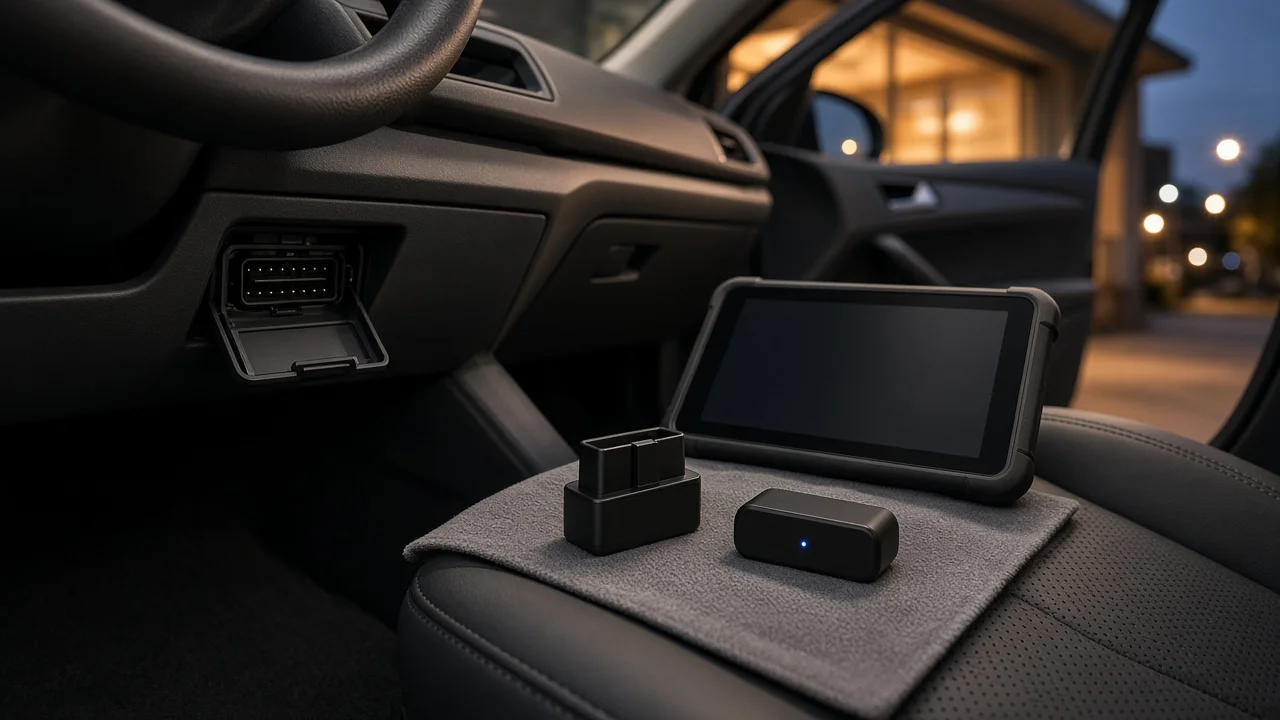
Choosing how a phone or tablet talks to a vehicle involves more than picking the smallest dongle. For anyone comparing an OBD2 adapter WiFi vs Bluetooth, the central question is whether the wireless link stays reliable during live data, coding, or extended diagnostics. Both paths use the same physical diagnostic port, but their connection settings, latency, and software compatibility shape the experience differently. Drivers should match the adapter type to their device, garage setup, and the tasks they actually perform, because one standard fits steady dashboard use and the other often fits mobile app sessions or multi-device access.
Direct answer
For most owners using an Android phone or tablet with a third-party app, a Bluetooth OBD2 adapter is the more practical starting point. Pairing is direct, the connection stays local to the vehicle, and power draw is modest enough for a plug-in interface adapter left in the port. The wireless negotiation does not require changing phone network settings, and typical diagnostic apps recognize the common ELM-style Bluetooth profile without complex setup.
A WiFi adapter becomes the better answer when the user relies on an iPhone, wants multiple devices sharing the same dongle, or needs a connection that can carry larger software exchanges. Because the adapter creates its own short-range network, the phone temporarily joins that network instead of using a normal hotspot or home internet path. That difference can affect online access during a session, so the immediate choice depends on whether mobile data continuity or broader device pairing matters more.