Nissan Sentra Mass Air Flow Sensor: Location, Symptoms and Replacement
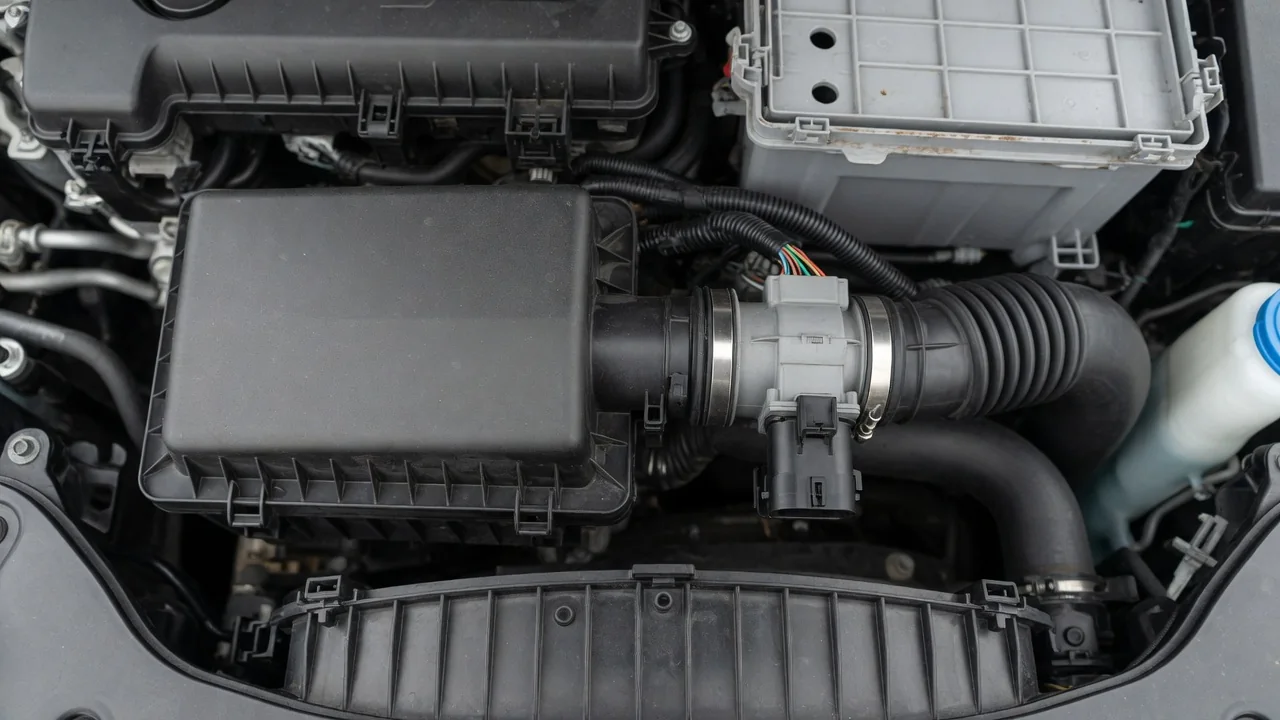
A 2015 Nissan Sentra mass air flow sensor, like the unit on 2011 through 2017 models, reports incoming air so the computer can meter fuel. Owners looking up a mass air flow sensor for a 2011, 2014, 2016, or 2017 Sentra still need the exact year, engine, and VIN before locating, diagnosing, or replacing the part. Location, symptoms, and replacement notes all depend on that vehicle-specific confirmation.
Identify Your Sentra’s Model Year and Engine
The mass air flow sensor sits in the incoming airstream and reports how much air is entering so the engine computer can calculate fuel. On a 2011 through 2017 Nissan Sentra, including 2012 and 2013 models, that reading supports idle quality, acceleration, and emissions control. A mass air flow sensor for a 2015 Nissan Sentra and one for a 2011 Nissan Sentra do the same job, yet hardware, connector, and intake layout can differ by year and engine. Treat the sensor as an airflow reporter, not a standalone fuel controller.
A year-only lookup cannot establish sensor fitment, connector details, or replacement procedures because Sentra engines and intake packages changed across this generation. VIN-based fitment, the engine code, and the vehicle identification number together identify the correct mass air flow sensor for a 2014 Nissan Sentra, a 2016 Nissan Sentra, or any other year in this range. Before relying on a location diagram or ordering a part, use vehicle-specific service information for that VIN. Diagrams and catalog titles often group several years; they do not replace confirmation of the mounting arrangement and wiring on the actual car.
Locate the MAF Sensor Along the Intake Air Path
To find the sensor, start at the air filter housing and follow the intake duct toward the engine with a vehicle-specific diagram. The MAF sensor typically sits in that duct so it can sample incoming air. Identify it by the sensor body and electrical connector, not by assuming one mounting arrangement across every 2011 through 2017 engine. Some assemblies combine the sensing unit with a housing; others bolt a smaller unit into the duct. Confirm that layout on the diagram for the engine in the car.
For a 2014 Nissan Sentra, mass air flow sensor location follows the intake duct from the air filter housing toward the engine; a 2015 Nissan Sentra uses the same inspection path once year and engine are confirmed. The electrical connector on the sensor body is the practical landmark, not a bolt pattern assumed from another Sentra. Inspect only on a parked vehicle with the engine off and cool. Do not disconnect the connector or open the air filter housing merely to confirm what you are looking at.
Recognize Symptoms That Warrant an Airflow Check
A failing or dirty mass air flow sensor can contribute to rough idle, hesitation, stalling, reduced power, and a check engine light, but those symptoms are not proof the sensor has failed. Unmetered air from a split intake duct or an open air filter housing can produce similar complaints. A corroded or loose electrical connector can also distort airflow readings. Ignition, fuel delivery, and vacuum leaks can mimic the same behavior. Treat the pattern as a reason to inspect the intake path, not to replace the sensor first.
Note whether the complaint appears during a cold start, at idle, or during ordinary acceleration, because that timing helps a technician compare airflow readings and fuel trims with conditions. Do not reproduce stalling in traffic or force a severe power-loss event to confirm the fault. If the engine stalls repeatedly, power drops enough to make merging unsafe, or the check engine light flashes, stop in a safe place and arrange professional assistance. A flashing light can indicate a misfire that risks converter damage; continued driving is not a diagnostic method.
Confirm the Fault Before Authorizing Replacement
An airflow-related trouble code identifies a diagnostic starting point; it does not automatically condemn the mass air flow sensor. Manufacturer-dependent codes require vehicle-specific confirmation, because the same numeric label can describe a circuit, a performance range, or a correlation with another sensor depending on the calibration. Verify the code's meaning for the exact 2011, 2013, 2015, or 2017 Nissan Sentra before interpreting it as a failed part. Freeze-frame data, if available, shows the operating condition when the code set and helps separate a wiring issue from an unmetered air leak.
With the engine off, a safe visual check includes crushed or split intake duct sections, clamps that have slid, an electrical connector that is not fully seated, and an air filter housing that is not latched closed. Those observations can explain poor airflow readings without a failed sensing element. A technician then uses vehicle-specific airflow data, fuel trims, wiring checks, and intake leak testing to evaluate the cause. There is no universal airflow threshold for every Sentra in this range; compare readings with the service information for that engine.
Choose a Sensor With Verified Fitment
Confirm fitment with the VIN, engine details, and a verified part number before buying a mass air flow sensor for a 2011 Nissan Sentra, a 2014 Nissan Sentra, or a 2015 Nissan Sentra. Catalog titles that only name the year can list more than one assembly. Match the connector shape, pin count, and mounting arrangement to the unit on the car. Appearance and an online listing title cannot establish compatibility, especially when several Sentra engines share similar intake duct styling from 2011 through 2017.
Check whether the listed part is only the sensing unit or a larger piece that includes an intake housing section. The wrong style will not mate to the intake duct even if the year in the title is correct. Useful purchase details include supplier support for VIN-based fitment, return terms if the connector or mount does not match, and any seals or hardware specified for that vehicle. Do not assume gaskets or screws are in the box. If the catalog cannot confirm the part number against the VIN, wait rather than guessing from photos.
Understand Replacement and Post-Repair Checks
Replacement belongs after a confirmed diagnosis and correct part identification, then installation to the vehicle-specific instructions for that Sentra, followed by a check that the engine runs and the original complaint is gone. The sensing element is fragile. Touching it, tapping the housing, or applying unapproved cleaners can damage the element or leave residue that distorts airflow readings. Cleaning is not a guaranteed repair and can make a marginal sensor worse. If service information for the vehicle does not authorize a particular cleaner or method, do not improvise one.
Consult applicable service information for any initialization or idle learning procedure after installation rather than assuming a universal reset or battery disconnection will finish the job. Some calibrations adapt fuel trims over ordinary driving; others require a scan-tool process for that model year. Successful repair means the symptoms recede and airflow readings and fuel trims return to a plausible range for that engine. If the same complaint returns, further testing of wiring, unmetered air, and related sensors is required. Repeating sensor replacement without that work rarely fixes a leak or circuit fault.