Nissan Mass Air Flow Sensor Problems and Recall History
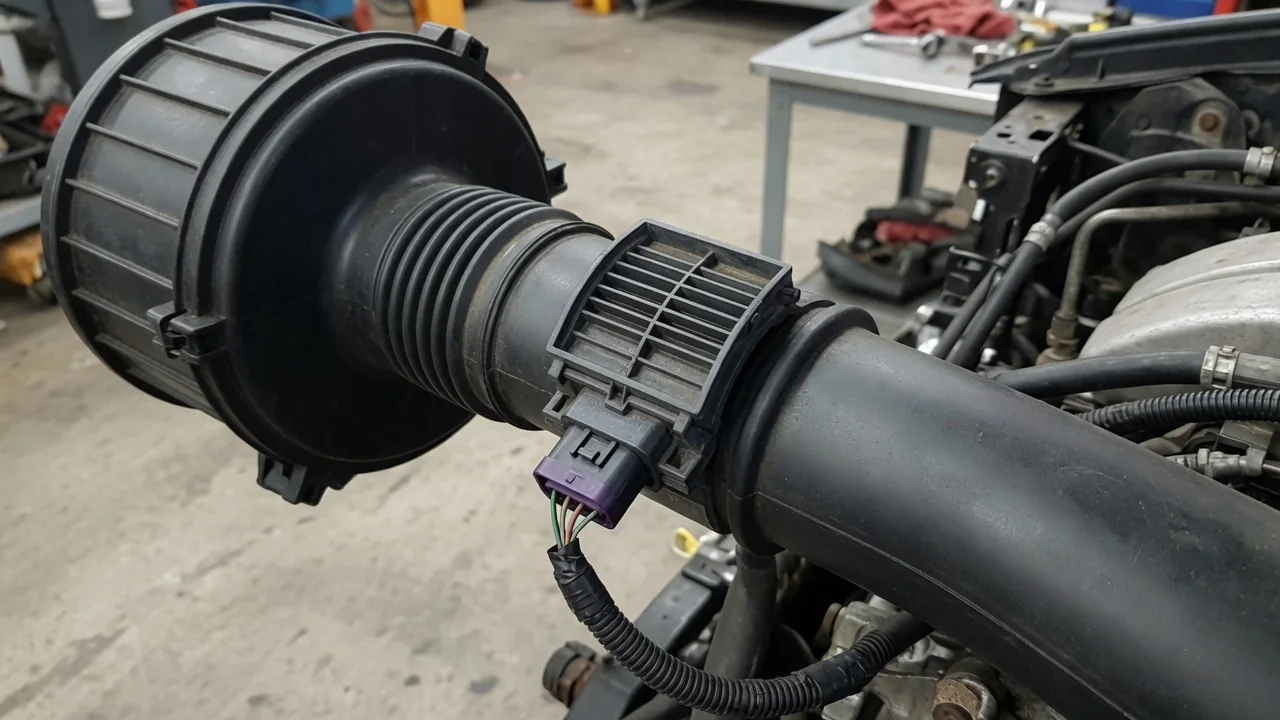
A Nissan mass air flow sensor measures incoming air so the engine computer can meter fuel. A listing labeled mass air flow sensor Nissan is not a universal part. This overview explains airflow measurement, overlapping symptoms, VIN recall lookup, and why Sentra, Versa, Pathfinder, Maxima, Frontier, Xterra, Murano, Juke, Kicks, SR20DET, and Z32 applications need year and engine confirmation.
What a Nissan Mass Air Flow Sensor Does
The mass air flow sensor for Nissan vehicles sits in the intake stream after the air filter and reports airflow measurement to the engine computer. That reading helps set injector pulse width and related fuel trim. If the reported mass is too high or too low for actual conditions, idle quality and throttle response can drift even when the rest of the engine is intact. Housing shape and air intake duct routing depend on the engine family.
Before discussing location or replacement fitment, identify model year, engine code, VIN, and market. A catalog line that simply says mass air flow sensor Nissan does not prove the part matches a given vehicle. Connector pin count, housing diameter, and ECU calibration vary across generations. Market differences can change intake hardware even when the nameplate looks the same, so treat a search result labeled for Nissan as a filter, not a confirmed match.
Symptoms and Safe Checks Before Replacing the Sensor
A contaminated Nissan mass air flow sensor can contribute to rough idle, hesitation, stalling, and a check engine light, but those complaints are not proof the sensor has failed. An intake leak after the meter, damaged air intake duct, loose sensor connector, or unrelated ignition and fuel faults can produce the same pattern. With the engine off and cool, look for crushed ducting, missing clamps, and connector corrosion, and note filter service history. Do not probe or wipe the sensing element.
Stored codes and freeze-frame data show the conditions when a fault set, helping a technician compare reported airflow with expected load. A manufacturer-dependent code still requires vehicle-specific confirmation of its meaning before anyone treats it as a failed mass air flow sensor. When symptoms persist, professional airflow, fuel-trim, intake-leak, and circuit testing is the next step. If stalling or severe power loss makes driving unsafe, stop in a safe place and arrange a tow.
Checking Nissan MAF Sensor Recall History and VIN Coverage
Searches for a Nissan mass air flow sensor recall often assume a company-wide campaign covered every model. That assumption is not established here. Any historical campaign still needs a confirmed identifier, affected component, market, vehicle scope, and published remedy before it can be described as fact; those details remain unverified in this overview. Safety recalls, service campaigns, technical service bulletins, and warranty coverage follow separate eligibility rules.
Confirm coverage with a VIN recall lookup through Nissan or an official recall tool, then ask a dealer whether any applicable campaign was completed on that vehicle. Symptoms such as a check engine light do not establish recall eligibility, and recall status does not diagnose the current fault. If no campaign applies, diagnosis still proceeds from codes, freeze-frame data, and testing. If a campaign does apply, the published remedy still has to match the component in question.
Sentra, Versa, and Maxima: Details Needed for Diagnosis and Replacement
Owners looking up a mass air flow sensor Nissan Sentra still need the model year, engine, and intake configuration before diagnostic advice applies. A Nissan Sentra mass air flow sensor replacement should wait until testing supports the fault and the catalog application matches that VIN. The same year-and-engine check applies to a mass air flow sensor Nissan Versa, because compact Nissan engines have used more than one housing and sensor connector family.
Maxima listings need the same discipline: year, engine, and intake hardware have to match before a mass air flow sensor for Nissan Maxima is ordered. Connector appearance or a seller title that only says Nissan is insufficient. Access steps and any post-replacement idle or ECU calibration checks belong in the model-specific Sentra, Versa, or Maxima guide. Mention a relearn only when verified service information for that vehicle requires it; do not assume another sedan's procedure applies to a Nissan Maxima mass air flow sensor job.
Pathfinder, Murano, Juke, and Kicks: Confirm the Exact Application
Pathfinder crossovers do not share one intake layout, so a mass air flow sensor for Nissan Pathfinder has to be narrowed by year, engine, and market before anyone talks about location. A mass air flow sensor Nissan Murano search also needs that same confirmation. Do not assume the meter sits in the same place as on a Juke or Kicks, or that one crossover housing fits another.
A mass air flow sensor Nissan Juke still depends on year, engine, and market, and a Nissan Kicks mass air flow sensor is a different application even when the vehicles look similar in size. Recent air intake duct work or aftermarket intakes help a technician frame testing, but they do not prove the sensor is defective. Verify location on the exact vehicle. Detailed access and diagnostic questions belong in the Pathfinder, Murano, Juke, or Kicks guide for that model.
Frontier and Xterra: Intake Condition and Sensor Fitment
Year and engine come first when choosing a mass air flow sensor for Nissan Frontier, because these truck engines have used more than one meter and housing. A Nissan Frontier mass air flow sensor catalog line does not establish interchangeability with another Frontier or with an Xterra. A mass air flow sensor Nissan Xterra search needs the same year and engine confirmation. Shared design themes do not mean shared airflow hardware.
On a Frontier or Xterra, crushed air intake ducting, a loose sensor connector, and overdue filter service are useful observations because unmetered air and contamination can mimic a bad meter. Those findings still cannot confirm sensor failure. Verify any replacement through the vehicle's application data rather than assuming a truck part swaps onto the SUV. Detailed testing and access belong in the Frontier or Xterra mass air flow sensor guide for that model.
SR20DET and Z32 MAF Searches: Identify the Hardware and Calibration
An SR20DET mass air flow sensor search names an engine family, not a single confirmed meter. Those engines have appeared in factory and swap installations with different housings, connectors, and control units. A Z32 mass air flow sensor search names a 300ZX generation and likewise does not identify the installed sensor or whether it suits the current ECU calibration. On a swapped vehicle, the actual sensor, housing, wiring, and calibration have to be identified together.
If airflow hardware and ECU calibration do not match, fueling can run rich or lean because the control unit is interpreting a signal the map was not written for. That mismatch can cause rough idle without the original sensor being electrically failed. This overview does not provide wiring conversions or tuning steps. A qualified tuner or diagnostic technician should verify compatibility using the hardware on the car. Detailed SR20DET and Z32 coverage belongs in the engine or platform guide.