Nissan Rogue Brake Warning Light: Causes and Checks
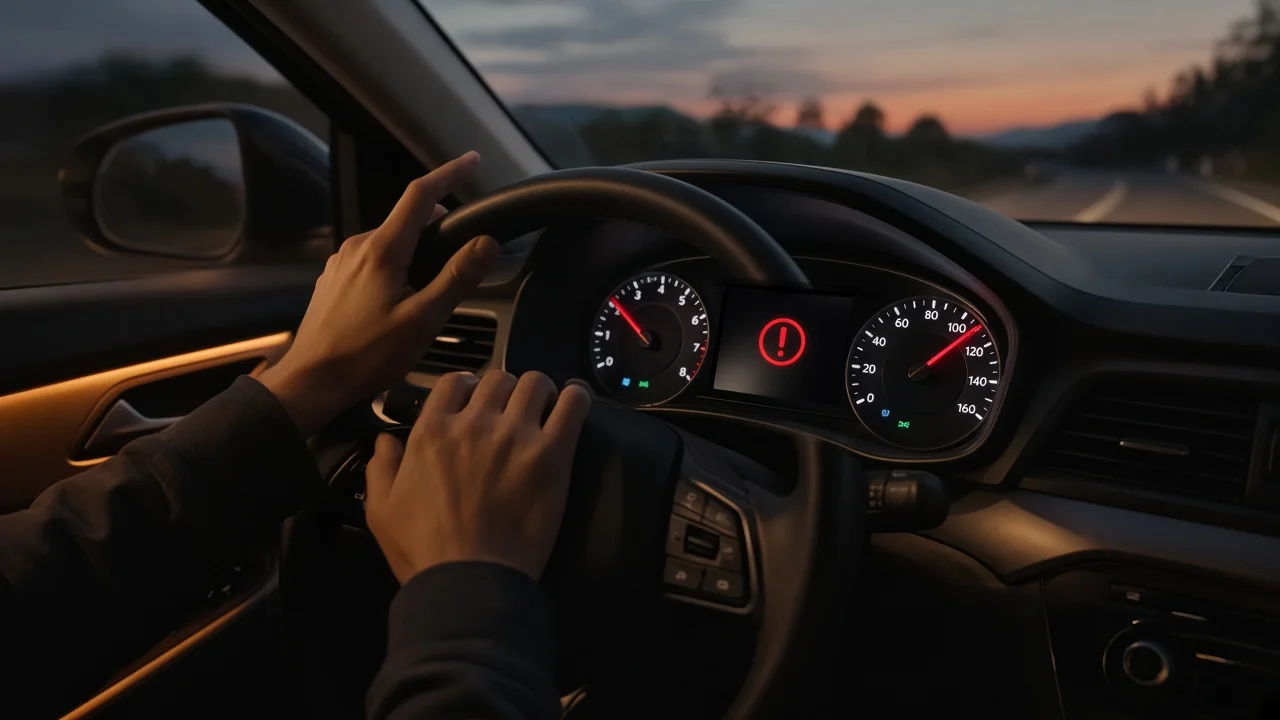
A red brake warning light on a Nissan Rogue needs prompt attention. Depending on the model year, it can mean the parking brake is still engaged, the brake fluid level is low, or the vehicle has detected a fault in the braking system. This guide explains how to narrow down the cause, which checks an owner can safely make, and when the SUV should not be driven.
Establish the symptoms
Start by identifying exactly which indicator is lit. The red light usually shows the word BRAKE or an exclamation mark inside a circle. It is a different warning from the amber ABS light, the amber parking brake indicator used on vehicles with an electronic parking brake, or a text message on the information display. Several warnings may appear together, so note each one. Then record when it appears. Does it come on at startup and stay on, appear only while driving, or flicker during turns, hard stops or on slopes? Does it seem to change with temperature?
Next, note any other signs. Is the pedal soft, sinking, unusually high or unusually hard? Do the brakes squeal or grind? Does the vehicle pull to one side, smell hot near a wheel, or leave wet spots where it is parked? Also consider recent changes. Brake pad or rotor replacement, a fluid service, rear brake work on a vehicle with an electronic parking brake, a battery disconnection or jump start, or a hard pothole impact can all be relevant. These details often separate a simple cause from a hydraulic problem.
Distinguish plausible causes
The parking brake is the most common and least serious cause. If the light goes out as soon as the brake is fully released, that cause is strongly supported. On Rogues with a foot-operated parking brake, a pedal that does not fully return or a misadjusted switch can keep the light on. On models with an electronic parking brake, a system fault usually brings its own indicator or message. If the light stays on with the parking brake definitely released, this explanation becomes much less likely.
Low brake fluid is the next major cause. A float switch in the master cylinder reservoir triggers the light when the level falls too far. There are two main reasons for a falling level. As the friction material on the brake pads wears, the caliper pistons extend and hold more fluid, so the reservoir level slowly drops. A level close to the minimum mark often makes the light flicker during turns or braking at first. The more serious reason is a leak from a caliper, hose, steel line or the master cylinder. Wet residue near a wheel, a level that drops noticeably between checks, or a soft pedal points toward a leak rather than normal wear.
Electrical and control faults make up the third group. These include a failed level sensor, a damaged connector at the reservoir, or chafed wiring. If the red light appears together with the ABS light, the system may have disabled electronic brakeforce distribution because of a fault such as a wheel speed sensor problem. A normal pedal and a correct fluid level make an electrical cause more likely, but they do not prove the hydraulics are healthy.
Checks in a useful order
Begin with checks that need no tools. Park on level ground and switch off the engine. Then confirm the parking brake is fully released, cycling it once if necessary. Find the brake fluid reservoir under the hood and read the level against the MIN and MAX marks on its translucent body without opening the cap. Note whether the fluid looks clean or dark. Look behind each wheel, along the inside of the tires, and on the ground beneath the vehicle for wet, oily residue. If the wheel design allows it, you may see how much pad material remains on the front calipers, but this only gives a rough impression.
If the level is low, top up only with the fluid type shown on the reservoir cap or in the owner's manual, from a sealed container. Do not overfill, and wipe up spills quickly because brake fluid damages paint. Topping up does not fix the cause. If worn pads explain the low level, adding fluid now can lead to overflow later, when the pistons are pushed back for new pads. Note how much fluid was needed and check the level again after a short period.
The remaining tests need tools, specifications or a qualified technician. These include reading ABS and brake control fault codes with a scan tool and measuring pad thickness and brake rotor thickness against the wear limits in Nissan service information. A technician should also check whether a caliper is sticking, inspect lines and hoses under load, test the fluid condition, and test the level switch and its wiring. Rear brake work on an electronic parking brake usually requires a scan tool or a specific service procedure to retract the mechanism. Forcing the pistons back can damage the actuator.
Interpret the findings
If the light goes out when the parking brake is released and stays out, the parking brake was the cause. If it keeps returning, the switch or pedal adjustment needs inspection. If the fluid is low, no leak is visible, and the pads are near their limit, normal wear is the likely explanation. A technician should confirm this by measuring the pads and rotors before replacing them with parts of correct vehicle fitment. After new pads are fitted, the reservoir level should look normal without extra fluid.
Low fluid combined with wet residue, or a level that drops again soon after topping up, confirms a leak in principle. The actual source still has to be found before any parts are replaced. If the fluid level is correct, there is no leak and the pedal feels normal, but the light remains, the sensor or wiring is the main suspect. It should be tested electrically rather than guessed at with a new master cylinder. Stored fault codes point to a circuit or area, not necessarily a specific failed part, so each code needs a confirming test.
Urgency and next action
Stop driving and arrange a tow if any of these signs accompany the red light: a soft or sinking pedal, longer stopping distances, grinding, a visible leak, fluid below the minimum mark, the ABS light together with changed braking behavior, or heat, smoke or a burning smell from a wheel. Once a fluid or hydraulic cause is suspected, there is no safe distance that can be promised. A light that stays off after the parking brake is released, with a normal pedal and fluid level, is less urgent, but any return of the warning still needs inspection.
When booking repair, give the shop the model year, trim, VIN and mileage. Describe which lights or messages appeared and under what conditions, the fluid level you observed and any fluid you added. Mention any noises, pulling or changes in pedal feel, recent brake or electrical work, and any fault codes already read. This information helps the technician choose the right tests, procedures and parts for your Rogue.