Nissan Kicks Spare Tire: Does It Have One and Where Is It?
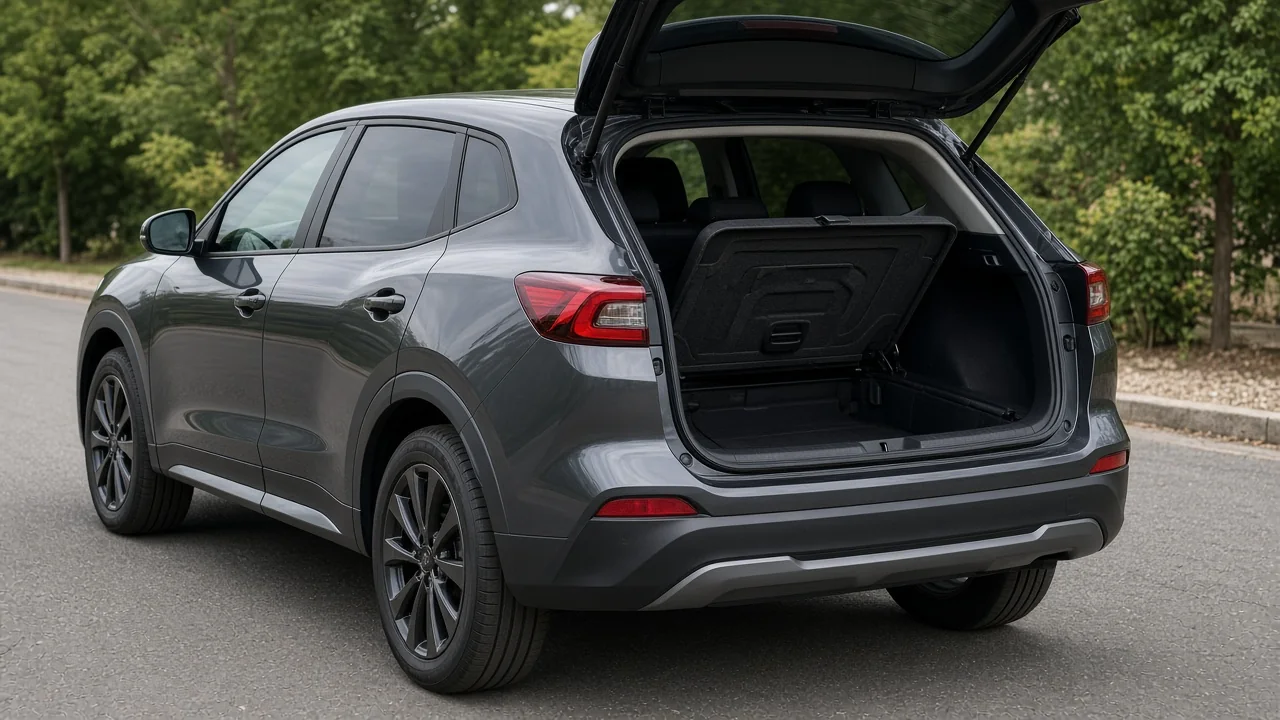
Whether a Nissan Kicks spare tire is on board depends on how that vehicle was equipped, not on the model name alone. Some Kicks examples carry a spare, often a temporary spare tire, while others come with a tire inflator kit and tire sealant. Confirm the model year, market, and the equipment actually present before planning a roadside change.
Confirm Whether Your Nissan Kicks Has a Spare Tire
A Nissan Kicks may leave the factory with either a spare or an inflator-and-sealant setup, and that choice can change with model year and the market where the vehicle was sold. The model name does not settle the question. Before you state that the vehicle includes a spare or only a tire inflator kit, match the year, sales market, and the equipment you can actually see. Two Kicks of similar appearance can be equipped differently, so a neighbor's layout is not a reliable substitute for this vehicle's records and hardware.
The owner's manual and any vehicle-specific equipment information that came with the car help identify what Nissan supplied. Look for the tire, jack, and emergency-equipment pages rather than assuming a spare is listed. On a used Kicks, original equipment and what is currently present can differ. A prior owner may have removed a temporary spare tire, compressor, or tools, or a shop may have installed a kit that was never factory gear. Treat the manual as a description of intended equipment, then verify that those items are still in the vehicle.
Locate and Access the Tire Equipment Storage Area
The documented storage location belongs in the owner's manual, because cargo layouts are not identical across every Kicks. Use the cargo floor as a practical inspection starting point without treating one underfloor design as universal. Park the vehicle on stable ground, set the parking brake, and unload luggage so the floor covering can be seen. If a designated removable floor panel is present, lift only that panel. Do not pry adjacent trim or force clips that are not meant to release for tire equipment storage access.
Once the cargo area is open, check accessible compartments for a spare, compressor, tire sealant, and stored tools. Look in labeled bins and under the floor rather than dismantling interior panels or releasing unfamiliar hardware. An empty storage recess is useful information about what is in the vehicle now, but it does not by itself establish what equipment the Kicks originally included. A missing spare or kit can reflect a prior sale, a previous flat, or incomplete handover, so pair the empty space with the owner's manual and any remaining labels.
Identify the Equipment You Find
What you find should be identified by type, not by assumption. A stored wheel and tire means a spare is present, often a compact temporary spare tire rather than a matching road wheel. A compressor plus a sealant container usually means a tire inflator kit was supplied instead of, or in addition to, a spare. Read equipment labels and the printed instructions on the kit or spare itself. Those labels describe that hardware, and they are more reliable than assuming every Kicks uses the same kit or spare type.
A jack or wheel tool in the cargo area does not by itself confirm that a spare is present. Those tools can remain after a spare was removed, or they can be stored with an inflator kit that never included a wheel. If the equipment is incomplete, unlabeled, mixed from another vehicle, or hard to interpret, have a Nissan dealer or a qualified tire shop sort it out. They can match remaining parts to the vehicle and tell you whether the tire equipment storage still holds a usable spare or only a kit.
Check Whether the Spare or Kit Is Ready to Use
If a spare is present, inspect it for visible damage such as cracks, cuts, dry rot, or a bent wheel before you rely on it. Check inflation against the pressure shown on the spare or in the applicable vehicle instructions, not against a guessed number. For a kit, read the sealant container's expiration date and inspect the compressor's accessible hose and power cord for cuts, kinks, or damaged connectors. Expired sealant or a damaged compressor can leave you without a working repair option even when the storage bin looks complete.
A temporary spare tire is not a substitute for a regular road tire, and its operating restrictions must come from the tire label and the owner's manual. Do not assume a speed or distance limit from another model or from memory. If the spare is underinflated, the sealant is expired, a hose is damaged, or you cannot tell whether the kit matches this Kicks, stop and have the equipment evaluated professionally. Completeness, condition, and suitability all matter; an incomplete kit is not ready to use simply because a compressor is still in the bin.
Know When to Use Roadside Assistance
A flat tire first requires a safe stopping location. Move out of travel lanes when you can do so without creating a new hazard, then assess traffic, lighting, and the ground under the vehicle. Work on a busy shoulder, a blind curve, or unstable gravel can be more dangerous than waiting for help. Tire inflator kit and tire sealant products also have limits. Kit instructions typically exclude certain damage types, such as sidewall cuts or a tire that has come off the rim, so a sealant bottle does not mean every flat can be sealed.
Call roadside assistance when the spare or kit is missing, the tire shows visible structural damage, or the vehicle cannot be positioned safely. Those situations are not solved by searching the cargo floor again. If you later want replacement tire equipment, confirm fitment and storage suitability with vehicle-specific information through a dealer or qualified tire shop. A spare or compressor that physically sits in the bin may still be the wrong size, the wrong kit type, or unsuitable for how this Kicks stores tools. Match the parts to the vehicle before you buy.