Nissan EGR Valve Symptoms, Location Checks, and Replacement
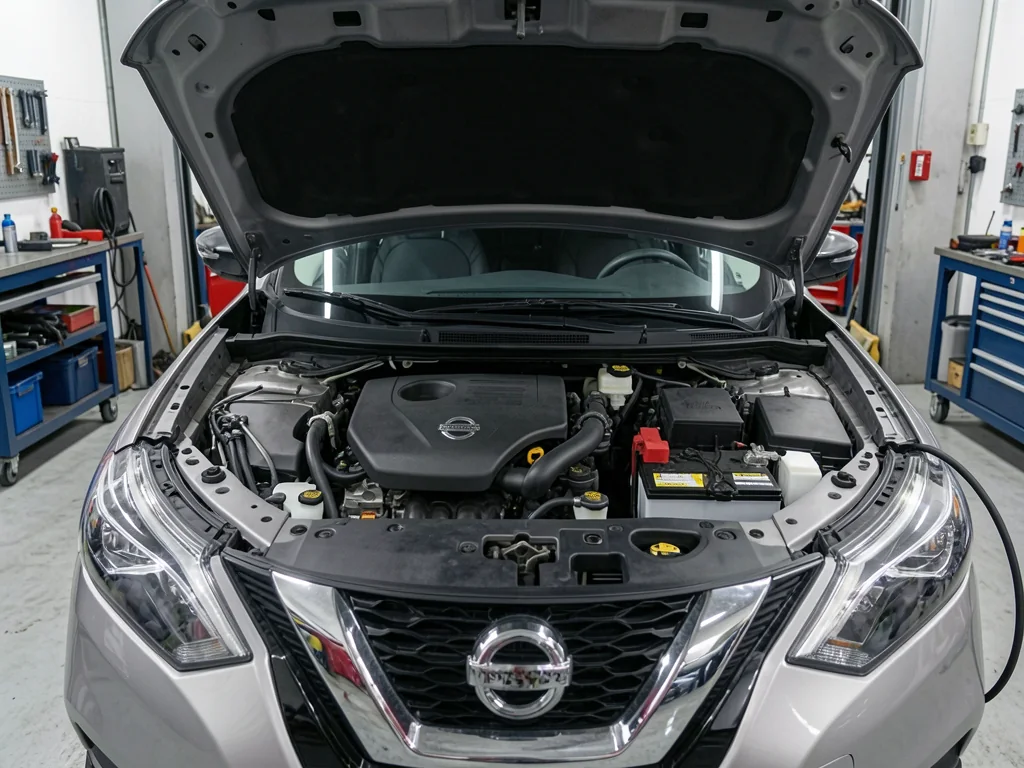
When a Nissan begins idling roughly, hesitating, or illuminating the check engine light, the exhaust gas recirculation (EGR) system is often suspected but not always confirmed. Drivers ask about an EGR valve for vehicles as varied as a 2023 Rogue, 2020 Altima, Frontier, or Sentra. Because not every engine uses a separately serviceable valve, narrowing the diagnosis requires model-year, engine, market, and sometimes VIN data before ordering parts or planning replacement.
Confirm the EGR Equipment on Your Nissan
Exhaust gas recirculation lowers combustion temperatures by routing a measured amount of inert exhaust into the intake under specific load conditions. When fitted, an EGR valve opens or closes that path using vacuum, an electric motor, or a position sensor. A Nissan engine may instead control internal residuals through variable valve timing, so assuming a bolt-on EGR valve exists can lead to a misdiagnosis or an unnecessary purchase.
Confirming equipment starts with the underhood emissions label, the model year, the displacement, and the market where the vehicle was sold. A VIN-based parts lookup and the correct service diagram tie the installed hardware to the engine calibration. This identifies whether the vehicle has an external valve, a cooler, or only internal EGR. Only after that confirmation should location and replacement advice be applied, and a suspected problem should remain separate from a proven valve failure.
Symptoms and Faults That Need EGR Diagnosis
Rough idle, hesitation, stalling, and a stored diagnostic trouble code are commonly linked to EGR faults, but those same complaints occur with vacuum leaks, ignition misfires, or fueling errors. A valve that sticks open creates a lean stumble and unstable idle, while one that fails closed may trigger a flow code. These observations are not proof of component failure; they are the starting point for a diagnosis that follows the symptom, not the part name.
Before clearing codes or buying a valve, record the freeze-frame data, exact code, and the conditions when the symptom appeared. Codes beginning P0400 through P0409 often relate to EGR flow or circuit performance, but manufacturer-dependent definitions require the Nissan service manual for the year and engine. If the engine runs severely rough, stalls repeatedly, or the check engine light flashes, stop safely and seek professional help instead of continuing to drive.
2022 and 2023 Rogue EGR Location and Replacement Checks
For a 2022 or 2023 Rogue, the first step is to identify the engine, since one Rogue may have a turbocharged unit with internal EGR while another uses an external valve. The valve location should only be described from the correct factory diagram, typically near the intake manifold or cylinder head, but the exact landmark varies with the powertrain. Treat each model year as a separate lookup rather than assuming the two are identical.
Owners can safely inspect accessible components with the engine off and cool, looking for an electrical connector, vacuum line, or visible mounting bolts. Removing hot exhaust-connected parts is not a driveway task. A professional replacement starts with confirming the diagnostic evidence, then checking valve operation, passages, and control signals. After installing a correctly identified part, the technician verifies operation and confirms the code does not return.
Altima EGR Questions, Including the 2020 Model
An Altima EGR question must begin with the model year and engine. A 2020 Altima with a 2.5-liter four cylinder may not have the same equipment as an earlier 3.5-liter V6 or a later model with a different calibration. Market variations also matter, because emissions hardware changes by region. Searching for a generic “Altima EGR valve” without that detail risks comparing a part that does not exist on the selected car.
For the 2020 Altima specifically, verify through the VIN and a dealer or trusted parts catalog whether the engine uses an external EGR valve. The service diagram will show the valve, its cooler if present, and the passages. If the catalog does not list a serviceable valve for that configuration, the EGR function may be handled internally. Any symptom or repair guidance must then be tied to the confirmed engine and diagnostic findings, not a cross-referenced assumption.
Frontier and Sentra EGR Identification
Frontier and Sentra owners face different identification checkpoints because their engine families and model years span decades. A Frontier may have a 4.0-liter V6 with an external valve, while a Sentra could have a 1.8- or 2.0-liter inline engine with a different design. Confirm the displacement, generation, and emissions certification before expecting a particular EGR arrangement. A part found in a general search is not proof of compatibility.
An unfamiliar component bolted near the throttle body or exhaust manifold does not establish that it is the EGR valve, nor that it has failed. An electrical connector may belong to an actuator, a sensor, or another system. When the engine bay is crowded or the suspected location is not clearly documented, a technician with Nissan service information should identify the part by the wiring diagram and mounting position. Guessing at a valve that is not present wastes time and risks damage.
What to Confirm Before Authorizing EGR Replacement
Before authorizing replacement, the technician should connect the complaint to the valve through commanded-operation and flow checks. A scan tool can open and close the valve while monitoring position feedback and manifold pressure. If the valve responds but flow remains low, the restriction may be in the passages or a cooler, not the valve itself. If the actuator moves but the position sensor disagrees, the diagnosis points to the assembly, not its mounting.
Deposits can cause the valve to stick, and in some designs a careful cleaning restores function, but many modern units are not serviceable and must be replaced as a complete assembly. Estimate factors include diagnostic labor, access time, the confirmed part number, and any gaskets or seals disturbed. After repair, the technician should clear codes, run the monitor, and test-drive under the same conditions that set the fault. If the symptom returns, the diagnosis continues rather than replacing the same component again.