Nissan CVT Problems: Symptoms, Model Years, Repairs, and Coverage
Nissan continuously variable transmission complaints often involve slipping, shudder, delayed engagement, or overheating. A useful Nissan CVT transmission fix starts with the correct model, year, and unit, because not every Nissan uses a CVT. Documented concern patterns, warning signs, fluid service versus replacement, and VIN checks for recall, warranty-extension, and class-action coverage all depend on that build-specific picture.
When Nissan Began Using CVTs and How to Identify Yours
Nissan introduced a steel-belt continuously variable transmission in Japanese volume production in the early 1990s and brought the Xtronic CVT to the U.S. market on the 2003 Murano. Wider adoption followed as Altima, Sentra, Versa, Rogue, Maxima, and Pathfinder received Jatco-built units through the late 2000s and 2010s. Equipment still depends on model, year, trim, and market, so factory build data or a dealer VIN record identifies the installed transmission.
The Nissan Frontier pickup is a frequent exception. North American Frontier trucks have used conventional automatic and manual gearboxes rather than a CVT, so the badge does not establish fitment; year-specific equipment and the VIN still govern. Nissan has not ended CVT use across the brand. Many current cars and crossovers still use an Xtronic unit, while trucks continue with conventional automatics. There is no single dated changeover when Nissan stopped using CVT transmissions.
Which Nissan Models and Years Have Documented CVT Concerns?
Documented Nissan CVT transmission problems cluster around 2010s cars and crossovers such as Altima, Sentra, Rogue, Murano, Pathfinder, Maxima, and Versa Jatco applications. Reported issues include shudder, slipping, delayed engagement, overheating, and reduced-power operation, yet each claim belongs to a specific model, year, and unit. Complaint counts, warranty extensions, and settlement inclusion do not establish failure rates or prove every vehicle in a year is defective.
The 2014 Nissan Versa sedan, and the related Versa Note, offered a CVT on many trims alongside a manual on others, so body style and option content must be confirmed first. Useful records include maintenance history, prior transmission work, software updates, CVT fluid specification notes, and invoices for valve body or control-module service. When symptoms or history warrant it, a professional inspection of that vehicle beats model-year reputation alone.
How the CVT Works and Where Problems Can Develop
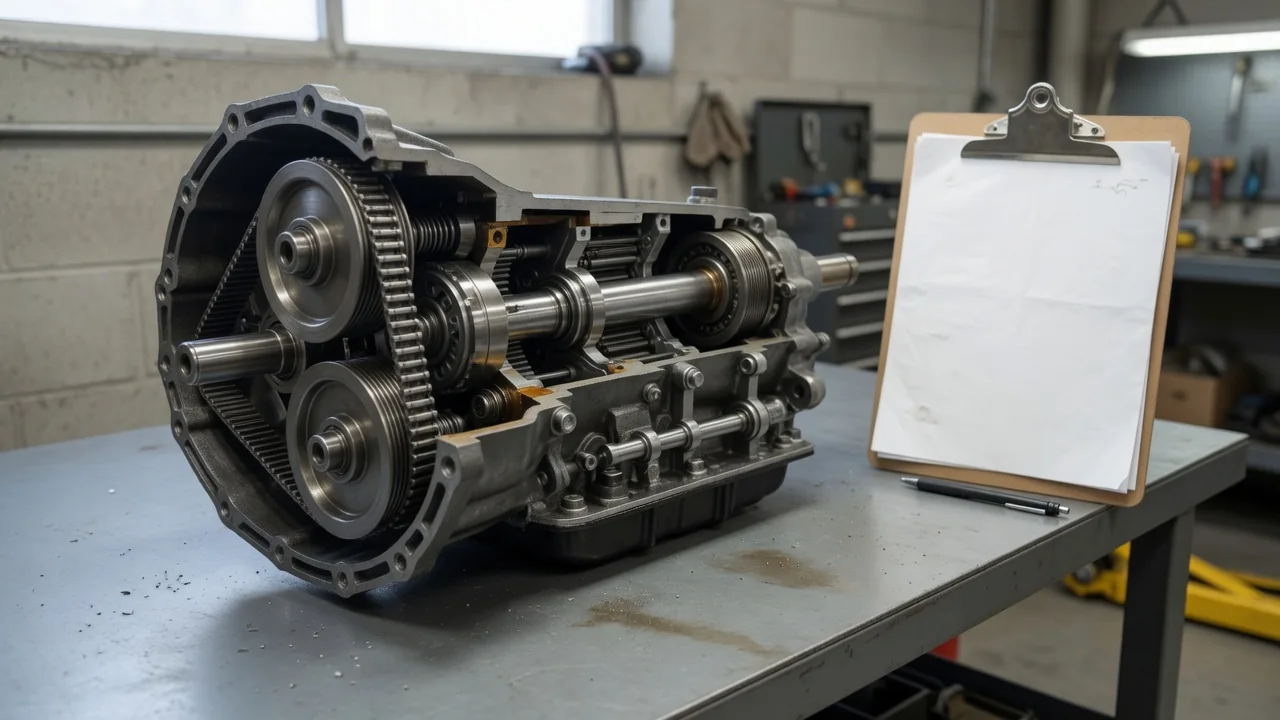
A Nissan CVT transmission diagram is easiest to picture as two variable pulleys connected by a steel belt or chain, with hydraulic pressure setting the pulley ratio as vehicle speed changes. Fluid circulation cools and lubricates those parts and supplies the control circuits. Pressure-control faults, internal wear, degraded fluid, and excess heat can disturb ratio control or belt grip. Those mechanisms are not equally common and are not universal Nissan faults.
The valve body meters hydraulic pressure, sensors report ratio and temperature, and the transmission control module commands line pressure and pulley position. Similar complaints can come from a hydraulic leak, a worn belt, a sensor, or controller software. Engine misfire, worn mounts, axle issues, and other driveline problems can also produce shudder or delayed engagement attributed to the CVT. Diagnosis has to identify the source rather than assume the transmission failed.
Slipping, Shudder, Overheating, and Other Warning Signs
Nissan CVT transmission failure symptoms often reported include acceleration shudder, delayed engagement into drive or reverse, a flare that feels like slipping, unusual noise, loss of propulsion, and transmission overheating or reduced-power messages. Any one sign is evidence to interpret, not proof the unit has failed. Engine speed can remain elevated during ordinary CVT acceleration, so suspected slipping needs context on vehicle response and any warning lamp.
Record whether the vehicle was cold or fully warm, any warning messages, road grade, and whether the symptom appeared at takeoff, at cruise, or during a passing attempt. If drive is lost, shaking is severe, smoke appears, or a message instructs the driver to stop, pull over safely and arrange assistance. Deliberate tests meant to reproduce a fault on public roads are not a diagnostic method and can leave the vehicle without propulsion.
What Can Fix a Nissan CVT Problem?
A Nissan CVT transmission fix starts with professional diagnosis using stored codes, live operating data, service history, and the procedures written for that model. A manufacturer-dependent code requires vehicle-specific confirmation and does not by itself prove a part has failed. Fluid service can be appropriate when the approved CVT fluid specification is used and contamination or age is the documented concern. Fresh fluid cannot restore a worn belt, damaged pulleys, or a failed pump.
Diagnosed remedies may include a software update to the transmission control module, sensor or harness repair, valve-body work, cooler service, or complete replacement, depending on the inspection. There is no single Nissan CVT transmission slipping fix that applies to every unit. A written recommendation is easier to judge when it cites diagnostic evidence, names the proposed scope and included components, and states the repair warranty. Current prices vary too widely to quote.
How to Check for an Applicable Nissan CVT Recall
A safety recall addresses a defect that can affect safety and is VIN-specific. It is not the same as a technical service bulletin, a customer service campaign, a warranty extension, or a class-action settlement. Nissan has issued VIN-limited safety recalls on certain mid-2010s cars and crossovers for transmission control software that could command reduced-power operation, with a dealer reprogramming remedy. That example does not place every CVT complaint under one recall.
Check the VIN through official recall records or a Nissan dealer, which shows campaign applicability and whether the remedy is already recorded as completed. An open campaign still has to match that vehicle. The absence of an open recall does not establish transmission health, and an open campaign does not diagnose the owner’s current shudder, slip, or overheating symptom. Service bulletins and warranty extensions remain separate tools for non-recall repairs.
Extended Warranty and Class-Action Coverage Checks
Original powertrain coverage, a manufacturer warranty extension, a purchased service contract, and class-action settlement benefits each use different eligibility terms. A coverage decision needs the VIN, model year, in-service date, mileage, the diagnosed failure, and records of prior transmission work. Nissan has issued VIN-specific CVT warranty extensions on listed cars and crossovers, but those programs do not follow every Nissan with a continuously variable transmission. A service contract may exclude existing damage or require documented fluid service.
Class-action history involving Nissan CVT durability has produced settlements for certain 2010s cars and crossovers, typically with listed models, mileage limits, and claim windows. Those cases do not mean every Nissan owner qualifies, and they should not be treated as proof that claims remain open. Request a written coverage determination before authorizing repairs. Keep estimates, invoices, diagnostic printouts, and service records, because reimbursement processes depend on that paper trail.