CVT Transmission Problems: Failure Modes and Warning Signs
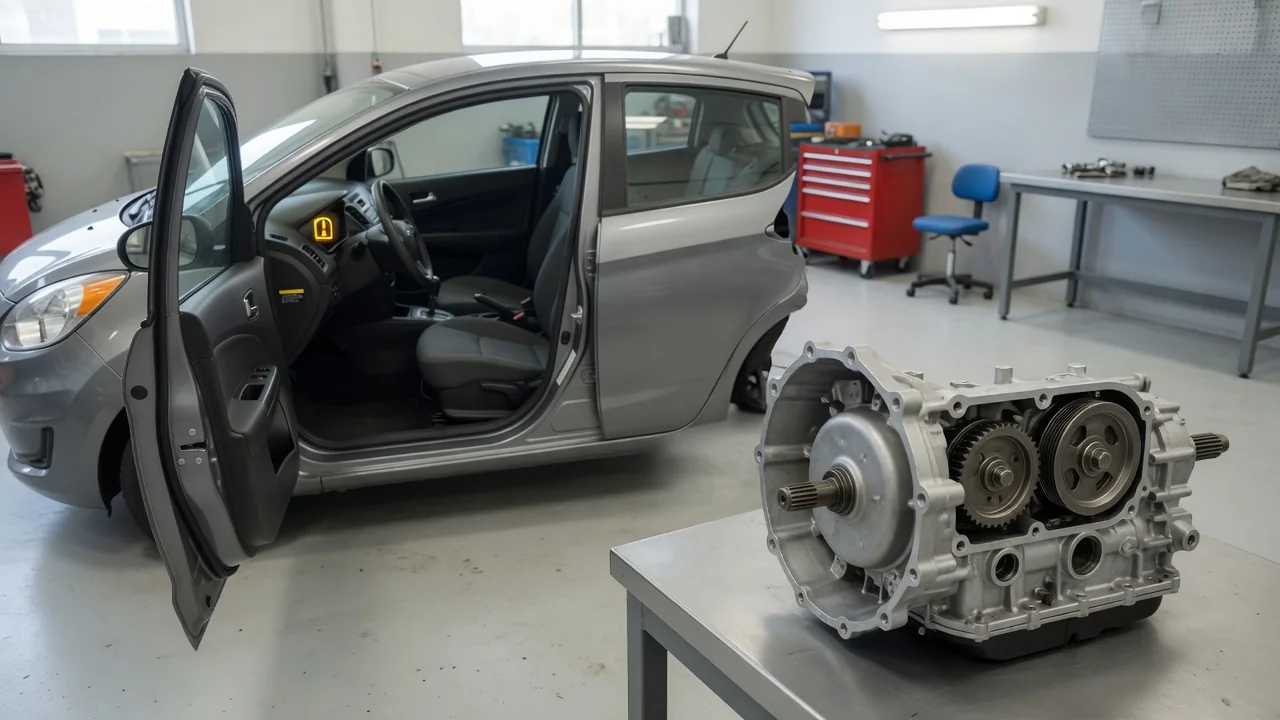
CVT transmission problems rarely begin with one obvious breakdown. More often, drivers notice shudder, slipping, a new whine, delayed engagement or an overheating message and wonder what's wrong with the CVT transmission. Knowing the common CVT transmission faults, which symptoms of a bad CVT transmission matter most, and what each sign may point to helps you decide when a professional check is enough and when stopping right away is the safer choice.
CVT Faults That Can Disrupt Power Delivery
A continuously variable transmission needs precise hydraulic pressure to clamp its drive element and change ratio smoothly. If transmission fluid condition gets worse, the fluid level drops, or a pressure-control solenoid or valve misbehaves, clamping force and ratio control can suffer. The result can be slipping, engine speed flare or sluggish response. The transmission control module also depends on speed, temperature and pressure signals, so a sensor or wiring fault can cause issues with CVT transmission behavior that look mechanical. Internal wear adds another layer, because worn seals and valves can leak pressure or respond unevenly.
Many CVTs send power through a steel belt or chain that runs between two variable-width pulleys supported by bearings. Pulley wear, a damaged belt or chain, or a failing bearing can cause noise, vibration and slipping, and in severe cases CVT transmission failures. Designs differ, though. Some hybrids use a planetary power-split unit often called an eCVT, and others add a launch gear or torque converter, so the transmission type has to be identified first. A symptom or warning light alone cannot prove internal damage or justify replacement without proper testing.
Shudder, Jerking, and Slipping Sensations During Acceleration
Shudder often feels like driving over rumble strips, or like rapid pulsing through the seat and steering wheel, usually during light, steady acceleration. Jerking or surging shows up as uneven pushes instead of a smooth pull. Slipping feels different: engine speed rises, sometimes sharply, while road speed barely changes, so you lose acceleration. Depending on the design, these symptoms may come from pressure regulation, a torque converter lockup clutch or start clutch, or internal wear that keeps the belt or chain from gripping the pulleys firmly.
Similar sensations can start outside the transmission. An engine misfire can feel like transmission shudder, worn engine or transmission mounts can amplify vibration, and traction control cutting power on a slippery surface can feel like slipping. Before a visit, write down the conditions you've already noticed: whether it happened cold or fully warmed up, on a hill or a flat road, under gentle or heavy acceleration, and at roughly what speed. Don't try to make the fault happen again on purpose. Repeated slipping builds heat and can make existing wear worse.
Whining, Humming, and Other New Transmission-Area Noises
Some CVTs make a faint operating sound even when healthy, so the key signal is change. A whine that is new, louder than before, or rises with speed deserves attention. A hum or grinding sound is more worrying when it comes with vibration or weaker acceleration. Transmission whine can come from bearing wear, restricted fluid supply, pump or hydraulic operation, or internal contact between the belt or chain and the pulley surfaces. Sound alone cannot confirm which, and several of these signs of CVT transmission problems overlap with other faults.
Several other components make noises that drivers blame on a bad CVT transmission. Uneven tire wear can cause a hum that changes with the road surface. A failing wheel bearing often gets louder with speed or while turning. Engine accessories such as a belt tensioner or alternator can whine along with engine speed. Note when the noise happens during normal driving: whether it follows vehicle speed or engine speed, shows up only when warm, or changes when coasting. Leave finding the source to a technician, who can use a lift, chassis listening tools and a road test.
Delayed Drive or Reverse Engagement and Loss of Movement
Engagement should feel prompt after you select Drive or Reverse. A noticeable pause, a harsh clunk when the gear finally engages, or a car that revs but won't move are all symptoms of a bad CVT transmission that need assessment. Delayed engagement may point to low or degraded fluid, a weak pump, a pressure-control problem, an electronic fault reported by the transmission control module, or internal damage to clutches or seals. Delays that are worse when cold or after the car sits overnight are useful clues, but they still need testing before anyone can interpret them.
Don't rev the engine to force the transmission to engage, and don't shift back and forth repeatedly to see whether movement returns. Both actions can shock worn components and build heat. If engagement becomes unpredictable, it is unsafe to keep driving. Signs include creeping unexpectedly, lurching when the brake is released, or losing drive while pulling into traffic. In that case, stop where it is safe, set the parking brake, turn on the hazard lights if you're near traffic, and call roadside assistance so the car is towed or carried to a shop rather than driven there.
Overheating Alerts and Warning Signs That Require Stopping
A transmission temperature warning, a reduced-power message, a burning smell, or reddish or brownish fluid under the car all call for prompt attention. CVT overheating can come from heavy load such as towing, steep grades or long stretches of stop-and-go traffic. It can also come from a restricted or leaking cooler, low or degraded fluid, or internal friction when parts slip. Many vehicles limit power to protect the transmission when it gets too hot. The warning shows that the transmission is running too hot, not which part has failed, so the cause still has to be found.
Stop in a safe place as soon as you can if you notice severe shaking, grinding, smoke, loss of drive, or a dashboard message telling you to stop. Driving on under those conditions can turn a manageable repair into major damage and may leave you stranded somewhere dangerous. If the warning goes away after the car cools down, that does not mean the problem is fixed. Often it only means the temperature fell below the alert threshold. Whatever caused the heat is still there, so have the transmission checked before the warning comes back.
What Professional Diagnosis Should Establish
Bring details that speed up diagnosis: when the symptoms started, whether they appear hot or cold, the speeds and loads involved, the exact warning messages, and any recent work such as a fluid service, battery replacement or collision repair, plus whatever service history you have. A technician will usually read the stored fault codes, check live data such as fluid temperature, pulley speeds and commanded pressure, and inspect for leaks and cooler damage. They should also check fluid level, fluid condition and pressure following the manufacturer's procedure for that transmission.
Many transmission codes mean different things on different makes, so the meaning for your specific vehicle must be checked in the correct service information before anyone relies on it. Even then, a code shows a condition the module detected, not a confirmed failed part. The findings should separate control problems, fluid issues, cooling faults and internal mechanical damage, because each needs a different repair. A software update, a sensor or wiring repair, a fluid correction or a cooler repair may clear up some CVT transmission failure symptoms, while internal wear may need deeper work. Deciding the transmission is bad and needs replacement should come after testing, not from symptoms alone.