Nissan Altima Engine Oil: Grade, Capacity, and Level Checks
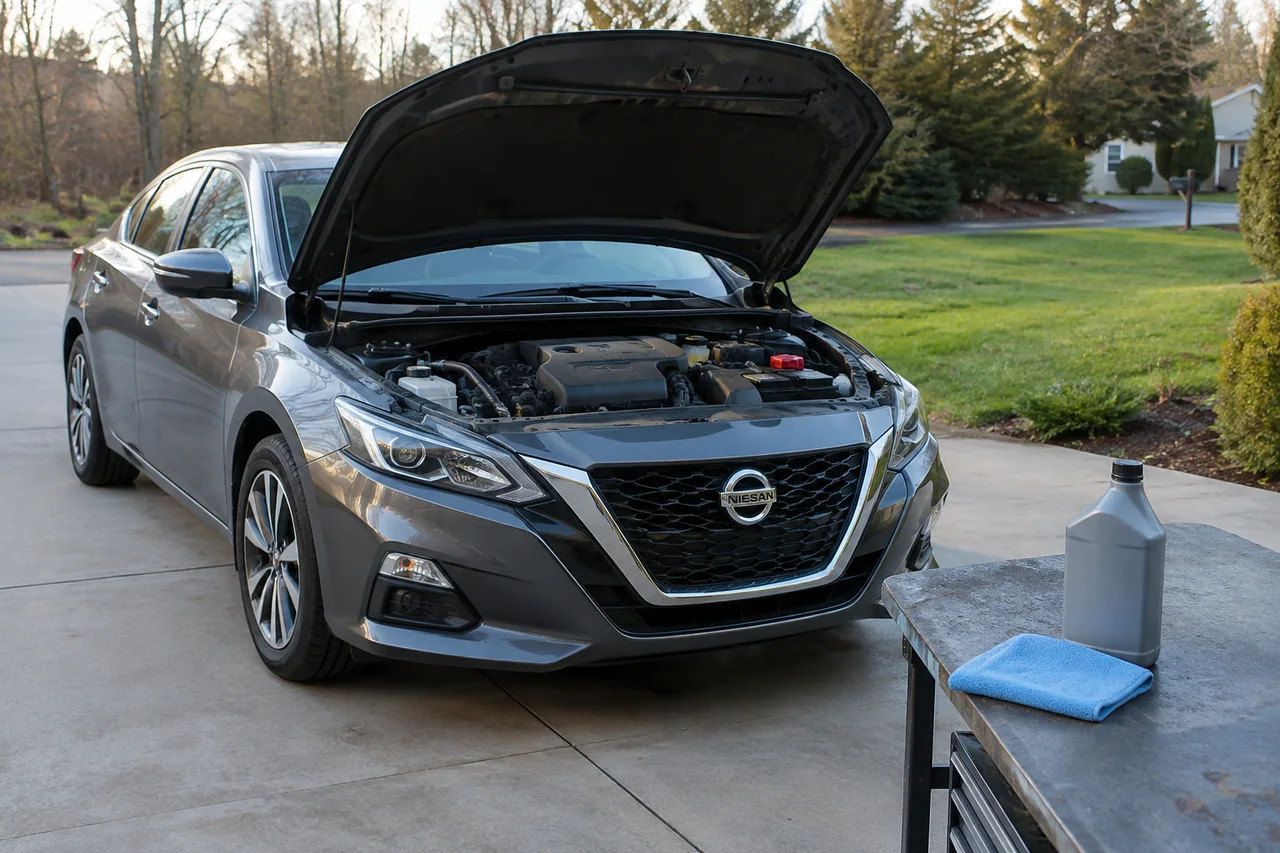
Choosing the right engine oil for a Nissan Altima starts with the vehicle in front of you, not a generic bottle recommendation. Oil grade, refill volume, and how you confirm the level all depend on the model year and the engine actually installed. Locating oil specifications, confirming engine oil capacity, and checking the dipstick keep Nissan Altima engine oil service aligned with the owner's manual rather than a one-size-fits-all bottle on the shelf.
Identify Your Altima’s Model Year and Engine
Before you select an oil viscosity or pour a refill, identify the Altima's model year and the engine that is actually in the car. Nissan has used more than one powerplant across generations, and a recommendation written for one configuration does not establish the specification for every Altima. Oil chosen for a later four-cylinder, for example, may not match the grade or volume listed for an earlier or different engine. Treating year and engine as the first facts keeps later steps from being applied to the wrong vehicle.
Look first at the owner's manual, the under-hood identification labels, and any engine information printed on the vehicle. Those sources name the installed engine more reliably than memory of a trim badge or a listing copied from another Altima. If the year, engine code, or displacement is unclear, a Nissan service department can confirm the details from the vehicle identification number and factory records. That confirmation is worth obtaining before you shop for engine oil for Nissan Altima service, because the wrong starting identity leads to the wrong SAE grade and the wrong refill amount.
Find the Required Oil Grade and Specifications
Once the year and engine are known, open the owner's manual to the lubrication or maintenance section and read the oil specifications written for that vehicle. The manual lists the SAE viscosity designation the engine is designed to use, along with any quality standard the oil must meet. An SAE grade describes how the oil flows when cold and how it holds film thickness when hot; it is not a brand name, and it is not interchangeable across every Altima simply because the cars share a nameplate. Use the listing that matches the identified engine rather than a neighboring year.
Compare the bottle label to those requirements before you pour. The label should show the same SAE viscosity the manual names, plus the quality marks or approvals the manual lists. If the manual states that synthetic oil is required, the container must say so; a conventional product that happens to share a viscosity number does not satisfy a synthetic requirement. Climate-related viscosity options apply only when the applicable owner's manual itself publishes a temperature chart or seasonal alternative. If that page is silent, stay with the primary listed grade rather than choosing a different viscosity for local weather.
Confirm the Oil Refill Capacity
Engine oil capacity is also year- and engine-specific. After you identify the vehicle, read the refill volume in the owner's manual or matching factory service information, and note whether the figure is given in quarts, liters, or both. A listed capacity that includes oil filter replacement is larger than a drain-and-fill figure that leaves the old filter in place, because the new filter holds oil the crankcase will later draw. Using the filter-inclusive number without changing the filter, or the exclusive number after a new filter, leaves the sump short or long of the intended level.
Routine service refill capacity is the amount used at a regular oil change. Technical documentation may also list dry-fill totals used after an engine rebuild, or volumes that include coolers and galleries emptied only during major work. Those larger numbers are not the amount to pour at a scheduled service. The stated refill amount is a starting reference, not a guarantee that the crankcase is at the correct level once the last quart is in. After filling, confirm the actual level with the vehicle's prescribed dipstick or electronic procedure, then add or wait as that procedure directs.
Check the Oil Level Safely
Check the oil on level ground with the engine off, following the owner's manual for whether the engine should be fully cold or recently warmed and how long to wait after shutdown. Oil still draining from the cylinder head or hanging in the galleries can make a hot, immediate reading look low. Park so the car is not on a slope, because a tilted pan moves oil away from the pickup tube and the dipstick. Wipe the stick, reinsert it fully, then withdraw it for the actual dipstick reading rather than relying on the first pull, which often shows splash.
The dipstick marks an operating range, not a single fill-to line. Oil should sit between the lower and upper marks after a proper wait; a film below the low mark calls for a small addition of the specified oil, while a film at the high mark is already full. Add in small amounts and recheck after each pour so overfilled engine oil does not pass the upper mark. If the stick is unreadable from damage or an ambiguous smear, or the level sits well above the high mark, stop adding oil and have a professional inspect rather than pouring further.
Recognize Oil Problems That Need Attention
An oil maintenance reminder on the instrument cluster is a service-interval prompt, not a diagnosis of the wrong SAE grade. An oil pressure warning is different: it reports low pressure in the lubrication circuit while the engine is running, and it likewise does not identify which viscosity to buy. Neither message, by itself, tells you the correct engine oil for Nissan Altima use. If the oil pressure warning appears while driving, stop as soon as it is safe, shut the engine off, and arrange assistance. Continuing to drive with low pressure can starve bearings of lubrication.
Keep a simple record of how often you add oil between changes, and glance at the pavement under the parked car for fresh spots without crawling underneath. Repeated top-ups, unusual engine noise, or oil that looks milky, gritty, or fuel-thinned point to a leak, consumption, or contamination that a viscosity change will not fix. Recurring low levels and suspected contamination need diagnosis of the cause, not a guess that a thicker or thinner SAE grade will hide the symptom. Changing viscosity on guesswork can leave the engine outside its oil specifications while the underlying problem continues.