Choosing Motul Break-In Oil: When It Fits and What to Check
The short answer
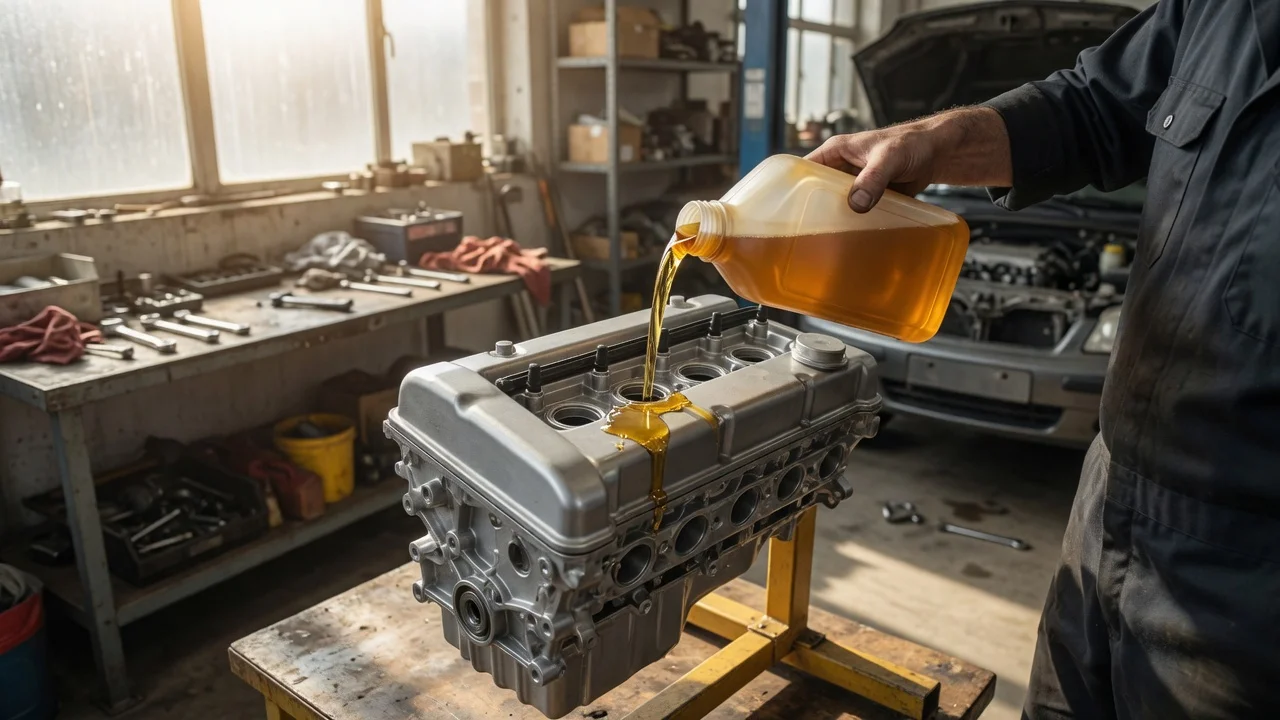
Motul break-in oil is meant for engines that have just been built or rebuilt. In these engines, new piston rings need to wear into the cylinder walls and new camshaft and lifter surfaces need protection during the first run. If that describes your engine, it is a reasonable choice when its viscosity grade and specification match what your engine builder or camshaft manufacturer asks for.
The answer changes for a factory-new car or motorcycle. In that case, follow the owner's manual. Manufacturers typically fill engines at the factory and specify the oil and service interval for the run-in period. Using a different oil can conflict with those requirements.
Break-in oil is a short-term fluid. It is designed to be drained after the initial run-in, not kept in the engine as an everyday oil.
What break-in oil does differently
Ring seating is the process in which new piston rings and freshly finished cylinder walls wear against each other until they form a tight seal. A good seal helps the engine hold compression and limits oil consumption. Break-in oils are generally formulated to allow this controlled wear rather than to minimize friction as much as possible.
Many break-in oils also carry higher levels of zinc and phosphorus anti-wear additives, often called ZDDP. These additives help protect flat-tappet camshafts, where the lifters slide directly on the cam lobes and are most vulnerable in the first minutes of running. Roller camshafts, which use a rolling wheel against the lobe, are less dependent on this protection.
These are general traits of the oil category. The specific formulation, additive levels and approvals of Motul's break-in product were not available for this guide. Confirm them on Motul's current product data sheet.
Checks before you buy
Engine condition: confirm the engine is freshly built or rebuilt, not factory-new under a manufacturer's run-in schedule. Camshaft type: find out whether the engine uses a flat-tappet or roller camshaft, because this affects how much anti-wear additive matters. Builder and parts instructions: engine builders and cam makers often specify the break-in oil, procedure and drain point. Their guidance takes priority, and ignoring it can affect parts warranties. Viscosity grade: match the grade on the container to the builder's recommendation for your engine's clearances and climate. Check the label for the version sold in your market. Motorcycles with a wet clutch: if the clutch runs in engine oil, confirm the product is rated for wet-clutch use before filling. That rating was not verified for this guide. Road use and catalytic converters: high zinc and phosphorus levels can be a concern for catalytic converters on road-registered vehicles, so check suitability if the vehicle will be driven on public roads during break-in. Quantity: work out how many containers you need from the engine's oil capacity, including any oil used for priming the system before first start.
Working out the real cost
Count the full break-in cycle, not just one bottle. The total usually includes the initial fill, a new oil filter, the drain-and-refill once break-in ends, and the regular oil you switch to afterward. Some builders also call for an extra early change, which adds another fill and filter.
No prices or availability data were supplied for this guide. When comparing quotes, note the market, date and currency. Check whether shipping and tax are included. Treat advertised prices as a starting point, since the amount you actually pay can differ. Buy from authorized sellers and check that containers are sealed, which reduces the risk of counterfeit or old stock.
After the break-in period
Drain the break-in oil at the point your builder specifies and replace the filter. Inspecting the drained oil and filter for unusual debris can reveal early problems. Then refill with the oil grade and specification recommended for normal running of that engine.
Gaps to resolve before ordering
Several details were not available here: the viscosity grades Motul offers in its break-in range, published additive levels, industry approvals, wet-clutch ratings and regional availability. The current product data sheet, the container label and your engine builder's written instructions are the places to confirm each of these before you commit.