Most Reliable Car Brands in 2025: What the Rankings Mean and How to Use Them
The Short Answer
Japanese brands, led by Toyota and its luxury division Lexus, have long sat at or near the top of major US reliability surveys. Mazda, Honda and Subaru also tend to rank well. That pattern is a reasonable starting point if you are looking for the most reliable car brands in 2025, and it reflects years of owner-reported data, not a single good year.
One condition changes the answer more than any other. A brand ranking is an average across every model the brand sells. A strong brand can still offer a weak model, a troubled first model year or an unproven powertrain. A brand with a middling score can still build a very dependable vehicle. Use brand reputation to narrow your shortlist, then judge the specific model, model year and powertrain you are considering.
Brands That Consistently Rank Well
The positions below are described as recurring patterns, not exact 2025 ranks or scores. Survey order shifts from year to year, and each survey measures something slightly different.
Toyota: Known for conservative engineering and gradual updates. Its long-running hybrid systems have a strong track record. Lexus: Shares much of Toyota's engineering and usually ranks at or near the top. It adds more complex luxury equipment. Mazda: Its relatively simple model lineup and conventional powertrain choices have helped it score well. Honda: Generally strong, though results vary more by model and generation than they do at Toyota or Lexus. Subaru: Often ranks well. Standard all-wheel drive across most of the lineup is part of its appeal in snowy regions.
Other brands, including some Korean and domestic makes, have produced individual models that score well even when the brand average is lower. Brands that are launching many new electric or heavily redesigned vehicles at once often see their averages pulled down by early-production problems.
How Reliability Rankings Are Built
Knowing how the rankings work helps you read them correctly. In the US, the most widely cited reliability data comes from large owner surveys, such as those run by Consumer Reports and J.D. Power. The two use different methods.
Predicted reliability: Uses owner-reported problems from recent model years to forecast how a current or upcoming model is likely to hold up. Dependability studies: Count problems that owners of roughly three-year-old vehicles report over the past year. They tell you how cars age, but they describe vehicles built several years ago. Initial quality studies: Measure problems in the first months of ownership. Confusing infotainment or controls can count as a problem here, even when nothing is mechanically broken.
Because of these differences, one brand can look excellent in one study and only average in another. A brand that scores poorly on initial quality because of a frustrating touchscreen may still be mechanically durable. When the sources agree on a brand, you can trust the signal more.
Why the Specific Vehicle Matters More Than the Badge
Reliability lives at the level of a particular model, model year and powertrain. Before relying on a brand's reputation, check these factors.
Model Year and Redesign Cycle
The first model year of a new generation or major redesign is where problems most often appear. Later years of the same generation usually benefit from fixes made on the production line. If a model was redesigned recently, a buyer focused on reliability may prefer a later year of the outgoing generation, or may wait a year or two into the new one.
Powertrain Options
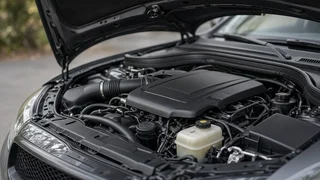
The powertrain is the engine, transmission and, where fitted, the hybrid or electric drive system. It is often the biggest variable within a single model. The same vehicle may be sold with a long-proven engine and a newer turbocharged engine, or with a conventional automatic and a newer transmission design. Hybrid systems with a long production history usually carry less risk than new ones. Fully electric vehicles have fewer engine-related parts, but early model years have often had software, charging and electronics problems. Check reliability data for the exact powertrain, not just the model name.
Equipment Level
The equipment level, or trim, determines what is fitted to the car. Higher trims add features such as larger screens, power-operated parts, air suspension, panoramic roofs and advanced driver-assistance hardware. Each of these is something else that can fail. A well-equipped trim is not unreliable by default, but more complex equipment means more potential repair items, especially after the warranty ends.
Body Configuration and Market Segment
Body configuration means the vehicle's basic shape and layout, such as sedan, hatchback, SUV or pickup. Market segment means where the vehicle sits in the market, such as compact, midsize, full-size or luxury. Both affect how the vehicle is built and used. A pickup that regularly tows works its drivetrain harder than a commuter sedan. Luxury models tend to carry more technology. Compare reliability within the segment you are actually shopping in, not across the whole brand.
Regional Availability
Models sold under the same name can differ between markets in engines, equipment and even where they are built. Reliability data gathered from US owners applies most directly to US-market vehicles. If you are buying an imported or gray-market car, treat US survey results as only a partial guide.
What to Check Before You Buy
Check | Why it matters | What to do; Model year history | First years of a redesign carry more risk | Find out when the current generation launched and whether known problems were fixed; Exact powertrain | Reliability can differ sharply between engines and transmissions in one model | Look up data for the specific engine, transmission or hybrid/EV system; Recalls and service campaigns | Open recalls point to known defects | Run the VIN through the federal recall lookup and ask the dealer for service campaign records; Warranty coverage | Coverage reduces your exposure to early failures | Compare basic and powertrain warranty terms, and check what remains on a used car; Service history (used) | Regular maintenance is a major factor in long-term reliability | Ask for records of oil changes, fluid services and repairs; Pre-purchase inspection (used) | Reveals the condition of this particular car | Have an independent mechanic inspect it before you pay; Repair and parts costs | A reliable car can still be expensive to fix | Ask a local shop about typical repair costs for the model
New vs. Used: How to Apply Brand Reliability
For a new car, predicted reliability and the brand's track record with similar powertrains are your main guides. The factory warranty covers early defects, so the bigger risk is long-term durability once coverage ends.
For a used car, the condition of the individual vehicle matters as much as the brand. A neglected car from a top-ranked brand can be a worse buy than a well-maintained car from a mid-ranked one. Dependability data for the matching model year is useful, but the service history and an independent inspection tell you about the car in front of you. Certified pre-owned programs from the manufacturer can add warranty coverage, so compare their terms carefully.
Choosing Your Next Step
If you want the lowest-risk path, start with brands that score well across several years and several surveys, such as Toyota, Lexus, Mazda, Honda and Subaru. Then choose a model in your segment that is not in its first redesign year and comes with a proven powertrain. If a brand outside that group has the vehicle you want, look up the specific model, year and powertrain instead of ruling it out on brand averages alone. Whichever brand you choose, checking recalls, warranty terms and, for used cars, maintenance records and an independent inspection will tell you more about the car you buy than any brand ranking.