Mobil motorcycle engine oil
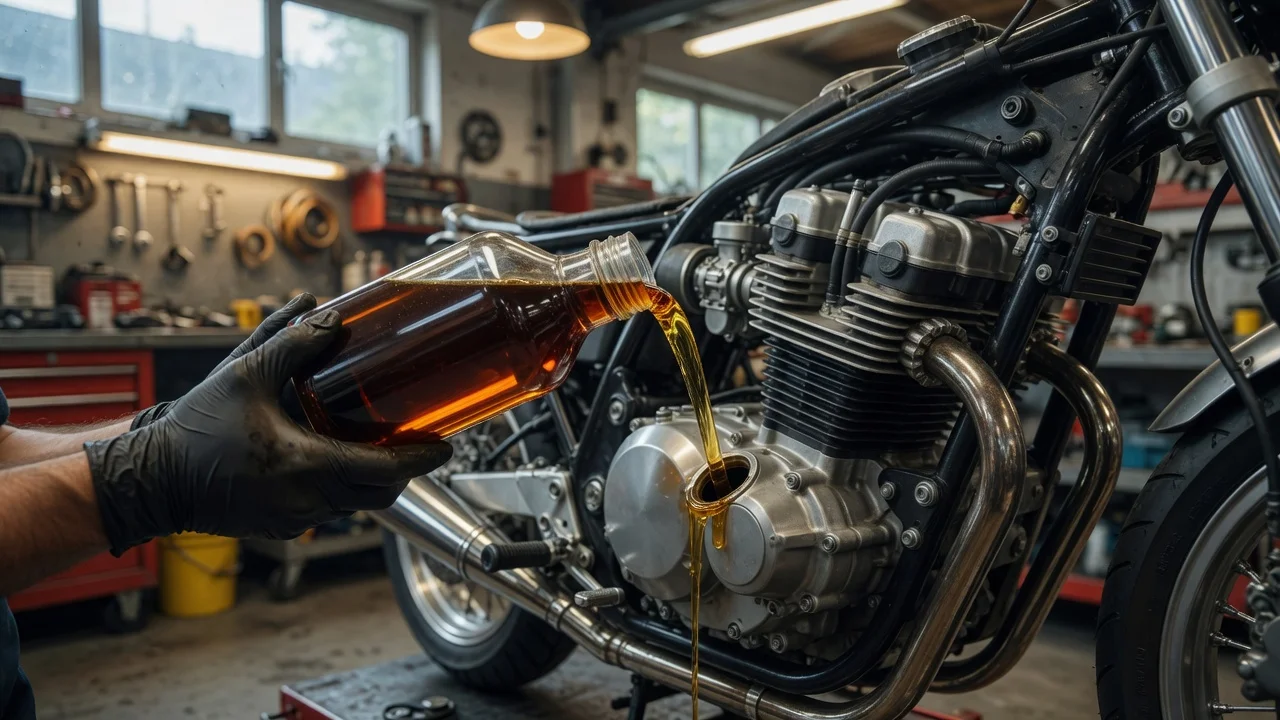
What Mobil oil to use in a motorcycle
Use a Mobil oil that is labeled for motorcycles and that matches the viscosity grade and service specifications in your bike’s owner’s manual. The right bottle is defined by those published specs for your model year, market and engine type, not by the Mobil brand name alone. Passenger-car Mobil engine oils can share a viscosity number with motorcycle oils and still miss motorcycle clutch and gearbox requirements.
Two conditions change the choice. A four-stroke motorcycle with a wet clutch (engine, gearbox and clutch sharing one oil) needs a motorcycle 4T oil that meets a wet-clutch rating such as JASO MA or JASO MA2. A two-stroke engine needs a 2T oil mixed or injected at the ratio the maker specifies. Scooters and some designs with a dry clutch or a separate transmission may call for a different JASO class, often JASO MB, or a dedicated gear oil in the transmission.
Read the manual before the bottle
The owner’s manual, or the service information for that exact year, market, trim and powertrain, is the compatibility source. Record the SAE viscosity (for example 10W-40 or 20W-50), the API service category if listed, and any JASO motorcycle rating. Then buy a Mobil motorcycle product whose label states those same grades and ratings. If the manual lists more than one viscosity by climate, pick the grade that matches the air temperatures you actually ride in.
JASO is the Japanese Automotive Standards Organization motorcycle oil classification. MA and MA2 describe oils intended to give a wet clutch enough friction to engage cleanly. MB describes a lower-friction oil used where the clutch does not share the engine oil, typical of many scooters. API categories describe engine-protection performance for four-stroke engines. A motorcycle Mobil oil should carry both the viscosity and the motorcycle rating your maker requires; matching viscosity only is incomplete.
Four-stroke Mobil oils and wet clutches
Most street motorcycles are four-stroke engines with a wet clutch. Mobil motorcycle 4T lines are sold for that layout: one oil lubricates the crankcase, the gearbox and the clutch plates. Friction behavior is part of the spec. Oils blended for cars often include friction modifiers that help fuel economy in an engine that does not drive a wet clutch. In a shared-sump motorcycle, that chemistry can make the clutch slip or grab. A Mobil bottle marked for motorcycles and JASO MA or MA2 is the product class that addresses that layout.
Mobil 1 motorcycle 4T oils and Mobil Super motorcycle 4T oils are the usual consumer families. Exact grade names, viscosities and which JASO or API claims appear on a given bottle vary by market and year. Confirm the current label against the manual rather than assuming a familiar viscosity from a car Mobil 1 product is interchangeable.
Two-stroke engines, scooters and separate gearboxes
Two-stroke motorcycles and many small bikes use a 2T oil that is mixed with petrol or metered by an oil injector. That oil is burned with the fuel. A four-stroke Mobil engine oil does not substitute. Use a Mobil 2T motorcycle oil only if the label matches the mixing method and the specification the maker names, and measure the ratio the manual gives.
If the gearbox has its own fill, treat that as a second fluid. Some shaft-drive and scooter transmissions specify a gear oil by API GL grade and SAE viscosity, separate from the engine oil. Fill each cavity with the fluid the manual names for that cavity. Do not assume one Mobil motorcycle engine oil covers a separate final drive.
What a Mobil motorcycle oil is doing
In a four-stroke bike, the oil has to control wear on cams, pistons and bearings, stay stable at high engine speed, and still allow wet-clutch plates to lock. Gear teeth in the same sump add extreme-pressure demand that a car engine does not place on crankcase oil. Motorcycle-specific Mobil formulations are built around that combined duty. High-output, track or sustained high-temperature use may lead a maker to specify a racing 4T grade or a heavier viscosity; that is still a manual call, not a default upgrade.
How to choose the next bottle
Identify the engine cycle (four-stroke or two-stroke) and whether the clutch is wet and shares the engine oil. Copy the SAE viscosity, JASO class and API or maker spec from the owner’s manual for your year and market. Select a Mobil motorcycle oil whose label states those same ratings. Prefer MA or MA2 for a wet-clutch four-stroke unless the manual names MB or another class. Match climate to viscosity if the manual gives a temperature chart. Use a 2T Mobil oil and the stated mix ratio for two-stroke engines; use a separate gear oil where the transmission has its own fill. Change the oil and filter on the interval the maker publishes for your riding, and dispose of used oil through an approved collection point.
Gaps that still need your bike’s data
This guidance cannot name a single Mobil product as correct for every motorcycle. Compatibility depends on model year, market, engine family, clutch design and the exact specification printed for that vehicle. Current bottle names, viscosities, JASO claims, prices and stock are label- and market-specific and are not listed here. If the manual is missing, obtain the factory service data for your VIN or model code, or ask a dealer parts desk to look up the specified oil by year and engine, then match that spec on a Mobil motorcycle label.