Is the Mini Countryman Suitable for Off-Road Driving?
The Short Answer
The Mini Countryman suits light off-pavement use, such as maintained gravel and dirt roads, grassy parking areas, snowy or rain-soaked tracks, and access roads to trailheads or campsites. It is not built for serious off-roading like rock crawling, deep mud, steep rutted trails or water crossings. The Countryman is a compact crossover based on a front-wheel-drive car platform. It is not a body-on-frame SUV or a purpose-built trail vehicle.
One detail changes the answer more than any other: whether the vehicle has Mini's ALL4 all-wheel-drive system. A front-wheel-drive Countryman is best kept to paved and well-graded roads. An ALL4 version handles slippery and loose surfaces more confidently, but it is still a crossover with road-oriented hardware.
What ALL4 Does and Doesn't Provide
ALL4 is an on-demand all-wheel-drive system. The vehicle normally drives mainly through the front wheels and sends power to the rear wheels when sensors detect slip or when conditions call for more traction. This helps when pulling away on snow, climbing a loose gravel incline, or driving on wet grass.
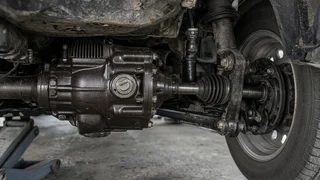
The Countryman lacks the hardware that dedicated off-road vehicles rely on:
Low-range gearing: a transfer case with a low gear range multiplies torque for slow, controlled crawling over obstacles and steep grades. The Countryman does not have one. Locking differentials: these force wheels on the same axle to turn together, so a wheel lifted off the ground doesn't spin uselessly. The Countryman relies on electronic traction and stability systems instead, which work for occasional slip but are less effective when wheels repeatedly lose contact with the ground. Underbody protection and recovery points built for trail use: these are not part of the Countryman's core design brief. All-terrain tires as a default: Countrymans are typically fitted with road-oriented tires. Many Mini models have been sold on run-flat tires, which give a firmer ride and offer limited sidewall flexibility for rough ground.
Why Model Year and Trim Matter
The Countryman has gone through several generations, and drivetrain availability, powertrains and equipment have varied by model year, trim and market. In the US, ALL4 has been offered on many Countryman versions, but not every Countryman sold has it. A used example may be front-wheel drive. Electric and plug-in hybrid versions also differ from gasoline models in weight, how power reaches each axle, and where components sit underneath the vehicle. Confirm the exact configuration of any specific vehicle rather than assuming all Countrymans share the same capability.
What to Check Before Buying for Rough-Road Use
Drivetrain: confirm the vehicle is an ALL4 model if you plan regular gravel, snow or dirt-road driving. Ground clearance and approach and departure angles: compare the official figures for the exact model year and trim against the roads you expect to drive. Tires: check the tire type and whether the vehicle uses run-flats. Ask whether all-terrain or winter tires are offered in compatible sizes, and whether a spare can be carried. Wheel and suspension options: larger wheels with lower-profile tires, or sport-tuned suspension, are more vulnerable to damage on potholed or rocky surfaces. Underbody layout: for electrified versions especially, look at what sits closest to the ground. Warranty terms: review how the manufacturer treats damage from off-pavement use.
Gaps in the Available Information
No confirmed specifications were available for this article. That includes ground clearance, approach and departure angles, wading depth, towing figures, and tire sizes for any model year. There were also no independent off-road test results to report. The assessment above therefore rests on the Countryman's general design as an all-wheel-drive-capable compact crossover, not on measured performance. Before buying, check the manufacturer's published specifications for the exact model year and trim you are considering.
Bottom Line
An ALL4-equipped Countryman is a reasonable choice if your off-road needs stop at unpaved roads, winter conditions and the occasional rough track. If you expect to tackle genuine trails, look at vehicles designed with low-range gearing, locking differentials and greater clearance.