Mercedes-Benz TPMS Sensors: Replacement and Relearn Essentials
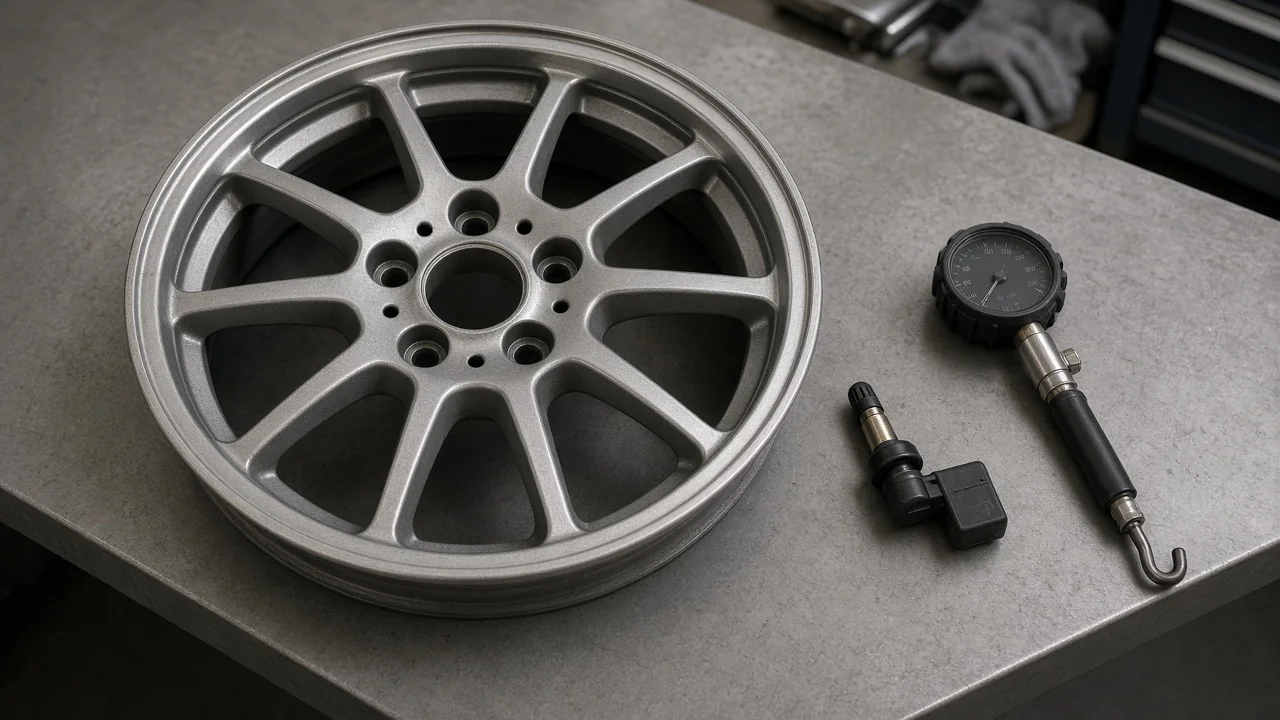
Mercedes-Benz vehicles with a direct tire pressure monitoring system use a wheel-mounted Mercedes TPMS sensor at each corner to report inflation. A TPMS sensor for Mercedes service is not a generic swap. Sensor identification, fitment, battery condition, valve hardware, programming, and TPMS relearn depend on the exact vehicle. Confirm equipment, check actual pressures, then decide whether replacement and vehicle recognition are needed.
Confirm Your Mercedes-Benz Tire Pressure Monitoring System
On a Mercedes-Benz with direct TPMS, each wheel typically carries a pressure sensor that measures inflation and communicates with the vehicle. Those Mercedes TPMS sensors let the tire pressure monitoring system display individual readings and warn when a tire is low. The sensor is usually part of the valve assembly or mounted inside the wheel, so it travels with the tire and wheel. Indirect systems infer pressure from wheel-speed behavior and do not use the same wheel-mounted hardware, which is why assuming every Mercedes uses the same layout is a mistake.
Before treating a warning as a sensor job, confirm what the vehicle actually has. The owner's manual and the equipment list show whether a direct system is installed and how alerts are presented. Model year, exact specification, options, and sales market all affect the installed system, because radio frequency, protocol, and relearn method can differ across otherwise similar cars. Do not assume a reset that worked on another Mercedes applies here. Identify the installed system first, then match parts and procedures to that vehicle.
Check Tire Pressure Before Suspecting a Sensor
Start with the tires, not the electronics. With the vehicle parked on level ground and the tires cold, use a quality gauge at each valve stem and compare the readings to the tire pressure placard on the door jamb or fuel-filler area, not the sidewall maximum. Inflate to the placard values for the load and wheel set in use. A low-pressure warning often means a tire is actually down, not that Mercedes TPMS sensors have failed. Correcting inflation first prevents unnecessary sensor replacement.
The display may show a low-pressure alert, dashes or unavailable readings, or a system malfunction message. Any of those can come from underinflation, a recent wheel change, a damaged valve, a weak sensor battery, or a communication issue, so one symptom is not proof a sensor has failed. If a tire is visibly deflated or the vehicle pulls, vibrates, or feels unstable, stop in a safe location rather than driving on it. A tire that keeps losing air needs leak diagnosis even when a sensor fault is also suspected.
Identify a Compatible Replacement Sensor
A compatible Mercedes TPMS sensor must match the vehicle, not merely look similar. Verify TPMS sensor fitment with year, model, engine and market data, a VIN-based parts lookup, and any sensor identification printed on the existing unit or listed in service information. Communication frequency, protocol, valve stem style, and sensor programming support have to suit that application. A broad Mercedes-Benz product label or a matching clamp-in appearance does not prove the replacement will talk to the control module or seat correctly in the wheel.
Replacement wheels and seasonal sets need the same fitment check. Original sensors may not transfer if the new rims use a different valve hole, sensor profile, or mounting method, and some aftermarket wheels will not accept the factory hardware. A spare, winter, or styling wheel is not automatically equipped with a working sensor. Match communication, valve configuration, and programming support to the vehicle and rim before mounting tires so each driven wheel can report pressure correctly to the monitoring system.
Determine Whether Sensor Replacement Is Necessary
Missing data can come from a depleted sensor battery, a cracked housing, a damaged valve stem, corrosion, or a communication problem after wheel work. Those conditions can look similar on the cluster, so symptoms alone cannot identify the cause. A stored fault is evidence to interpret, not proof the electronics have failed, and manufacturer-dependent codes still need vehicle-specific confirmation. A leak at the valve or a failed seal may be serviceable without replacing the entire sensor, depending on whether the installed design allows separate valve hardware.
A tire professional can check whether each sensor responds, review reported battery status when the tool and vehicle provide it, inspect for leaks, and read relevant system faults. That process separates a punctured tire from a silent sensor and a valve leak from a dead transmitter. One non-responsive corner does not by itself mean every Mercedes TPMS sensor on the car must be replaced. Replace only the units that fail identification or communication checks, and service the rest according to condition and the installed sensor's serviceability.
Understand Programming and Vehicle Relearn Requirements
Sensor programming and TPMS relearn are not the same job. Programming prepares a blank or cloneable replacement so it uses the correct identity and protocol. Relearn is the vehicle step that registers those identities and completes wheel position recognition so each reading appears at the right corner. Some vehicles learn automatically after a drive cycle, others need an onboard procedure, and others require diagnostic equipment. Consult the service information for that Mercedes rather than a universal button sequence, speed, or distance.
Clearing a warning lamp or restarting monitoring does not repair a leak, revive a depleted sensor battery, or make an incompatible part communicate. If the replacement was never programmed, or the vehicle never completed relearn, readings can stay missing even when pressures are correct. No relearn will make an incompatible sensor work. Follow only the procedure specified for that vehicle, then confirm each identity is recognized in the expected wheel position before treating the warning as resolved.
Plan the Service Visit and Confirm the Result
Bring the VIN, the exact warning wording, and notes on recent tire, wheel, or sensor work to the appointment. That information speeds parts lookup and helps the shop separate a leak from a communication or relearn issue. An estimate may include the sensor itself, applicable valve hardware, tire dismount and mount, balancing, sensor programming, and TPMS relearn. Leave tire dismounting and sensor installation to an equipped tire service professional; the sensor sits inside the wheel and is easy to damage during bead work.
After service, confirm cold inflation against the tire pressure placard, check for leaks at the valve and bead, and verify that the vehicle recognizes each sensor and shows normal system operation. Successful recognition means sensor identities are present and wheel positions make sense, not merely that a lamp went out during the visit. If a warning returns, a reading stays unavailable, or handling still feels off, further diagnosis is required rather than repeating the same replacement. Address remaining leaks and communication faults before considering the job complete.