Mercedes-Benz PCV Valve Location and Replacement for the C300
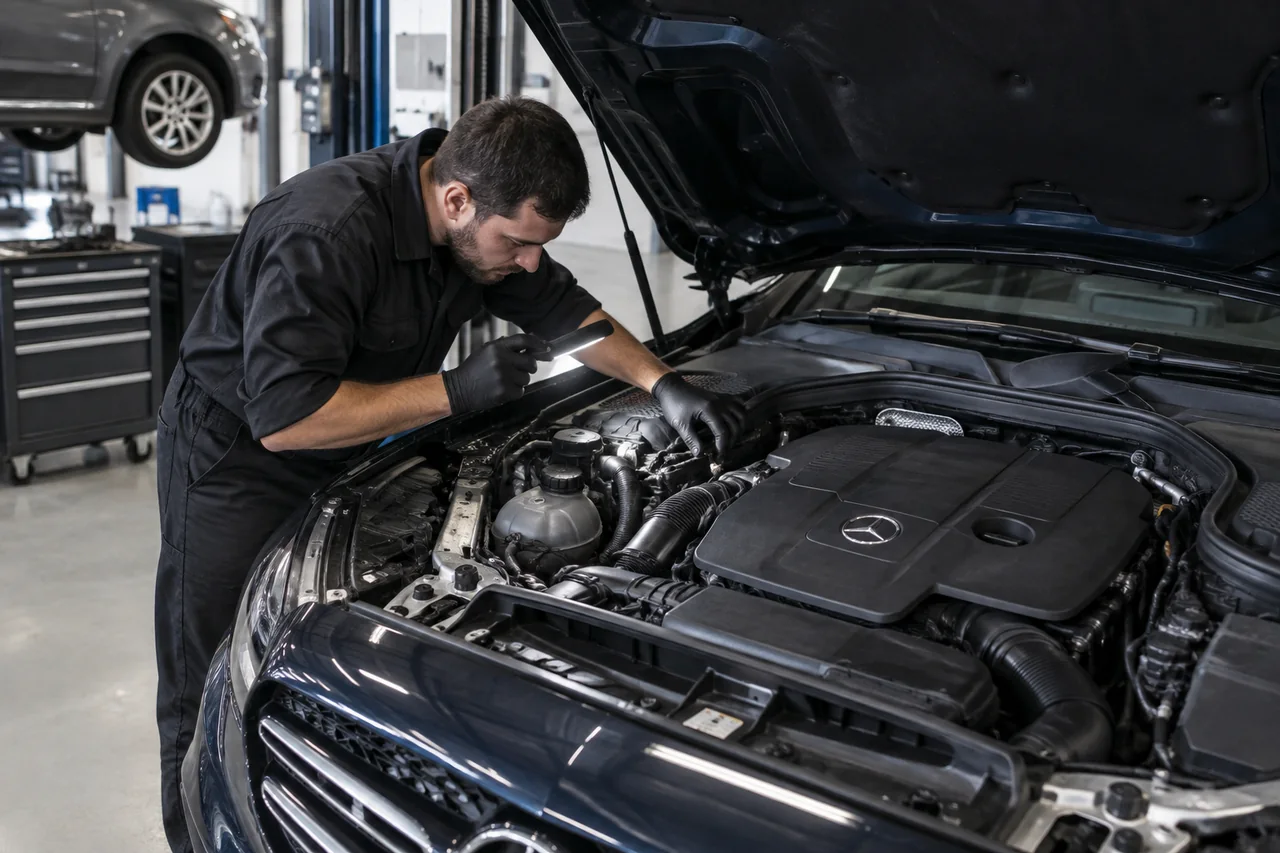
A malfunctioning crankcase ventilation system can cause rough running, oil leaks, and increased oil consumption in your Mercedes-Benz C300. Whether you need to replace a standalone PCV valve or a larger oil separator assembly, accurate diagnosis and engine identification come first. The C300 badge spans multiple engines and model years, so checking your VIN-specific parts catalog prevents ordering the wrong component. This guide explains how to locate the system, interpret symptoms, and understand the replacement scope before you begin.
Identify Your Mercedes-Benz PCV System Before Ordering Parts
The PCV system routes blow-by gases from the crankcase back into the intake manifold, where they burn during combustion. This process controls crankcase pressure and prevents oil vapor from escaping to the atmosphere. A pressure regulator or oil separator is often integrated into the system to control flow and return liquid oil to the sump. On many Mercedes-Benz engines, the component you might call a PCV valve is actually part of a larger ventilation assembly mounted on the valve cover or connected by breather hoses.
Before ordering parts, gather the model year, engine identification, and VIN. Engine codes such as M272 or M274 determine the exact ventilation design, which may include a replaceable diaphragm, a complete oil separator, or both. The C300 name alone does not specify which engine is installed, and parts are not interchangeable between generations. Using a VIN-based lookup with your dealer or parts supplier ensures that the replacements seals and housing are compatible with your specific crankcase ventilation layout.
Locate the PCV Components on Your C300
Locating the PCV components on your C300 requires an engine-specific service diagram. The diagram will label the pressure regulator, oil separator, and breather hoses with reference points that help you distinguish the ventilation plumbing from nearby fuel, coolant, and wiring systems. Without this diagram, it is easy to confuse the PCV lines with other vacuum or emission hoses. Take time to identify each component by its official name rather than guessing from appearance alone.
Perform a visual inspection only with the engine off and cool. Look along accessible hose connections for cracking, looseness, or oil residue that may indicate a vacuum leak. Do not disconnect anything during inspection, as brittle plastic fittings can break easily. On some C300 engines, the PCV diaphragm sits under the engine cover or near the firewall, making it difficult to see. If the components are concealed or access is obstructed, professional inspection is the safer approach and may prevent accidental damage.
Check Whether Symptoms Support a PCV Diagnosis
Symptoms such as a high-pitched whistle, unstable idle, oil seepage around the valve cover, or rising oil consumption can suggest a crankcase ventilation problem, but they are not proof of PCV failure. Damaged vacuum lines, intake manifold leaks, or a failing crankcase pressure regulator can produce identical clues. For example, a torn breather hose may mimic a stuck PCV valve by allowing unmetered air into the intake. Rule out these overlapping faults before replacing parts.
A technician may confirm a diagnosis using specified crankcase-pressure measurements, smoke testing for vacuum leaks, and scan data from the engine control unit. Any diagnostic trouble codes must be interpreted in a vehicle-specific context, because a code points to a system anomaly, not necessarily a failed part. Codes related to idle control or fuel trim can appear when crankcase ventilation is disturbed. If you experience severe running problems, an oil-pressure warning, or oil actively leaking onto hot components, stop driving immediately and seek professional assistance.
Define the Replacement Scope for Your C300
Once the engine identification is confirmed, you can determine whether the repair involves a serviceable valve, a replaceable diaphragm, or a complete oil separator assembly. Some C300 engines use a simple PCV valve threaded into the valve cover, while others integrate the pressure regulator into a plastic housing that must be replaced as a unit. Check the applicable service procedure for access requirements, which may include removing the engine cover, intake ducting, or even the valve cover itself.
Before finalizing the repair scope, inspect all hoses, connectors, seals, and related ventilation components for wear. A new PCV valve will not fix a cracked breather hose, and reused seals can leak. Confirm replacement-part fitment through vehicle-specific documentation rather than assuming interchangeability between engines or model years. Restricted access, fragile plastic connections, and the need for post-repair testing often make professional service the appropriate choice for Mercedes-Benz PCV replacement.
Understand What a Mercedes-Benz PCV Replacement Includes
A Mercedes-Benz PCV replacement begins with confirming the fault through diagnostic testing, then establishing access to the component. The technician replaces the specified valve or separator along with any required seals, gaskets, or hoses that were disturbed. After reassembly, connections are restored and the system is checked for leaks. The exact procedure varies by engine, so using the correct service information for fastener specifications and sealing requirements is essential to avoid creating new faults.
Never force brittle plastic fittings, modify the ventilation plumbing, or improvise with aftermarket parts that do not match the original design. These shortcuts can lead to vacuum leaks, oil leaks, or increased crankcase pressure. A written estimate should clearly state the assembly being replaced, associated parts like seals and hoses, access labor, diagnosis time, and verification steps. The repair cost depends on the confirmed assembly and how much disassembly is required, so avoid relying on generic price quotes without knowing your engine.
Verify the Repair and Investigate Persistent Symptoms
Verification after the repair should address the original complaint. The technician should check for vacuum or oil leaks, listen for abnormal noises such as whistling, and confirm that idle quality and fuel trims have returned to normal. If the original symptom was increased oil consumption, a follow-up observation period may be necessary. Clearing stored fault codes alone does not demonstrate a successful repair, because the underlying condition may still exist without immediately setting a new code.
If symptoms persist, repeat crankcase-pressure testing and a scan-data review are needed. A new PCV valve will not compensate for a clogged hose or a misdiagnosed intake leak. After service, pay attention to recurring warning lights, fresh oil spots under the car, or the return of unstable idle. Should any of these appear, renewed diagnosis is required rather than assuming another PCV replacement will solve the problem. Systematic troubleshooting will identify the true cause.