Mazda CX-5 Tire Pressure: Placard and TPMS Basics
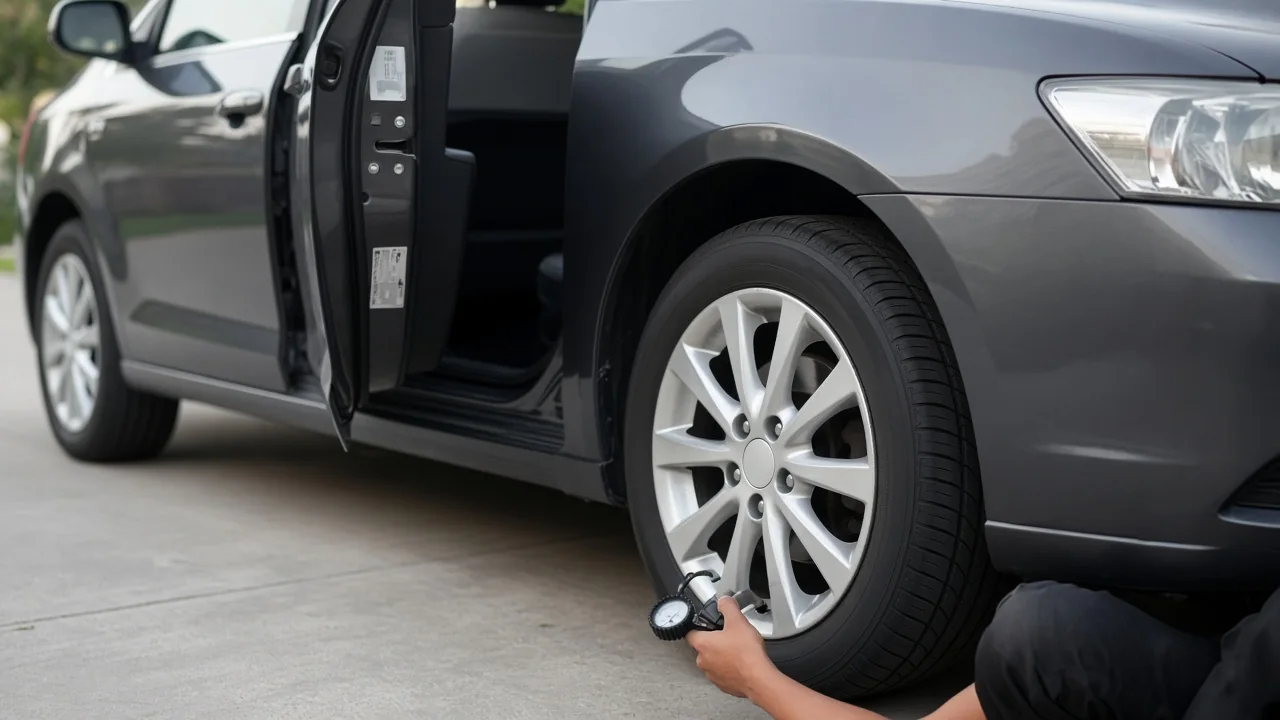
Correct Mazda CX-5 tire pressure depends on the tire information placard for that vehicle, read as cold tire pressure with a tire pressure gauge. The driver's door jamb and the owner's manual are the usual places to find those PSI values and any loading notes. Understanding a TPMS warning light, and knowing when a reset or a leak inspection is appropriate, keeps inflation decisions tied to the CX-5 rather than to the maximum molded on a tire sidewall.
Find the Recommended Pressure for Your CX-5
Recommended cold inflation for a CX-5 is the figure printed on that vehicle's tire information placard, not a single PSI copied from another trim or model year. Different CX-5s can carry different tire sizes, load ratings, and separate front and rear specifications, so one published number cannot be treated as correct for every example. Read the front and rear entries separately, then confirm that the tire size printed next to those pressures matches the size actually mounted. If the sizes differ, use vehicle-specific documentation rather than guessing from a neighboring figure.
The PSI molded into a tire sidewall is a maximum capacity marking, not the CX-5's recommended inflation target. Inflating to that sidewall number can over-pressurize a tire relative to the placard and change ride, wear, and load behavior. If the label is missing, damaged, or unreadable, or if aftermarket wheels and tires have replaced the original sizes, do not invent a substitute PSI. Consult the owner's manual for that model year or a qualified tire professional who can match the actual equipment to Mazda's vehicle-specific guidance.
Locate and Read the Tire Information Placard
Start at the driver's door opening. Inspect the driver's door jamb, the B-pillar face that appears when the door is open, and the nearby door edge for the tire information placard. Look for a printed label that pairs tire sizes with inflation pressures rather than a VIN plate or airbag warning. Wipe the area if dirt or paint overspray hides the type. That location keeps the Mazda CX-5 tire pressure specification with the vehicle even after a tire shop has discarded old paperwork.
Once you find the label, identify the listed tire sizes, the pressure unit, usually PSI in the United States, and any separate spare-tire entry. Front and rear rows can differ, and a compact spare, if listed, may use a different pressure than the road tires. Do not assume numbers that are not printed there. The owner's manual for that CX-5 confirms where the placard should be and may add loading notes, such as whether occupants or cargo change recommended cold inflation. Use those pages to interpret the label, not to replace it with a generic chart.
Check Tire Pressure When the Tires Are Cold
Cold tire pressure means a reading taken before the tires have been warmed by driving, typically after the CX-5 has been parked for at least three hours and has not just been driven a long distance. Park on level ground, set the parking brake, and check each road tire with a reliable tire pressure gauge at the valve stem. Compare every reading with the matching front or rear placard value. Checking only one corner, or relying on a visual look at the sidewall, will miss a slow leak on another wheel.
If a cold reading is low, add air in small amounts and recheck until the gauge matches the placard. If a cold reading is high, release a little air and recheck; do not chase a single blast from a station compressor. Driving heats the air inside the tire and raises pressure above the cold figure. Do not bleed air from a warm tire solely to force the gauge back to the cold Mazda CX-5 tire pressure target, because the tire will then sit underinflated after it cools overnight.
Understand What a TPMS Warning Can Tell You
A TPMS warning light is a prompt to stop somewhere safe and measure actual pressures; it is not a diagnosis of a failed sensor, a puncture, or a specific wheel. Temperature drops can lower cold tire pressure enough to trigger the lamp after a cold night. Gradual air loss through a valve, bead, or tread puncture can do the same over days. The alert does not tell you which of those is happening, so a tire pressure gauge on every road tire, and on the spare if it is monitored, is the next step.
The model-year owner's manual is the authority for whether a steady lamp, a flashing lamp, or a warning that returns after inflation has a different meaning on that CX-5. Some systems illuminate for low pressure; others flash to indicate a system fault that still needs pressure verification. A tire can still be low enough to affect handling, heat, and wear even when no TPMS warning light is displayed, because the warning may appear only after pressure has already fallen well below the placard. Regular cold checks remain necessary.
Confirm the Correct TPMS Reset or Initialization Process
Before attempting any TPMS reset, identify the CX-5 model year and read the procedure in that year's owner's manual. Mazda CX-5 tire pressure monitoring hardware and menus have varied, so a sequence that works on one year may not apply to another. Initialization, sensor relearning, and automatic warning clearance depend on the installed system. Do not assume every CX-5 has a dedicated reset button, a hidden switch, or a cluster menu item; looking for a control that is not documented can waste time while a tire remains underinflated.
Correct cold pressures come first. Inflate to the placard, inspect for obvious leaks, and recheck with a gauge before following any documented reset or initialization. Clearing a lamp without fixing a leak only hides the next loss of air. If the TPMS warning light remains after pressures are verified and the applicable manual procedure is completed, stop repeating button presses or ignition cycles. Have the system tested professionally; a sensor, receiver, or wiring issue needs diagnosis that a reset sequence cannot substitute.
Know When Pressure Loss Needs Professional Attention
A tire that needs air again after a short interval is asking for inspection, not another fill-and-forget cycle. Repeated Mazda CX-5 tire pressure loss can come from a punctured tread, a leaking valve core or valve stem, a damaged bead seal, or a cracked wheel, and adding air does not identify which one. Note which corner is dropping, then look without removing the object for cuts, bulges, cords, or something embedded in the tread or sidewall. Those observations help a technician start in the right place.
Rapid deflation, a visible bulge, cords showing, a bent wheel, or sudden pulling, vibration, or instability are reasons to stop somewhere safe and arrange assistance rather than drive on to a preferred shop. Do not attempt puncture repair, TPMS sensor diagnosis, or wheel removal at the roadside; those jobs need proper equipment and inspection of the tire's inner structure. A professional can determine whether the casing is still serviceable, whether a valve or sensor is leaking, and whether the wheel itself is the path of air loss.