Mazda 2.5 Skyactiv Engine Problems: What Owners and Buyers Should Know
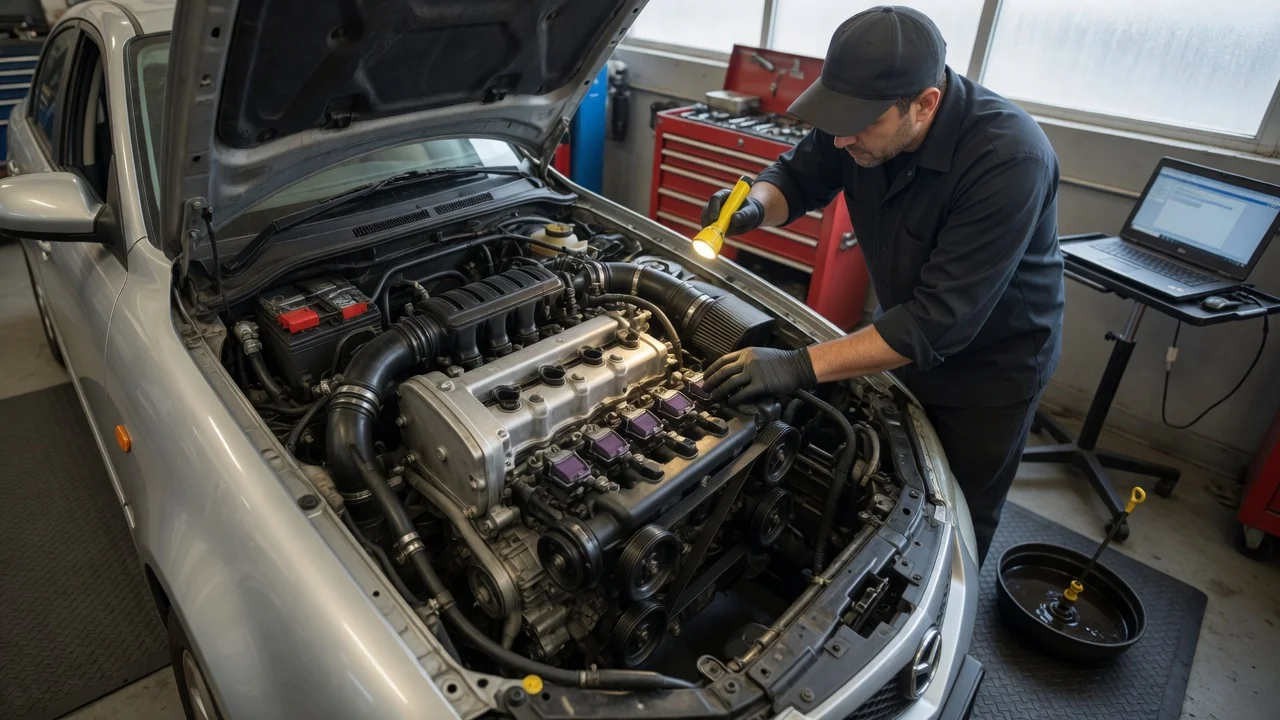
The short answer: the Mazda 2.5-litre Skyactiv-G is not known for one defining, widespread mechanical failure. Owner and repair discussions tend to focus on a small set of concerns. These are carbon deposits typical of direct-injection engines, misfires, oil consumption on some engines, the feel of cylinder deactivation on later naturally aspirated versions, and heat and maintenance sensitivity on the turbocharged version. How much any of these matters depends on which version of the engine you have, its model year and its maintenance history. This guide does not have failure-rate data or a verified list of service bulletins, so it cannot rank these issues by frequency. Where that matters, it says so.
Which engine this covers
Skyactiv-G is Mazda's name for its gasoline engine family. The 2.5-litre version is a four-cylinder engine with direct fuel injection, meaning fuel is sprayed straight into the cylinder rather than into the intake port. It also has a high compression ratio for a gasoline engine. The 2.5 has been used in several Mazda models, including the CX-5, Mazda6, Mazda3, CX-30 and CX-50, with the turbocharged version also used in the CX-9 and some other models. Availability varies by market and model year. Check your owner's manual or a VIN decode to confirm exactly which engine your vehicle has.
Variant | Key distinguishing feature | Concerns most relevant to it; Naturally aspirated 2.5, without cylinder deactivation | Earlier versions of the engine | Intake valve carbon deposits, ignition-related misfires, normal direct-injection noise; Naturally aspirated 2.5, with cylinder deactivation | Can shut down two cylinders at light load to save fuel; added in later model years, timing varies by model and market | Everything above, plus vibration or roughness during deactivation and questions about oil consumption; 2.5 turbo (Skyactiv-G 2.5T) | Turbocharged version | Everything that applies to direct injection, plus greater sensitivity to oil quality, change intervals and heat
Commonly raised concerns, and what is and isn't established
Carbon buildup on the intake valves
In a direct-injection engine, fuel no longer washes over the back of the intake valves. Oil vapour from the crankcase ventilation system can therefore leave deposits there over time. This happens across direct-injection engines from many manufacturers and is not unique to Mazda. Heavy deposits can contribute to rough idle, hesitation or misfires, often first noticed on cold starts. How quickly deposits build up on the Skyactiv-G 2.5, and at what mileage they typically cause symptoms, is not established by the evidence available here. Driving pattern and oil condition plausibly affect it. A technician can confirm deposits by looking at the valves with a borescope, a small camera inserted into the intake. That avoids replacing parts on suspicion.
Misfires and rough running
A misfire means one cylinder is not burning its fuel properly. On any gasoline engine, the usual candidates are worn spark plugs, a failing ignition coil, a fuel injector problem, a vacuum leak, valve deposits or a loss of compression. A misfire report on a Skyactiv-G 2.5 is a symptom to trace, not proof of a specific failed part. The diagnostic section below covers how to narrow it down.
Oil consumption
Some owners report the engine using oil between changes. Concern has been raised particularly about later engines with cylinder deactivation. The supplied evidence does not establish how common this is, which model years are affected, or whether Mazda has issued a specific fix. Treat claims about particular years as unverified until you check them against Mazda service information or a dealer lookup for your VIN. Measured consumption, recorded over a set distance, is far more useful than an impression that the oil seems low.
Cylinder deactivation behaviour
On versions with cylinder deactivation, the engine runs on two cylinders under light, steady load, then switches back to four when more power is needed. Some drivers notice a slight change in vibration or sound during these transitions. A subtle change may be normal. Pronounced shuddering, a check-engine light or stored codes are not, and should be diagnosed. The available evidence does not quantify long-term durability effects of the system.
Ticking noise
Direct-injection engines commonly make a light, rapid ticking at idle from the high-pressure fuel pump and injectors. This is usually normal. A deeper knock that changes with engine speed or load, or a new noise that gets louder, is different and needs attention.
Turbocharged version
Turbocharging adds heat and puts more demand on engine oil. As with turbocharged engines generally, following Mazda's specified oil grade and change intervals matters more than on the non-turbo engine. The evidence here does not identify a documented, turbo-specific defect pattern for the 2.5T, so no failure mode is claimed for it.
Gaps in the available evidence
This article has no supplied data on failure rates, warranty claim figures, specific recall campaigns or technical service bulletin numbers for the 2.5 Skyactiv-G. It cannot tell you which model year is best or worst, or rank these concerns by frequency. For a specific vehicle, the most reliable sources are a recall check by VIN through your national vehicle safety authority, a Mazda dealer's lookup of open campaigns and service bulletins, and the car's own service records.
If your engine has a symptom: what to check next
A diagnostic trouble code tells you what the engine computer detected, not which part failed. For example, a misfire code says a cylinder misfired. It does not say whether the plug, coil, injector or valve is at fault. Use codes as a starting point, then confirm with checks like those below.
Symptom | Plausible causes | Checks and what they indicate; Steady check-engine light, rough idle or hesitation | Spark plug, ignition coil, injector, vacuum leak, intake valve deposits | Read stored codes. Generic misfire codes P0300 to P0304 indicate random or cylinder-specific misfire. If a misfire follows a coil when it is swapped to another cylinder, the coil is likely at fault. If it stays with the cylinder, look at the plug, injector, compression or valve deposits next. A borescope inspection confirms or rules out heavy deposits. Oil level dropping between changes | Burning oil internally, external leak, crankcase ventilation (PCV) fault | Look for wet spots under the car and on the engine. Have a measured oil consumption test done, with the level documented over a set distance. Blue-grey exhaust smoke, especially on startup, points toward internal burning. Spark plugs fouled with oil can identify an affected cylinder. Vibration at steady light-throttle cruising (engines with cylinder deactivation) | Normal deactivation transition, worn engine mounts, misfire | Note whether it occurs only at light steady load and disappears under acceleration, which suggests deactivation. Check for stored codes. Have the engine mounts inspected. Persistent or worsening vibration with codes needs a dealer diagnosis. Ticking at idle | Normal injector and high-pressure pump noise, valvetrain noise, exhaust leak | A light, even tick that does not worsen is typically normal for direct injection. A tick that grows louder, changes character or comes with a warning light needs inspection. Knocking that rises with engine speed or load | Internal mechanical wear, detonation | Do not keep driving to see if it goes away. Check the oil level, then arrange professional diagnosis.
When to stop driving and get professional help
A flashing check-engine light: this indicates a severe misfire that can overheat and damage the catalytic converter. Reduce load and stop as soon as it is safe. A low oil pressure warning, or an oil level below the minimum mark. The temperature gauge rising toward hot, or steam from the engine bay. A deep knocking noise or a sudden loss of power. A strong smell of fuel.
Practical guidance for owners and used-car buyers
Run a VIN-based recall and service campaign check before buying, and ask a dealer whether any open campaigns apply. Ask for service records, and look for oil changes at or within Mazda's recommended interval, using the specified oil grade. If possible, listen to a cold start and check for rough idle, smoke or warning lights. On a car with cylinder deactivation, drive at a light steady throttle and note any pronounced vibration. For a turbo model, give extra weight to maintenance history and consider a pre-purchase inspection that includes reading stored codes. If you already own one, check the oil level regularly between changes so you have actual data if consumption becomes a concern.
Overall, the issues discussed for the Mazda 2.5 Skyactiv-G are mostly ones shared with other modern direct-injection engines, plus version-specific points for cylinder deactivation and the turbo. The available evidence does not support labelling the engine as either trouble-free or problem-prone. A specific car's records, recall status and a proper diagnosis of any symptom will tell you more than the engine's general reputation.