Car audio amplifier remote turn on wire
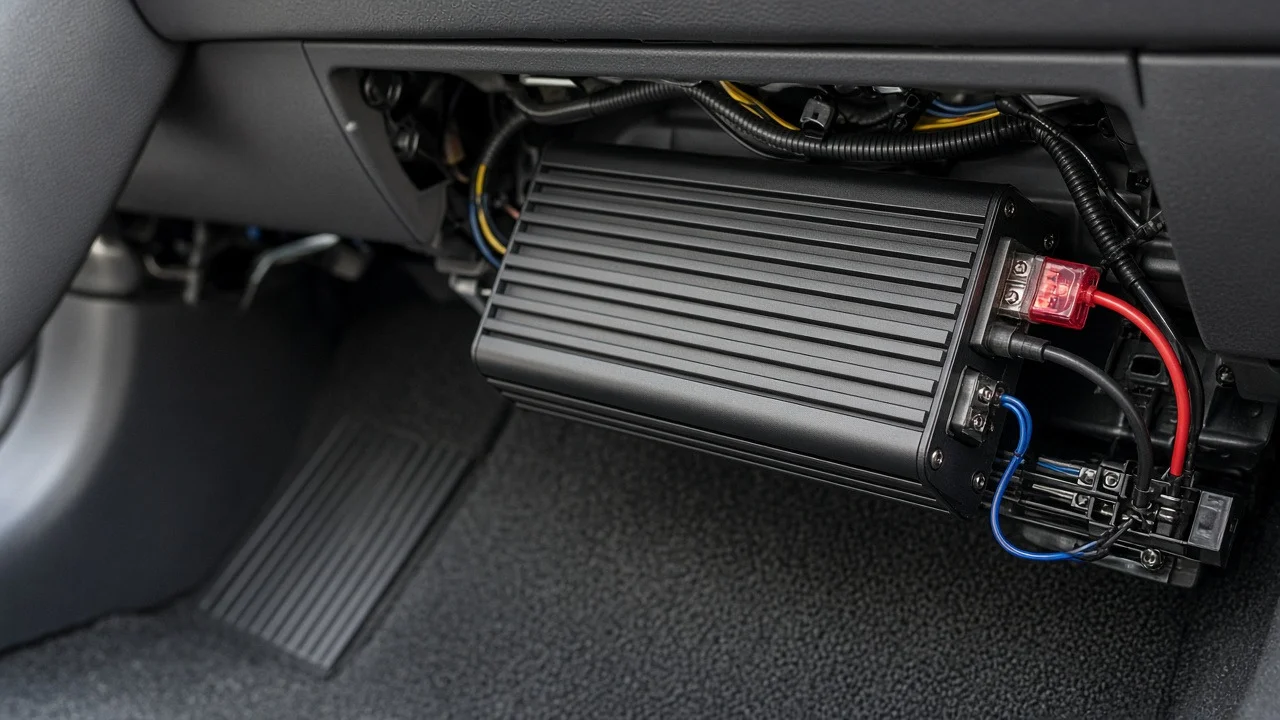
A car audio amplifier remote turn on wire is the small control lead that tells an aftermarket amplifier when to switch on with the audio system. Without a reliable turn-on signal, the amp can stay asleep, draw current unexpectedly, or power up at the wrong time. The wire typically connects from a head unit output to the amplifier remote terminal, but installations vary with factory audio source units, vehicle integration modules, and accessory power routing. Understanding this circuit helps avoid noise, battery drain, and no-sound complaints after an install.
Essential answer
The remote turn on wire is a low-current control conductor, not a main power feed. It carries a 12-volt signal from the head unit or another switched audio source to the amplifier remote terminal. When the source turns on, the signal voltage rises and wakes the amplifier’s internal power supply. When the source turns off, voltage drops and the amplifier shuts down. This lets the amplifier follow the radio or infotainment system instead of staying active whenever the main battery cable is connected.
In many aftermarket head units, a blue or blue-white lead provides this output. The amplifier side uses a terminal labeled REM, remote, or turn on. The connection is not the same as speaker wiring or the thick constant power cable. If the vehicle keeps a factory head unit, there may be no dedicated aftermarket remote lead. A line output converter, switched accessory circuit, or vehicle integration module may then supply the turn-on reference while preserving signal reception and antenna behavior.