7.3 Powerstroke Oil Pressure Sensor Location
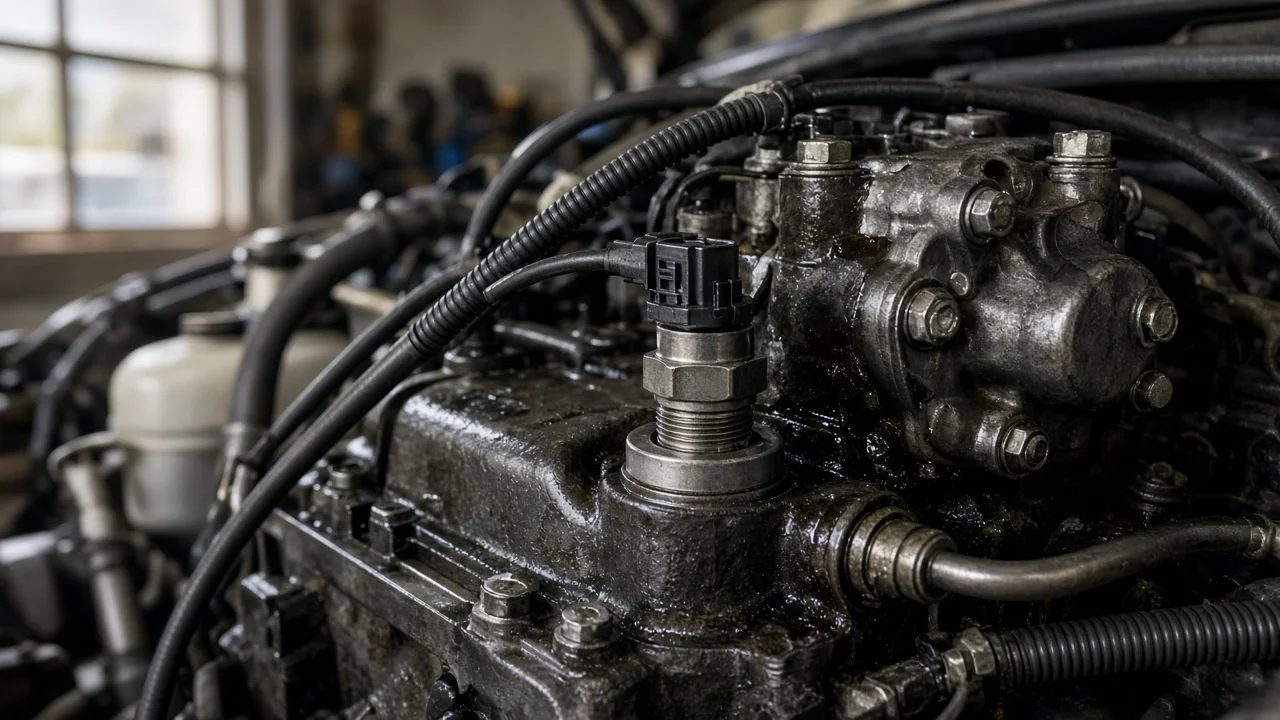
Finding the oil pressure sensor on a 7.3 Powerstroke starts with knowing which side of the engine to inspect. The sensor reads lubricating system pressure and feeds that signal to the gauge or warning circuit, but its exact mounting point can be confused with nearby threaded ports, switches, and harness connectors. Because the engine bay is tight and several accessories crowd the top of the block, a clear identification routine saves time. Understanding the sensor’s role also helps you interpret a low or erratic reading instead of assuming the sending unit itself has failed.
Essential answer
On the 7.3 Powerstroke, the engine oil pressure sensor is typically mounted toward the top rear of the engine, near the high-pressure oil pump reservoir or in the valley area. This location places the sensor in contact with lubricating oil after it has passed through the main oil gallery or reservoir, allowing the sender to respond to changes in base oil pressure. The exact position may vary by model year and whether the vehicle uses a gauge sender, a switch, or both. Because the engine differs from later Powerstrokes, the sensor is not always located where it is on the 6.0L or 7.3L IDI engines.
The sensor should be distinguished from the injection control pressure sensor and the high-pressure oil system components. The engine oil pressure sensor monitors the low-pressure lubricating side that supplies bearings, turbocharger, and piston cooling, while the high-pressure system uses a separate circuit. When a driver notices the factory gauge dropping or an oil warning light coming on, the signal path from this sensor is one part of the diagnosis. Wiring, connector condition, and actual mechanical oil pressure should all be considered before replacing the sender.
Identification and location
Look for the oil pressure sensor at the rear of the engine’s valley, often near the fuel filter housing or to the side of the high-pressure oil reservoir. The sensor may be a single-wire switch for a warning lamp or a variable-resistance sender for a gauge, and it is commonly threaded into an oil passage in the block or reservoir housing. A pigtail with a single wire or a small connector body is a useful visual cue, but several other connectors run along the same area. The best identification is to trace the harness from the sensor to confirm it matches the oil pressure circuit rather than a temperature or injection-related sender.
Position accuracy improves when you approach the engine from the passenger side with the vehicle on level ground and provide enough light to see behind the fuel bowl. The sensor’s location may be partially hidden by the turbocharger pedestal or high-pressure oil lines, so a small inspection mirror can help without removing components. While some trucks put the sender on the driver-side rear of the block, the valley location is the most commonly referenced point on the 7.3 Powerstroke. If the installed component does not match the expected connector or thread size, verify the application before treating it as the oil pressure sender.