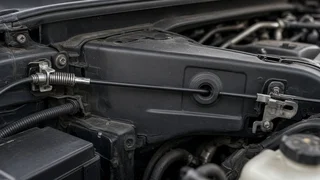
Hyundai and Kia hood release cable replacement
A hood release cable that stretches, binds, or snaps can leave you unable to inspect the engine bay, check fluids, or reach routine service points on a Hyundai or Kia. The concern often appears with a handle that moves too easily, feels gritty, or stops returning, and corrosion at the latch mechanism is a frequent contributor. Understanding the cable path and latch relationship helps you judge whether the issue is the inner wire, the outer sheath, or a misaligned striker before choosing a replacement approach.
Essential answer
Replacing a hood release cable on these vehicles usually means routing a new inner cable from the cabin handle, through the firewall or inner fender area, to the hood latch assembly. The job is generally straightforward for a home mechanic, but the exact routing varies by platform. A Sonata’s longer nose and different cowl layout can place the cable closer to the brake booster and strut tower, while a Rio’s compact engine bay often runs it along the driver-side inner fender. Confirming the original cable path before removal prevents kinked bends that would shorten the new cable’s life.
The practical distinction between a replacement cable and a latch problem matters because a new cable will not fix a seized latch. When the handle pulls with little resistance and the hood stays closed, inspect whether the release lever on the latch moves with the cable end. Sometimes the inner wire separates inside the sheath near a corroded latch, but other times the latch return spring has failed or the striker is misaligned. An accurate diagnosis tells you whether to order a cable, service the latch, or address both during one repair.