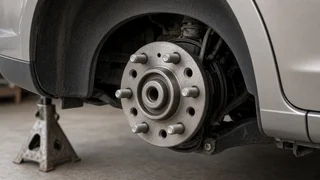
Honda Civic wheel bolt pattern by year

Wheel fitment questions for a Honda Civic often begin with a simple measurement, yet the exact spacing of the lug holes can shift between model generations and market versions. For a 2012 Civic, the commonly referenced bolt circle uses five lugs arranged on a 4.5-inch or 114.3 mm diameter, but that figure by itself does not complete the fitment picture. Center bore, offset, thread pitch, and wheel width all influence whether a replacement wheel or spacer sits correctly. Understanding how the bolt pattern interacts with those dimensions helps a buyer avoid returns and unsafe mounting assumptions when comparing 2010, 2014, or 2016 Civic applications.
Essential answer
A 2012 Honda Civic wheel bolt pattern is normally described as 5x114.3, meaning five lug studs on a circle with a nominal diameter of 114.3 millimeters. The same dimension is often called 5x4.5 in inch-based fitment guides. This specification appears across common Civic body styles for that model year, but it should not be treated as a universal Honda value for every generation. A 2010 Civic generally shares that five-lug 114.3 mm layout, while earlier small-car platforms may use a four-lug arrangement. A 2014 Civic also fits within the same five-lug family for mainstream trims, so wheels marketed for several ninth-generation years can often interchange when other dimensions match.
A 2016 Civic continues the five-lug 114.3 mm pattern on many versions, though the overall wheel and tire package changed with the newer platform. Matching only the bolt circle is not enough because the hub center diameter, wheel offset, lug seat shape, and thread pitch affect secure mounting. A wheel may have the correct lug spacing but still contact the brake caliper or sit proud of the fender. When a fitment guide says a wheel fits a Civic, it usually assumes a compatible center bore or hub ring, correct conical or ball seat hardware, and an offset within the range that clears suspension and bodywork.
For a practical check, count the studs and measure from the center of one lug hole across the hub to the center of the hole opposite it when the pattern has an even number. A five-lug pattern does not have a true opposite hole, so a bolt-circle gauge or manufacturer specification is more reliable than a tape measure. Because the same 5x114.3 dimension is shared by many vehicles, seeing a matching number on another car does not confirm that its wheels will fit a Civic. The stamped markings on a factory wheel typically include width, diameter, and offset but seldom spell out the bolt circle clearly enough for a quick used-wheel purchase.
Market specification can also change hub-related details even when the lug count and bolt circle look the same. A Civic built for one region may use a different wheel stud diameter or seat profile than a similar model sold elsewhere. For this reason, a replacement wheel should be checked against the specific model year and trim rather than assumed from photos or a broad “Civic wheel” listing. If the vehicle has aftermarket hubs or converted brakes, the original bolt pattern may no longer describe the current parts. The safe approach is to treat the 5x114.3 figure as the starting identification, then confirm the remaining mounting surfaces before installation.