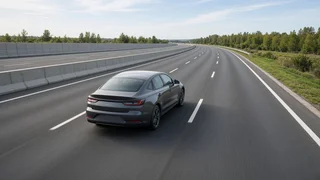
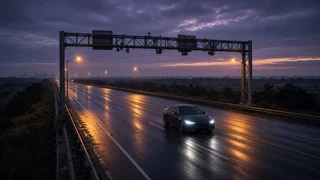
Driving the Eastern Peripheral Expressway
Driving on Eastern Peripheral Expressway asks you to manage high sustained speeds, limited interchange spacing, and open intercity surroundings. The route is designed to move through traffic around congested urban cores, so drivers encounter different demands than on a local arterial. Recognizing how access, visibility, following distance, road markings, and right of way work together on this type of controlled-access corridor helps you read traffic flow, anticipate lane changes, and respond safely when road conditions change or driver attention begins to fade during a long, repetitive run.
Essential answer
The essential answer is that this expressway is a high-speed, access-controlled peripheral route intended for through movement rather than stopping, turning, or local delivery traffic. Road markings and signage carry much of the information load because there are no intersections controlling right of way in the ordinary city-street sense. Drivers merge, maintain lane discipline, and exit by using dedicated ramps, which means any uncertainty about position should be resolved well before a weaving zone or deceleration lane appears.
Because the corridor bypasses built-up areas, visibility can change across open sections and overpasses, and following distance becomes the main buffer for unexpected slowdowns. A driver researching or using the road should treat it as a limited-access facility where planning an exit, reading advance signs, and holding a steady lane reduce the need for last-second corrections. The overall scope is route knowledge and driving behavior, not specific local services or interchange-by-interchange instructions.