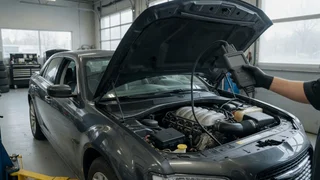
Look up Chrysler 300 check engine codes
A glowing check engine light on a Chrysler 300 means the onboard diagnostic system has stored at least one trouble code. Looking up Chrysler 300 check engine codes is the first step in converting that warning into useful evidence. The code does not name a failed part; it identifies a monitored circuit, sensor, emission function, or performance fault the computer has detected. Reading the code, reviewing freeze-frame data, and checking symptom conditions help narrow where the diagnosis should begin without guessing or replacing parts prematurely.
Essential answer
Looking up a Chrysler 300 check engine code starts with retrieving the alphanumeric diagnostic trouble code, or DTC, through the OBD-II connector. The code letter and digits point to the powertrain area involved, such as fuel, ignition, emissions, or transmission controls. A P0300-family code, for example, indicates the engine controller has detected misfires, while an EVAP code suggests the vapor recovery system is failing a self-test. The lookup gives direction only; the stored code must be interpreted together with live data and the conditions present when the light appeared.
Each DTC has a definition, but the same code can have different causes on different Chrysler 300 engines and model years. Manufacturer-dependent codes may require vehicle-specific service information for accurate interpretation. A circuit code means the controller saw an unexpected voltage or resistance, not necessarily a failed sensor. After noting the code, a confirmation test and inspection of the related wiring, connectors, and operating conditions should be part of the diagnosis. Clearing the code without identifying the underlying condition usually leaves the light able to return when the monitor runs again.