How to Replace a LEER Topper Key
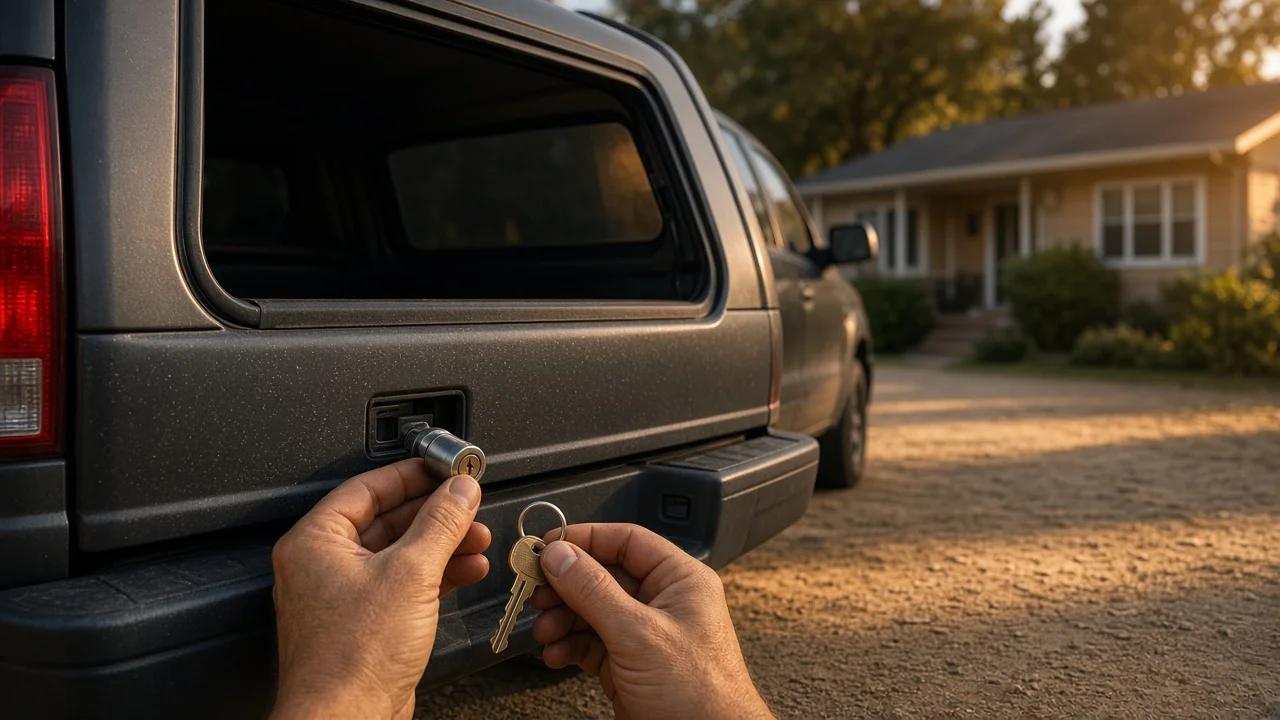
If you have lost or broken the key to your LEER truck cap, you can usually get a replacement without replacing the whole lock. Find the key code for your cap's locks, then have a LEER dealer or a locksmith supply a key cut to that code. If no code can be found, a locksmith can usually decode the lock or replace the lock cylinders. Caps with powered or remote locking add a second consideration: you may need a replacement remote transmitter as well as, or instead of, a mechanical key. The details depend on your cap's model, its age and the lock hardware it was built with, so treat the steps below as a general approach rather than a model-specific procedure.
What Kind of Key Your LEER Cap Uses
Most LEER caps and tonneau-style toppers use a simple mechanical key. That is a cut metal key that turns a lock cylinder in the rear door handle and, on many models, in the side windows or side access doors. These locks are separate from your truck's ignition and door locks. A topper key does not communicate with the vehicle, and it has no connection to the truck's immobilizer, the anti-theft system that stops the engine from starting without a recognized key.
Some caps, especially newer or higher-trim models, have optional central locking or keyless entry. A small remote transmitter, or a link to the truck's own locking system, locks and unlocks the cap. These caps typically still have a mechanical key as a backup. Before you order anything, work out whether you need a metal key, a remote, or both.
Mechanical key only: the most common setup; replaced by cutting a new key to the lock's code. Multiple locks keyed alike: the rear door and side windows often share one key, so a single replacement usually opens all of them. Powered or remote locking: may need a replacement transmitter paired to the cap's control module, plus a mechanical backup key.
Step One: Find the Key Code
A key code is a short series of letters and numbers that tells a key cutter exactly how to cut a key for a given lock. With the code, a replacement can be made without the original key and without taking the lock apart. Check these places:
The original key or a spare: codes are often stamped on the key head. The face of the lock cylinder: some locks show a code on or near the keyway. The paperwork that came with the cap: purchase documents, the owner's packet or a key tag. The dealer that sold or installed the cap: they may have recorded the lock information with your order. Identification labels on the cap itself: these usually identify the cap and its build rather than the key, but they can help a dealer find the original hardware.
Write the code down and keep it somewhere other than the truck. With the code on record, the next lost key is a routine order instead of a locksmith call.
Where to Get a Replacement LEER Topper Key
LEER dealers and truck accessory shops
An authorized LEER dealer is the most direct route when you have the key code. They can order a key cut to the code, identify the lock hardware your cap uses, and source replacement locks or handles if needed. Turnaround and cost vary by dealer and by the part involved, so ask before you commit.
Locksmiths
A locksmith can often cut a key from the code. Many can also make one without the code by reading the lock directly, which is called decoding or impressioning, depending on the method. This is often the faster option when you need access soon or the code is missing. Results depend on the lock design, so call ahead, describe the cap and lock, and confirm they work on truck cap or compartment-style locks.
Replacing the lock instead of the key
If no code is available, a key can't be decoded, or the cylinder is worn or damaged, replacing the lock cylinder or the whole handle assembly may be the practical fix. Replacement hardware usually comes with new keys. Replacing the lock also makes sense if you think a lost key could be used by someone else. If your cap has several locks, keep them all on one key by replacing them together or by asking for a matched set.
Option | Best when | Main consideration; Key cut from code (dealer) | You have the key code | Requires the code; ordering time varies; Key cut from code (locksmith) | You have the code and want it locally | Confirm they can cut that key blank; Locksmith decodes the lock | No code, but the lock works | Depends on lock design and locksmith capability; Replace lock cylinder or handle | No code, damaged lock or security concern | More parts and labor; keep all locks keyed alike; Replacement remote transmitter | Cap has powered or keyless locking | Must be paired to the cap's system
Caps With Remote or Keyless Entry
If your cap locks with a remote, a replacement transmitter generally has to be paired to the cap's control module before it will work. This is a form of key programming, but it is separate from programming a vehicle key with an immobilizer chip. The pairing method depends on the locking system fitted to your cap. A dealer familiar with LEER accessories is usually the best place to confirm which transmitter matches your system and how it is paired. If the cap's locking ties into the truck's own key fob, the truck's dealer or a qualified automotive locksmith may need to be involved instead. Either way, keep the mechanical backup key, since it is your way in if the remote battery or the powered system fails.
Proof of Ownership
Dealers and locksmiths may ask you to show that the cap is yours before they cut a key or open a lock, especially when you are working from a code. Policies vary, but useful documents include the truck's registration with your name on it, the cap's purchase receipt or installation invoice, and photo identification. Bringing these along can save a second trip.
If You're Locked Out Right Now
If you need into the cap urgently, a mobile locksmith is usually the quickest option. Some roadside assistance plans include lockout service, but coverage is often written around the vehicle's doors and ignition, so check whether your plan covers an aftermarket truck cap before you rely on it. Avoid prying the rear door or forcing the handle. Damage to the door seal, glass, latch or hinge can cost far more to fix than a new key or lock.
Preventing the Next Lost Key
Record the key code and store it away from the truck. Have at least one spare cut and keep it somewhere secure, not inside the cap. Keep the cap's purchase or installation paperwork with your vehicle records. If the locks stiffen, use a lubricant suitable for lock cylinders, so a key doesn't snap in a binding lock. For remote-entry caps, replace transmitter batteries before they fail completely.