Late ignition timing
When an engine fires each spark plug after the piston has already passed its ideal position, the result is late ignition timing. This condition shifts combustion pressure later in the power stroke, changing how the engine starts, idles, accelerates, and manages heat. Drivers may notice sluggish throttle response, reduced fuel efficiency, or an engine that feels flat under load. The subject spans mechanical distributor adjustment, electronic spark control, sensor inputs, and engine operating conditions. Understanding the essential answer requires separating a truly retarded spark event from other starting, fuel delivery, and cranking-speed problems that can produce similar sensations behind the wheel.
Essential answer
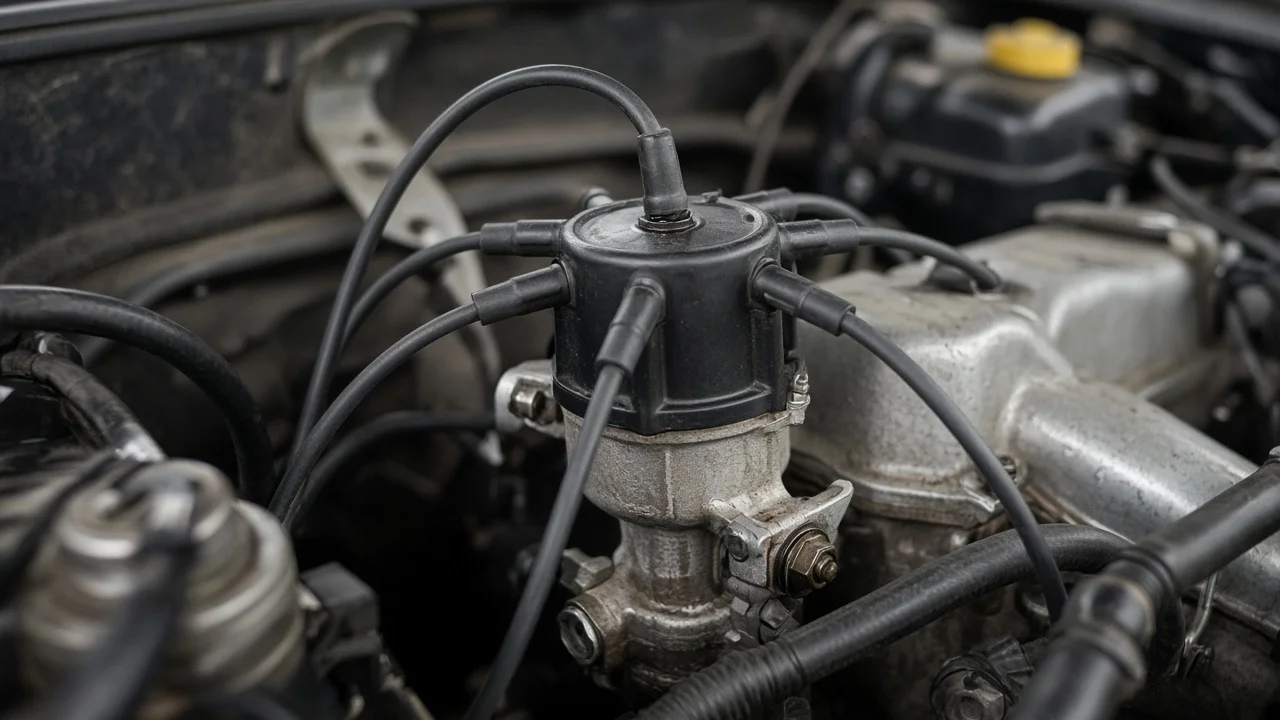
Late ignition timing means the spark plug fires closer to or after top dead center on the compression stroke instead of slightly before it. The delayed combustion event leaves the expanding gases with less crank angle to push the piston down efficiently, so usable cylinder pressure arrives later. This often feels like reduced low-speed torque, lazy throttle response, and an engine that needs more pedal to maintain speed. In distributor-equipped vehicles, a retarded base timing setting can cause the condition; in modern engines, the powertrain control module typically commands spark advance based on sensor data, so a faulty input may shift timing later than intended under specific loads or temperatures.
The condition differs from a simple weak spark or fueling issue because the igniter still produces a spark and the cylinder still fires. What changes is when combustion begins relative to piston movement. Late timing may raise exhaust gas temperature as burning continues into the exhaust port instead of finishing in the cylinder. During cranking, retarded spark can also reduce the engine's ability to catch cleanly, especially with a marginal battery state of charge or slower cranking speed. Diagnostic checks should confirm whether the actual commanded or base timing is truly late before replacement parts are considered, since rough running and hard starting also occur with fuel delivery faults, a tired starter circuit, or an ignition switch signal that drops while cranking.