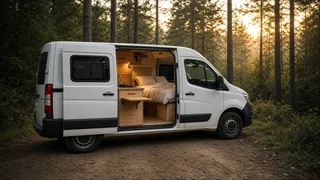
Land rover camper van conversion

A Land Rover camper van conversion turns a rugged utility vehicle into a compact living space, but the term deserves careful qualification. Most Land Rover models are sport utility vehicles rather than traditional vans, so the build usually centers on a Defender, Discovery, or similar body style. Owners often seek a vehicle that can travel unpaved trails while still providing a basic sleeping platform, storage, and camp kitchen. The conversion approach depends heavily on the model generation, body style, and intended use, which changes how the interior is planned and how the vehicle performs on and off pavement.
Essential answer
A Land Rover camper van conversion generally means modifying a Land Rover so its rear cabin can serve as a small camper. For many owners this involves a Defender hardtop or station wagon rather than a true van, because the boxy rear body offers a practical base for a sleeping platform and modular storage. The result is less like a traditional motorhome and more like an expedition vehicle, where durability, ground clearance, and four-wheel drive remain central to the design.
The scope of the project varies with the vehicle model generation and powertrain configuration. A long-wheelbase Defender provides more interior length than a short-wheelbase model, while a Discovery offers a different roof height and trim level. Since no single factory layout defines the conversion, the essential answer is that this is a custom build rather than a standardized product. The owner’s priorities—sleeping capacity, water storage, or load carrying—shape the final layout far more than a fixed specification would.