John Deere X485 Engine Oil: Type, Capacity, and Service Guide
Direct Answer and Scope
For the liquid-cooled, three-cylinder gasoline engine used in the John Deere X485 garden tractor, the essential engine oil requirement is a high-quality detergent oil meeting API service classification SJ or higher. The factory-favored viscosity is SAE 10W-30 for general temperature operation. John Deere also lists SAE 5W-30 as acceptable for colder climates where temperatures remain below 32 degrees Fahrenheit (0 degrees Celsius), and SAE 30 as an option for warmer, consistently above-freezing conditions. The total engine oil capacity, including the filter, is 2.1 U.S. quarts, or 2.0 liters.
Viscosity Selection by Temperature
Oil viscosity should be matched to the expected ambient temperature during the operating season. SAE 10W-30 is the broadest single recommendation for this tractor and suits most mowing and property maintenance work. If the tractor is used primarily in cold weather, such as for snow removal with a blade or blower, 5W-30 provides easier cold starts and faster oil circulation. Straight SAE 30 oil is acceptable only when temperatures will consistently stay above 32 degrees Fahrenheit. Avoid multi-viscosity oils that do not carry the specified API rating.
Oil Type and Additive Requirements
The X485 gasoline engine requires a conventional or synthetic detergent oil labeled with API service classification SJ, SL, SM, or a later letter designation for gasoline engines. Oils marketed specifically for diesel service, such as API CK-4 or FA-4, are not recommended unless the container also clearly lists an approved gasoline rating. Consult the operator's manual for the exact API letter rating applicable to the engine serial number, as later production units may specify a newer API class. The engine is a gasoline-fueled powerplant, so diesel-only formulations should be avoided.
Engine Oil Capacity and Filter
The total fill volume is 2.1 U.S. quarts, or 2.0 liters, when the oil filter is replaced at the same time. The oil capacity without a filter change is slightly less, but the filter should be replaced at every oil change interval. Because the quantity is small, measure precisely and recheck the dipstick after running the engine briefly and allowing it to settle. Overfilling can cause foaming, reduced lubrication, and oil leaks from the crankcase breather.
Condition | Recommended Oil | Notes; General use, above 0°F | SAE 10W-30 | Factory primary recommendation; Cold weather, below 32°F | SAE 5W-30 | Easier cold starts; Warm climate, always above 32°F | SAE 30 | Single-grade option; Required API service | SJ or higher, gasoline rated | Check manual for exact letter; Capacity with filter | 2.1 U.S. qt (2.0 L) | Includes filter fill
Service Procedure Reminders
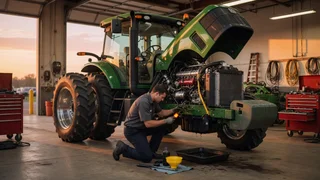
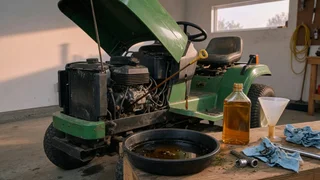
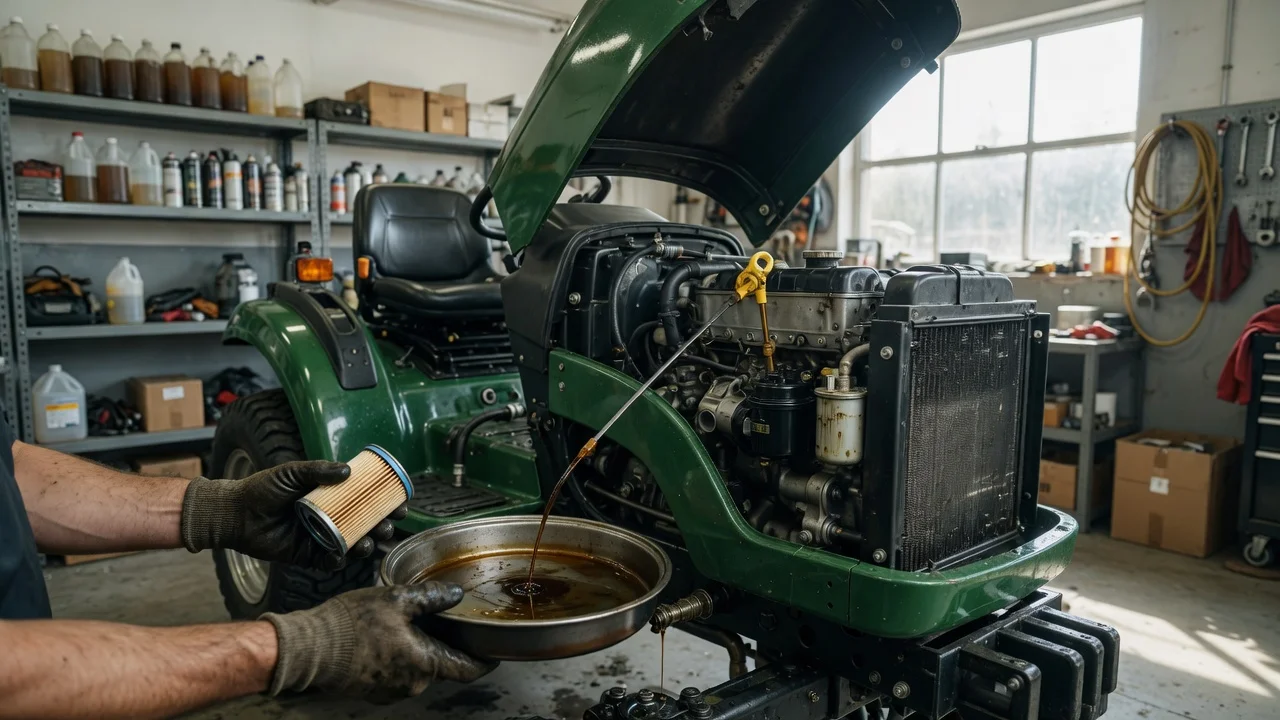
Before draining, run the engine for a few minutes to warm the oil so it flows out more completely. Place a suitable drain pan beneath the engine, remove the drain plug, and allow the oil to drain fully. Replace the oil filter, applying a thin film of fresh oil to the new filter gasket and tightening it by hand according to the filter manufacturer's instructions. Refill with the selected viscosity and API-rated oil, then start the engine and check for leaks at the drain plug and filter. Stop the engine, wait for the oil to settle, and verify the level on the dipstick.
What the Evidence Does Not Specify
This guide covers engine oil only. It does not include the hydrostatic transmission oil or hydraulic system fluid, which are separate reservoirs with different specifications. The exact oil change interval in hours is stated in the operator's manual for the specific serial number range and varies with operating conditions, so it is not repeated here as a universal figure. If the tractor is operated on steep slopes or in exceptionally dusty conditions, consider shortening the service interval beyond the standard schedule.