Jeep Wrangler Brake Pads: What to Know Before Replacing Them
Short answer
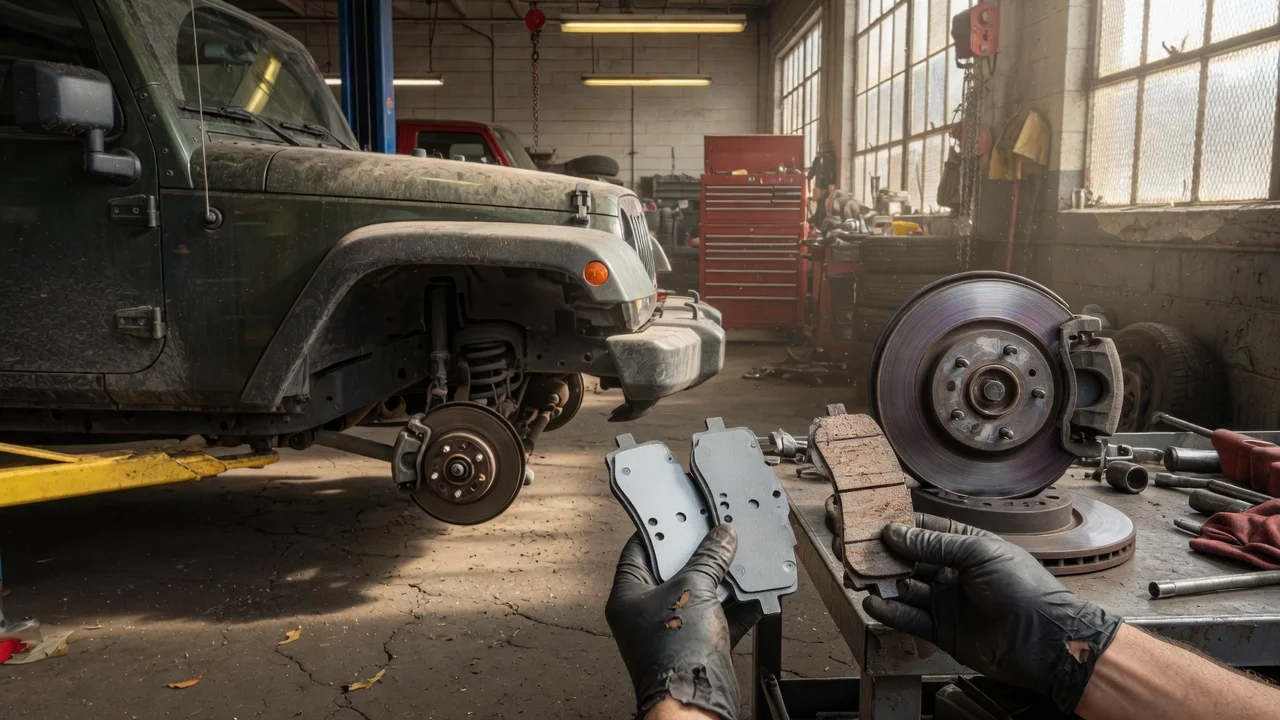
The correct brake pads for a Jeep Wrangler depend on the model year, axle, and trim. Wranglers from different generations use different caliper and pad shapes, so pads are not universally interchangeable across all years. For a standard replacement, you need pads matched to your Wrangler's front or rear axle, and in some years to the brake package that came with the vehicle.
Why model year matters
The Jeep Wrangler has been sold under several platform generations: YJ, TJ, JK, and JL. Brake pad fitment changed between these generations and sometimes within a generation when axle or brake components were revised. A pad listed for a 2012 Wrangler JK may not fit a 2018 Wrangler JL even if both are four-door models. Always confirm the pad shape against the specific year, axle position, and whether the vehicle has standard or upgraded brakes.
What to check before buying
Model year and generation; Front or rear axle; Trim or brake package if multiple calipers were offered; Whether the Wrangler has been modified with larger axles or aftermarket brake kits
Common signs that brake pads need attention
Reduced brake response, a low or soft pedal, squealing or grinding during braking, and a brake warning light can all point to worn pads. Squealing may also occur with glazed pads or contamination, while grinding often means the friction material is gone and the backing plate is contacting the rotor. If grinding has started, the rotor may need resurfacing or replacement in addition to new pads.
Pad types and trade-offs
Common replacement pad materials include ceramic, semi-metallic, and organic compounds. Ceramic pads generally produce less visible dust and can be quieter, but they may not provide the same initial bite as semi-metallic pads in all conditions. Semi-metallic pads often handle heat well and suit heavy or off-road use, but they can be noisier and produce more dust. The best choice depends on how the Wrangler is used: daily street driving, towing, or off-road use.
Installation considerations
Replacing Wrangler brake pads usually involves removing the wheel, unbolting the caliper, replacing the pads, and compressing the caliper piston before reinstalling. Some rear calipers require a tool that rotates the piston while compressing it, rather than a simple clamp. Hardware such as abutment clips, anti-rattle springs, or caliper slide pins should be inspected and lubricated or replaced as needed. If you are not confident working on brakes, have the work done by a qualified mechanic.
What to do next
Use the Wrangler's year, axle position, and trim to find a pad set that matches the original caliper. Compare material type against your driving conditions, and replace pads in axle sets rather than one side only. If you also feel vibration or pulsation when braking, inspect the rotors before or during the pad replacement because worn pads and damaged rotors are often addressed together.