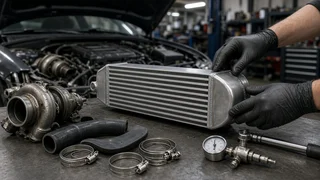
Isuzu 4JB1 turbo intercooler engine
The Isuzu 4JB1 turbo intercooler engine attracts interest from owners and builders who want a compact diesel with meaningful mid-range torque and straightforward service access. This powerplant combines a small-displacement four-cylinder architecture with forced induction and a charge-air cooler, which lowers intake temperature and supports denser airflow. Understanding the engine configuration helps explain its behavior under load, its cooling requirements, and the symptom conditions that indicate when the turbocharger, intercooler, or supporting systems need attention. The discussion below outlines what this engine is and how its intercooled turbo arrangement differs from naturally aspirated or non-intercooled diesel designs.
Essential answer
The Isuzu 4JB1 turbo intercooler engine is a four-cylinder indirect-injection diesel that uses a turbocharger and an intercooler to improve cylinder filling and combustion efficiency. This layout is common in light commercial vehicles and repowered projects where compact dimensions and low-rpm pulling ability matter more than peak horsepower. The intercooler reduces the temperature of compressed intake air before it enters the combustion chambers, which helps preserve air density and supports more complete fuel burn under sustained load.
Interpreting this engine begins with the condition of its forced-induction path rather than the badge on the valve cover. Boost leaks, oil residue in the intake tract, or elevated exhaust gas temperatures can point to problems in the turbocharger, intercooler, or associated plumbing. Diagnostic codes are useful evidence, but manufacturer-dependent definitions require vehicle-specific confirmation. Service history and a careful inspection of hoses, clamps, and the charge-air cooler remain important because a fault code only tells you which circuit behaved unexpectedly, not which mechanical part has failed.