Is Octane the Same as Gasoline? What the Octane Number Really Means
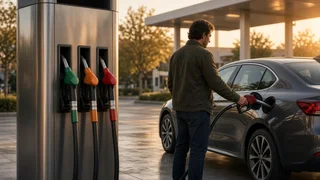
Octane and gasoline are not the same thing, even though people often use the words interchangeably. Gasoline is the fuel you pump into your car. Octane refers to two related things: a specific hydrocarbon compound that is one of many ingredients in gasoline, and the octane rating, a number that describes how well a given gasoline resists knocking. When someone asks whether octane is gasoline, the practical answer is that octane is a property of gasoline, not a substitute for it.
The Short Answer
Gasoline is a blended fuel made from many different hydrocarbons, usually with additives and, in the US, commonly some ethanol. Octane, as a chemical, is one family of hydrocarbons found in gasoline. It is not sold to drivers as a standalone fuel. The octane rating on a pump is a measure of a fuel's resistance to premature ignition (knock), not a measure of how much octane compound the fuel contains or how much energy it holds. A higher octane rating does not make gasoline "stronger" or cleaner; it makes it more knock-resistant, which matters only if your engine is designed to need it.
What Gasoline Actually Is
Gasoline is a refined petroleum product made by blending many hydrocarbon streams from the refining process. Its exact makeup varies by refinery, season and region, because fuel specifications are adjusted for factors such as volatility in hot or cold weather and local emissions rules. Retail gasoline also contains additive packages, such as detergents that help keep fuel injectors and intake valves clean.
In the US, most gasoline sold at the pump is an ethanol blend. E10, which contains up to 10 percent ethanol, is the most common. Some stations also offer E15, and flex-fuel stations may sell E85, which is intended only for vehicles specifically designed to run on it. Ethanol itself has a high octane rating, so it is one of the ingredients blenders use to raise the octane of finished fuel.
What Octane Is as a Chemical
Octane is a hydrocarbon with eight carbon atoms. There are several structural versions of it, called isomers. One of them, commonly known as isooctane, is particularly resistant to knocking and serves as a reference point for the octane scale. Another compound, normal heptane, knocks very easily and serves as the low reference point.
Gasoline contains some octane isomers along with many other hydrocarbons, but it is not pure octane, and the octane number on the pump does not tell you the percentage of octane in the tank. A fuel can earn a given octane rating through any combination of ingredients that produces the same knock resistance.
What the Octane Rating Measures
The octane rating compares a fuel's knock resistance to a blend of isooctane and normal heptane in a standardized test engine. If a fuel resists knock as well as a reference mixture containing a certain percentage of isooctane, it receives that number as its rating. Fuels can score above 100 if they resist knock better than pure isooctane.
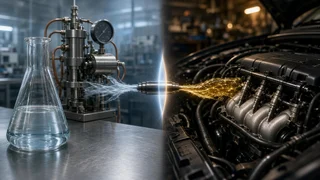
Knock happens when part of the air-fuel mixture in a cylinder ignites on its own from heat and pressure instead of burning smoothly after the spark plug fires. This uncontrolled combustion can produce a pinging or rattling sound and, if severe and sustained, may damage engine components. Higher-octane fuel tolerates more compression and heat before igniting on its own.
How Octane Appears on US Fuel Labels
US fuel labeling displays the octane rating as an average of two laboratory measurements, the Research Octane Number and the Motor Octane Number. This average is often written as (R+M)/2 on the pump label and is also called the Anti-Knock Index. Because other countries frequently display the Research Octane Number alone, a fuel labeled with a higher number abroad is not necessarily more knock-resistant than a lower-numbered US fuel. Keep this in mind when comparing owner's manual recommendations across markets.
Common US pump grade | Typical label range | Usual intended use; Regular | Around 87 | Most engines designed for regular fuel; Midgrade | Around 89 | Some engines that recommend between regular and premium; Premium | Around 91 to 93 | Engines that require or recommend premium, often high-compression or turbocharged designs
Grade names and exact numbers vary by retailer and region. In some high-altitude areas, the lowest grade offered may be rated below 87. Always check the number on the pump label rather than relying on the grade name alone.
Common Misconceptions
Higher octane means more power: Not in itself. Octane rating describes knock resistance, not energy content. An engine designed for regular fuel generally will not gain meaningful performance from premium. Premium is cleaner: Detergent additives, not octane, are what help keep fuel systems clean. Both regular and premium grades can contain detergent packages. Octane is a fuel you can buy separately: Drivers buy gasoline at different octane ratings, not octane itself. Products marketed as octane boosters are additives, and their use is a separate decision that should follow the vehicle maker's guidance. All gasoline at the same octane is identical: Two fuels with the same rating can differ in ethanol content, additive packages and seasonal blend.
How to Choose the Right Octane for Your Vehicle
The correct octane rating depends on your specific engine, so the owner's manual and the label near the fuel filler are the authoritative references. Requirements can differ by model year, engine option, trim and market, even within the same vehicle nameplate.
If the manufacturer specifies regular fuel, buying a higher octane rating typically offers no meaningful benefit. If premium is listed as required, use at least that octane rating. Using lower-octane fuel may cause knocking or force the engine computer to reduce performance to protect the engine. If premium is listed as recommended, many modern engines can operate on lower-octane fuel by adjusting ignition timing, usually with some loss of performance or efficiency. Follow the manual's guidance on whether this is acceptable for your engine. If you hear persistent knocking on the recommended fuel, have the vehicle inspected rather than simply switching grades.
Ethanol Blends and Fuel System Compatibility
Octane rating and ethanol content are separate considerations. A fuel can have a suitable octane number yet contain more ethanol than a particular vehicle or engine was approved for. Most modern cars sold in the US are designed for E10, and many newer models also carry manufacturer approval for E15, but older vehicles, motorcycles, boats and small engines may have different limits. E85 should be used only in flex-fuel vehicles. Check the owner's manual and the pump label for ethanol content as well as octane before fueling.
Bottom Line
Octane is not gasoline. Gasoline is the fuel; octane is a hydrocarbon found in it and, more importantly for drivers, the name of the rating that describes how well the fuel resists knock. Choose the octane rating and ethanol blend your vehicle's manufacturer specifies, and treat a higher number as a match for engine design rather than an upgrade in fuel quality.