Is a Wheel Hub the Same as a Wheel Bearing?
A wheel hub and a wheel bearing are closely related but not the same part. The bearing is the rolling element that lets the hub spin smoothly, while the hub is the structural forging that carries the wheel, brake rotor, and drive or stub axle. In many modern vehicles the two are combined into a sealed hub assembly, which is why the terms are often used interchangeably in parts catalogs and service conversations. Knowing the physical difference matters when a noise, looseness, or replacement estimate appears, because the component design may change what should be replaced together.
Essential answer
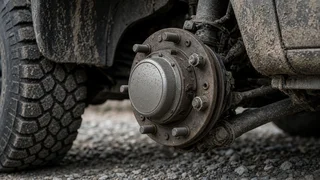
In simple terms, a wheel hub is not the same as a wheel bearing. The hub is a metal body with a flange for the lug studs, a pilot surface to center the wheel, and an inner bore or spindle relationship that locates the rotating assembly. The wheel bearing is a ring of balls, rollers, or tapered rollers that sits between the hub and the stationary suspension or steering knuckle, controlling radial and axial load while allowing rotation. Comparing a wheel hub assembly vs wheel bearing means distinguishing the load-carrying housing from the friction-reducing rolling element inside it.
However, the answer changes with construction. On many newer vehicles, the bearing is pressed into the hub forging and sealed inside a unified cartridge. This is often sold as a complete hub bearing, unitized wheel bearing hub, or wheel hub bearing assembly. In that case, the wheel bearing is part of the hub assembly, and asking whether a hub bearing and wheel bearing are the same becomes a question of service packaging rather than physical identity. The rotating bearing cartridge and the flanged hub remain distinct components, but they are replaced as one factory-assembled unit.
The difference between a hub and wheel bearing also depends on drive layout and axle style. A driven front wheel may use a splined hub that engages an outer CV joint stub shaft, while a non-driven rear wheel may use a simpler spindle-mounted hub. The bearing seat, press fit, and retaining ring determine how the two stay aligned. Even when they are integrated, the bearing’s hardened races and rolling elements are made from different materials than the hub body, which is designed for clamping, stud retention, and brake rotor alignment.
Recognizing this distinction helps in diagnosis and parts selection. If a hub flange is bent or its stud threads are damaged, the bearing may still be healthy. If the bearing has pitted races or excessive play, the hub itself may be reusable on serviceable designs. With a sealed hub assembly, replacing just the rotating bearing cartridge is often not intended by the manufacturer, and the practical repair is to install the complete unit. That is why the essential comparison is mechanical function first and replacement format second.