Identify an Engine from Its VIN
The Short Answer
A Vehicle Identification Number (VIN) can usually tell you which engine a vehicle was built with, but it does not contain the engine's own serial number. On most vehicles sold in the US since the 1981 model year, the VIN is a standardized 17-character code. One of its characters, often the eighth on many manufacturers' vehicles, identifies the factory engine type. That code identifies the engine as built at the factory, not necessarily the engine fitted today. The unique engine number is a separate marking stamped or cast on the engine itself.
Two qualifications change the answer. First, the position and meaning of the engine code vary by manufacturer, model year and market, so one character cannot be read the same way on every vehicle. Second, the VIN describes the vehicle as it left the factory. If the engine was swapped or replaced, the VIN will not reflect that.
What the VIN Can and Cannot Tell You
What a VIN typically reveals: • The manufacturer and country or region of origin; • The vehicle line, body style and often the restraint system; • An engine type code that maps to a displacement, configuration or fuel type in the manufacturer's tables; • The model year and assembly plant; • A production sequence number unique to that vehicle; What a VIN does not reveal on its own: • The engine block's individual serial number; • Whether the original engine is still installed; • Detailed specifications such as output figures, which must come from manufacturer documentation for the decoded engine
Which VIN Characters Point to the Engine
The 17 characters fall into three broad sections. The letters I, O and Q are not used, which avoids confusion with the numbers 1 and 0.
Positions | Section | General content; 1–3 | World Manufacturer Identifier (WMI) | Manufacturer and region of origin; 4–8 | Vehicle Descriptor Section (VDS) | Model, body, restraints and, on many vehicles, the engine code; 9 | Check digit | A calculated character used to detect errors or fraudulent VINs on North American vehicles; 10 | Model year | Letter or number indicating the model year; 11 | Plant code | Assembly plant; 12–17 | Sequential number | Production serial for the individual vehicle
Many manufacturers place the engine code in position 8, which is why that character is the usual starting point. This is a widespread convention, not a universal rule. Some manufacturers encode the engine elsewhere in the descriptor section or combine it with other attributes. The same character can also mean different engines in different model years. Always read the engine code together with the manufacturer (positions 1–3) and the model year (position 10).
Vehicles built before the 1981 model year used manufacturer-specific VIN formats of varying length. For those, engine identification from the VIN depends entirely on that maker's own decoding scheme for the specific year.
Where to Find the VIN
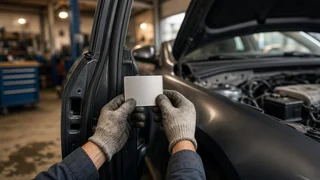
• On a plate at the base of the windshield on the driver's side, readable from outside the vehicle; • On the certification label on the driver's door jamb or door edge; • On the vehicle title, registration and insurance documents; • On some vehicles, stamped on the frame or body structure; locations vary by model
Compare at least two of these sources. A mismatch between the dashboard plate, door label and paperwork warrants further investigation before you rely on the decoded engine information.
Finding the Engine Number Itself
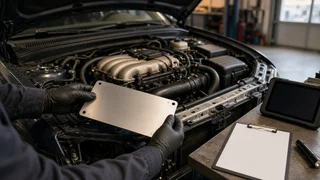
If you need the actual engine number rather than the engine type, look at the engine. Manufacturers stamp or cast identification on the block, often on a machined pad. The location depends on the engine family. It may sit near the joint with the transmission, on the front or side of the block, or below the cylinder head. Check the service documentation for your exact vehicle configuration, because the location differs between engines even within one brand.
Some engines carry a partial or full VIN stamping in addition to their own serial or casting numbers. Under US federal parts-marking rules, certain vehicle lines must have the VIN marked on major parts, including the engine and transmission. Where such a stamping exists and matches the vehicle's VIN, it suggests the original engine is likely still fitted. Not every vehicle is covered, and markings can be obscured by corrosion or grime.
How to Confirm the Engine from a VIN
1) Record the full 17-character VIN from the vehicle, and check it against the paperwork. 2) Run it through a VIN decoder. The National Highway Traffic Safety Administration provides a free public decoder that returns manufacturer-submitted data, often including engine details. 3) Cross-check the result with the emissions control information label under the hood, which typically lists engine displacement and the engine family. 4) For exact factory build details, ask a franchised dealer's service or parts department to look up the VIN. Manufacturer records can show the original engine and transmission codes. 5) If originality matters, for example on a purchase or a classic vehicle, inspect the engine's own stampings and compare them with the factory records.
Commonly Confused Items
• Engine code versus engine number: the VIN's engine code identifies a type of engine shared by many vehicles. The engine number identifies one specific engine. • Casting numbers versus serial numbers: numbers cast into the block usually identify the part design and can appear on many engines. Stamped serials are unique. • Engine family on the emissions label versus VIN engine code: both describe the engine, but they use different coding systems and do not substitute for each other. • Transmission codes: some manufacturers record the transmission on the door label or build sheet rather than in the VIN, so its absence from the VIN is not unusual.
Limits of This Guide
This guide explains the general structure of US-market VINs. It does not include manufacturer-specific engine code tables, since none were available for verification. To learn what a particular character means for your vehicle, use the manufacturer's documentation or a decoder that draws on manufacturer-submitted data for that exact make, model year and market. Treat third-party decoder results as a starting point when they disagree with factory records.