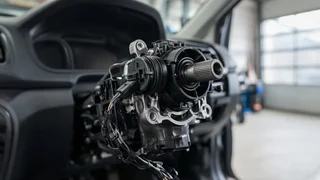
Hyundai/Kia Steering Angle Sensor Location (i30, i40, Elantra)

Locating the steering angle sensor on a Hyundai Elantra, i30, i40, or related Kia model usually points to one area inside the steering column. The component measures how far and how quickly the wheel turns, feeding that signal to stability control and electric power steering. When a scan tool reports a steering angle sensor fault, drivers often want to know whether this is a visible external part or an integrated module buried beneath the column trim. The answer varies by platform, equipment level, and whether the sensor is sold as a separate clock spring assembly or built into the column electronics. Understanding that distinction helps you avoid confusing the sensor with the steering wheel position switch or the torque sensor used by some electric steering racks.
Essential answer
The steering angle sensor is typically located in the steering column area, near the clock spring behind the steering wheel. On many Elantra and i30 platforms, the sensor may be integrated into the clock spring assembly or mounted as part of the column electronics module. The exact arrangement depends on build configuration, market, and whether the vehicle uses a conventional hydraulic steering system or an electric power steering setup with additional column inputs. A fault here can affect directional stability features and make the steering feel inconsistent, but the stored code identifies a signal problem rather than automatically condemning the sensor itself.
For the i40 and some related Kia models, the same principle applies: the steering wheel position is measured at the upper column, while the electric motor may use its own torque and position sensing. If the sensor is a separate component, it usually sits close to the combination switch or beneath the steering column shroud. If it is integrated, replacement often involves the clock spring or a larger electronic assembly. Because manufacturer-dependent designs vary, vehicle-specific confirmation matters before ordering parts or disassembling trim.
Identification and location
Look behind the steering wheel and you will find the clock spring ribbon assembly that carries airbag and switch circuits. The steering angle sensor may share this housing or attach directly to it. On some Hyundai and Kia applications, a visible module with an electrical connector sits between the steering wheel and column switch bracket. On others, there is no separate replaceable sensor to see; the angle calculation happens inside the electronic control unit using inputs from the column and rack. Position accuracy depends on clean connector contacts, secure mounting, and correct initialization after battery disconnection or alignment work.
A practical first step is to remove the lower column cover only when you have the correct service information and the airbag system has been safely de-powered. Then trace the wiring from the clock spring. The sensor or its connector may be marked with part numbers, but physical appearance alone does not confirm function. If the scan data shows a frozen or implausible reading while the steering wheel turns, the live data can point toward a wiring issue, clock spring fault, or calibration loss rather than simply a bad sensor.