How to test car battery health and condition

A weak battery can mimic fuel, starter, and sensor problems, so testing should be the first diagnostic step when a vehicle cranks slowly or behaves electrically erratic. A car battery health test is not a single reading but a comparison of resting voltage, cranking performance, and reserve behavior. Healthy chemistry produces enough cold cranking amps for the starter while holding voltage near the expected range. To check battery condition accurately, use a digital multimeter and understand what each value reveals. Even a battery that starts the car may have low reserve capacity or rising internal resistance, so routine measurement helps catch failure before it strands you.
Direct answer
To test car battery health and condition, begin with a resting voltage check using a multimeter set to DC volts after the vehicle has been off for several hours or after the surface charge is removed. A fully charged conventional flooded battery should settle near 12.6 volts, while materially lower readings suggest discharge, sulfation, or a charging fault. Voltage alone cannot prove cranking ability, but it is the fastest way to separate a discharged unit from one that may have internal damage.
A more complete car battery health test adds a load or conductance evaluation. When the engine starts, watch how far voltage dips and how quickly it recovers. If voltage falls sharply during cranking or the battery measures low cold cranking amps on a conductance tester, capacity and plate condition are likely reduced. This is what technicians mean when they say car battery CCA is low: the battery can show acceptable open-circuit voltage yet fail under the heavy draw a starter requires. To determine whether the battery is good or bad, you must therefore interpret both the no-load and loaded numbers together.
How to proceed
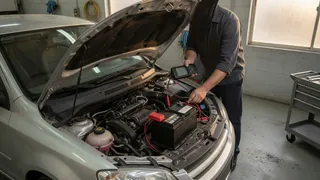
Set a digital multimeter to the correct DC voltage range, typically twenty volts, so the display can read battery voltage without overloading the meter. With the engine off and accessories shut down, connect the red probe to the positive terminal and the black probe to the negative terminal. A stable connection is essential because corrosion or a loose clamp can skew the result. Record the resting voltage before turning anything on, then have a helper start the engine while you keep watching the meter.
During cranking, a healthy battery generally maintains enough terminal voltage to power the control modules and ignition system, although normal values vary with temperature and engine design. After starting, the alternator should raise system voltage into the charging range. If you still need to calculate battery health after these checks, use a conductance battery tester to estimate cold cranking amps relative to the battery label and note whether the measurement falls outside the expected range. Recharge a discharged battery and retest before condemning it, because cold weather or short trips can create a temporary low state of charge rather than a permanent capacity loss.