How to Test a Trailer Brake Controller
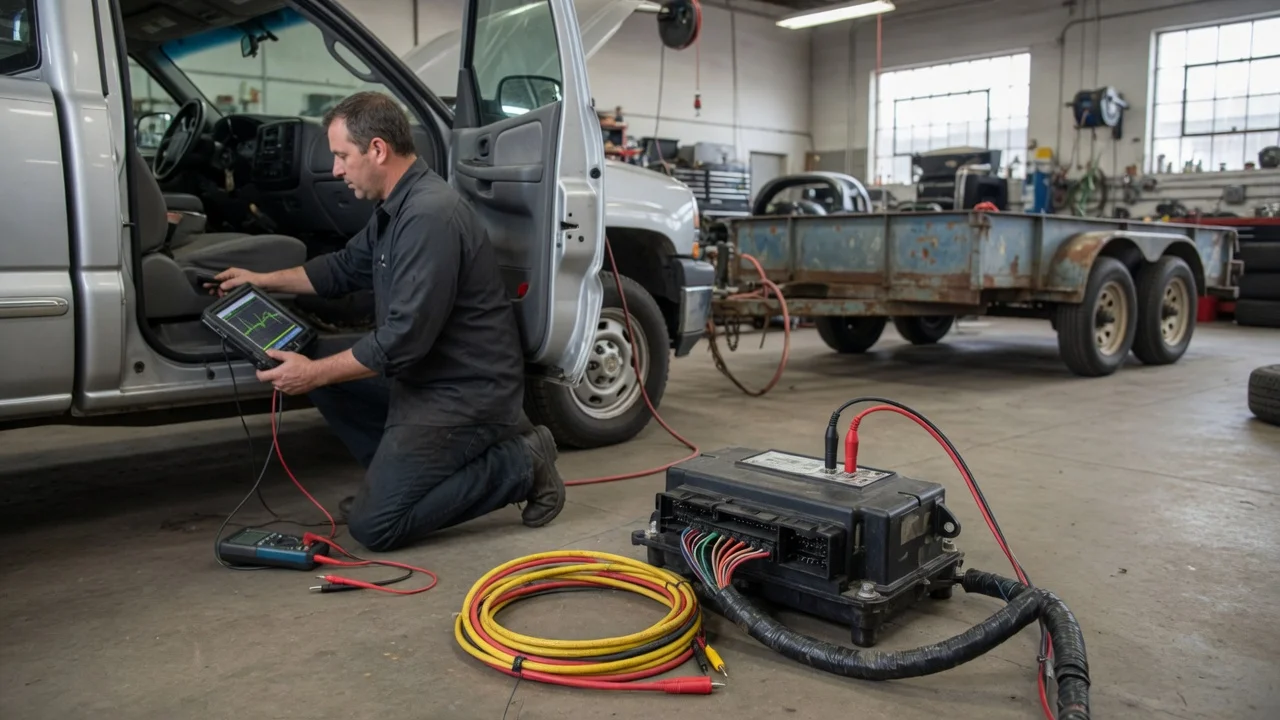
Test the controller without moving the trailer first
A trailer brake controller sends an electrical signal to the trailer brakes when the tow vehicle slows. Testing it verifies that the signal is present, the gain or output setting responds correctly, and the manual override works. Start with a stationary check before driving. Park on level ground, set the parking brake, and connect the trailer wiring plug firmly to the vehicle socket. Turn the ignition to the run position if the controller only powers with the key on.
Check the controller display and fault indicators
Look at the controller display or indicator light. Many controllers show a numeric output, a bar graph, or a color that changes with braking force. A steady green or normal readout with the trailer connected usually means the controller sees the trailer brake circuit. A flashing light, error code, or no display may indicate a disconnected magnet, a short, an open circuit, or a trailer without electric brakes. If the controller shows a fault before you press the manual lever, fix the wiring or connection first.
Use the manual override to confirm brake actuation
On most controllers, a manual lever or button applies the trailer brakes without pressing the tow vehicle brake pedal. Squeeze the lever slowly while a helper watches the trailer wheels or listens near the brakes. You should hear a hum or click from each electric brake magnet and, on many trailers, see the brake shoes move. If the trailer is on a jack stand with the wheels off the ground, rotate a wheel by hand while the override is applied. The wheel should drag or stop as the output increases.
Do not run a full power manual override test for a long time. Electric trailer brakes are not designed for continuous high-current activation while parked. A short check of a few seconds at moderate output is enough to confirm operation. If only one side locks or drags, inspect that wheel, the magnet wiring, and the brake adjustment.
Test the brake pedal signal and gain response
With the trailer connected and the engine running, have a helper press the tow vehicle brake pedal slowly while you watch the controller. The output should increase as pedal pressure rises. On a time-delay controller, the display usually rises after a short delay. On a proportional or inertia-sensing controller, more aggressive pedal pressure should produce a quicker and higher output reading. If the display stays at zero when the brake pedal is pressed, check the brake light signal wire, the controller power feed, and the ground connection.
Set the gain or output adjustment to a middle value before this test. If the trailer brakes grab too hard at low speed during the road check, lower the gain. If you feel little trailer braking, raise it gradually. The correct setting depends on trailer weight, load, and road surface, so verify the adjustment during a low-speed stop.
Perform a low-speed road test
Choose an empty, straight stretch of road with a safe run-off area. Drive at about 20 to 25 km/h, then apply the tow vehicle brake smoothly. The trailer should brake in proportion to the tow vehicle without pushing or pulling sharply. If the trailer brakes lock too early, reduce the gain. If you feel the trailer pushing the tow vehicle, increase the gain slightly or check for a weak connection. Repeat the stop a few times at a controlled speed.
If the controller works when parked but not during braking, the issue may be with the brake pedal signal wire, a fuse, or a poor ground under load. If the controller works in the manual test but not in the road test, test the tow vehicle brake light signal at the trailer socket with a circuit tester or multimeter. Work on the brake light circuit may require qualified service if the vehicle has integrated trailer brake control or complex body electronics.
Equipment and precautions
Trailer connected to the tow vehicle with the correct wiring plug; Helper to watch the trailer wheels or controller display during tests; Jack and jack stands if rotating a wheel by hand; Multimeter or circuit tester for signal and ground checks; Vehicle owner information for controller-specific fault codes and gain settings
Use jack stands whenever a wheel is lifted. Never rely on a jack alone. Keep hands and clothing away from moving wheels, brake drums, and suspension parts. Electric brake magnets can get warm during repeated testing, so allow them to cool between extended checks.
When to stop and seek qualified service
Stop testing if the controller becomes hot, smells burnt, or blows a fuse repeatedly. These symptoms can point to a short in the trailer wiring, a failed brake magnet, or an incorrectly installed controller. Stop if the trailer brakes respond erratically or if the display shows an unfamiliar fault code. The controller manufacturer instructions define the meaning of specific codes; do not guess across brands or model years. Trailer brake systems are safety equipment. If the cause is not found after checking the connections, fuse, ground, and gain setting, have the vehicle and trailer inspected by a qualified brake or trailer specialist.