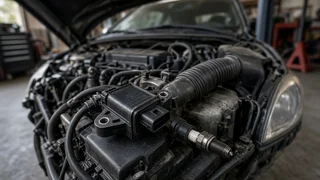
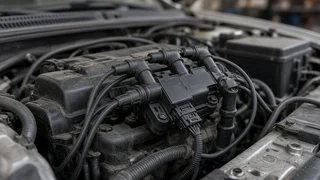
How to Start a Car With a Bad Ignition Coil

A no-start with a suspected bad ignition coil is frustrating because the engine may crank strongly yet refuse to catch. The coil has to transform battery voltage into the high-energy spark that lights the air-fuel mixture, and a weak or dead unit can snuff that spark on one or more cylinders. In some cases the engine still starts and runs poorly; in others it will not fire at all. Before you keep cranking and draining the battery, narrow down whether the coil is truly the reason or merely one symptom in a larger ignition or fuel problem.
Direct answer
You cannot make a car start reliably by ignoring a failed coil, but a marginal or intermittent unit can sometimes allow the engine to fire when the right conditions occur. The ignition coil builds a magnetic field and then collapses it to generate the high voltage that jumps the spark plug gap. If the coil is weak, that spark may still appear when cranking speed is healthy, fuel vapor is light, and cylinder pressure is lower at startup. The engine may catch, run unevenly, and flash a misfire fault code as the coil's output continues to fade under heat or load.
The essential answer is to treat the coil as suspect evidence, not a locked verdict. Check whether the engine has spark at the affected cylinder before condemning the part, because wiring, a poor ground, or a failing ignition module can mimic a dead coil. A coil that is shorted internally or completely open will prevent combustion on that cylinder and may keep the engine from starting at all. If the car does start, drive only far enough to confirm the problem and avoid flooding the catalyst with unburned fuel.
How to proceed
Begin with a quiet key-on check rather than endless cranking. Listen for the fuel pump's brief prime and watch that the instrument cluster wakes up normally, because both confirm the ignition switch and basic battery state of charge are strong enough for diagnosis. A weak battery can reduce cranking speed to the point that a marginal coil cannot produce a useful spark, even though the starter still turns. Make sure the transmission is in Park or Neutral and the security light is not active, then attempt one short start cycle so you can note whether the engine coughs, backfires, or stays completely flat.
Next, narrow the failure to ignition rather than fuel delivery. If the engine has an occasional stumble or a single dead cylinder, the coil may still allow startup but should be confirmed with a spark check or a scan for misfire counts. Avoid continuing to run the engine if raw fuel is reaching the catalytic converter, because repeated misfires can overheat and damage it. Since coil wiring and connector terminals can cause the same loss of spark, inspect for looseness, corrosion, or heat damage before replacing parts. If there is no spark and the coil is inaccessible or the vehicle uses a coil-on-plug system with unusual diagnostics, a professional grade tool may be needed to confirm the exact failed circuit.