How to Remove Rust from a Trailer Hitch Ball
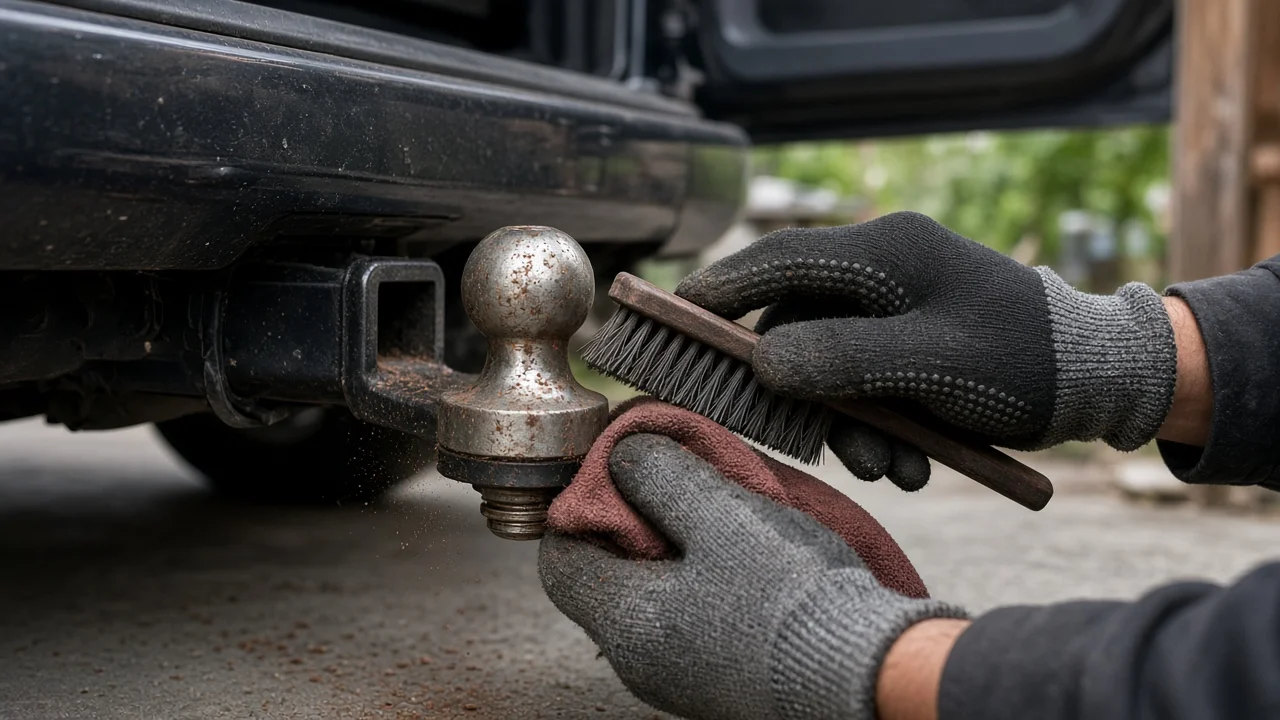
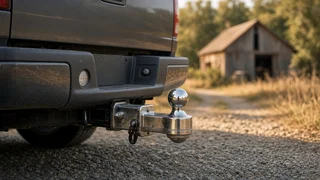
A rusty trailer hitch ball is usually an appearance and friction problem rather than a structural emergency. The ball wears a thin layer of rust after the polished surface is scratched, the original corrosion protection is worn away by the coupler, and moisture sits in the open air. Removing that rust restores a smoother pivot surface, reduces grinding inside the trailer coupler, and makes it easier to see whether the ball still has sound material beneath the discoloration. The condition also matters because severe pitting can reduce the effective contact area at a critical connection point, even when the ball retains its nominal size and load rating.
Direct answer
The essential answer is that surface rust on a trailer hitch ball can be removed with controlled abrasion, followed by a protective coating that is appropriate for the polished contact surface. The goal is not merely to make the metal bright. It is to remove loose oxidation, level light pitting, and expose cleaner steel so a coupler seats and pivots with less friction while preserving the ball shape. If pitting is shallow and the ball still measures close to its intended diameter, the component can usually be returned to safe service.
Deep pitting is different from surface rust. A ball that has lost material through flaking, heavy scaling, or visible craters may still be shiny after sanding, but its reduced contact area and altered curvature can concentrate stress at the mounting shank and inside the coupler. There is no universal wear limit in the supplied information, so any hitch ball with deep loss, cracks, or looseness in the shank should be replaced rather than refinished. Rust removal is appropriate for contamination and light corrosion, not for restoring a mechanically compromised component.
How to proceed
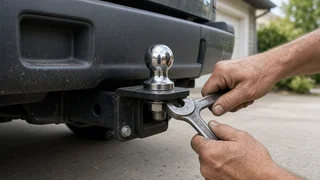
Work with the ball mounted or secured in a vise if it has already been removed. Clean loose dirt and grease first so abrasive particles do not dig into the metal. For light orange rust, an abrasive pad or fine wire hand brush can brighten the ball without removing significant steel. For heavier rust, work around the sphere with strips of emery cloth or fine abrasive paper, keeping pressure even so the curvature remains smooth. The shank, base, and mounting points need attention as well, because corrosion there can affect how the ball seats against the drawbar.
After abrasion, wipe the surface clean and inspect it in daylight from several angles. A serviceable ball should show consistent curvature with only minor staining or shallow pitting remaining. Then protect the fresh metal. A rust-preventive coating on the base and shank is useful, while the polished ball can be treated with a light film of grease that also lubricates the coupler. Product compatibility matters because some paints and thick coatings interfere with coupler latching or wear unevenly under tongue loads. Before towing, confirm the coupler still closes fully and has normal clearance over the coated ball.