How to Read a Car's Temperature Gauge Trend
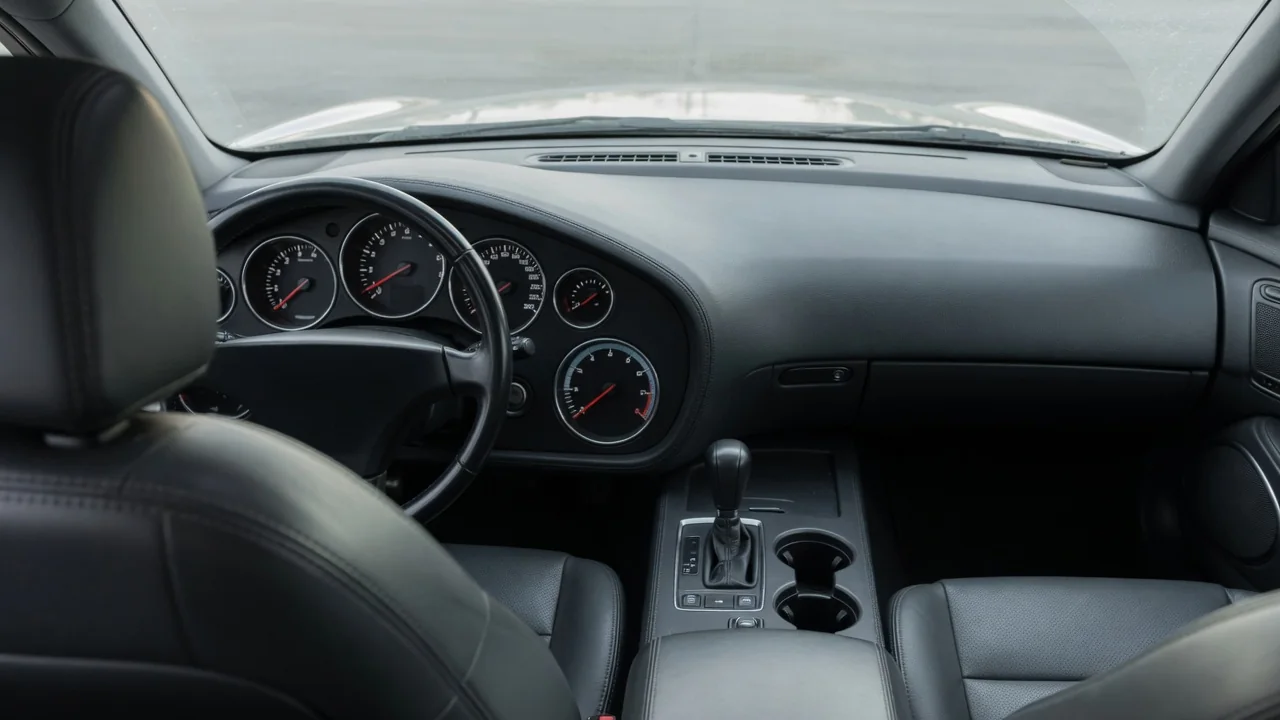
A temperature gauge is most useful when you read it as a trend rather than a single snapshot. Where the needle sits on a given day matters less than how it behaves over time: how quickly it climbs after a cold start, where it settles, and whether it moves when driving conditions change. This guide explains engine temperature gauge interpretation in practical terms, covering what a normal pattern looks like, which sudden changes deserve attention, and how to respond safely when the reading goes wrong.
Normal range
After a cold start, the needle should rise gradually from the cold end of the scale as the engine warms. Coolant circulates mainly within the engine until the thermostat begins to open, then flows through the radiator, where heat is released. Once the thermostat is regulating, the gauge typically settles at a consistent position, often near the middle of the scale, and stays there through ordinary driving. The time it takes to reach that point varies with outside temperature, engine design, and how the car is driven, so a slower warm-up on a cold morning is not by itself a sign of trouble.
Many modern gauges are deliberately buffered. Instead of showing every small change in coolant temperature, the instrument cluster holds the needle steady across a band of readings considered normal and only moves it when the temperature leaves that band. As a result, a needle parked in the middle does not prove the coolant temperature is perfectly constant. Some vehicles use a digital readout or only a warning light instead of a needle, and how each display behaves is specific to the vehicle; the owner's manual is the reliable reference for what normal looks like on a particular car.
The most valuable baseline is your own car's habit. Note where the needle usually rests once warm and how it behaves in traffic, on the highway, and on long climbs. A small, temporary rise during slow traffic on a hot day, followed by a return to the usual position once the car is moving or the cooling fan runs, is commonly part of normal operation. What matters is a reading that departs from the established pattern or fails to return to it.
Sudden changes
A rapid climb toward the hot end is the change that most needs immediate attention. Common general causes include low coolant from a leak, a cooling fan that is not running, a thermostat stuck closed, a failing water pump or drive belt, or a blocked radiator. The context of the rise offers clues. A gauge that climbs mainly when idling or crawling in traffic but improves at speed can point toward airflow problems such as fan operation, because moving air helps the radiator at road speed. A rise under load, such as while climbing or towing, may suggest the system cannot shed enough heat when demand is high. These patterns are hints, not a diagnosis.
A needle that drops suddenly can also be a warning. If the gauge falls toward cold during steady driving, the cause may be a thermostat stuck open, a faulty temperature sensor, or a wiring or connection problem. One possibility deserves particular caution: when coolant level becomes very low, the sensor may be surrounded by steam or air rather than liquid and report a misleadingly low temperature, even as the engine is getting hotter. A drop that coincides with steam, a sweet smell, loss of cabin heat, or a warning light should be treated as possible overheating, not as reassurance.
Erratic movement, such as a needle that swings up and down or jumps between positions, often points to air trapped in the cooling system, an intermittent sensor or electrical fault, or a thermostat that is not regulating smoothly. Loss of heat from the cabin heater at the same time as gauge fluctuation is a meaningful combination, because the heater core relies on circulating hot coolant. Any persistent change from the usual pattern is worth investigating even if the needle never reaches the red zone.
Safe response
If the gauge rises above its normal position, start by reducing the load on the engine. Turning off the air conditioning removes extra work and heat from the front of the radiator. Setting the heater to maximum heat with the fan on high can move some engine heat into the cabin, which may slow the climb while you find a place to stop. This is a temporary measure, not a fix. If the needle keeps rising, reaches the hot zone, or a temperature warning light comes on, pull over as soon as it is safe and switch the engine off.
Once stopped, do not open the radiator cap or the coolant reservoir cap while the engine is hot. The system is pressurized, and hot coolant can spray out and cause serious burns. Allow the engine to cool fully before touching anything, then check the coolant level in the reservoir against the marks and look for obvious signs such as puddles under the car, wet hoses, or a broken belt. Topping up with the coolant type specified for the vehicle may be appropriate if the level is low, but adding coolant does not correct the underlying reason it was lost.
Continuing to drive an overheating engine risks severe damage, including warped cylinder heads and failed head gaskets, which are far more costly than the original fault. If the cause is not obvious and simple to resolve, or if the gauge climbs again after a restart, arranging a tow or professional inspection is the safer choice. A gauge that reads cold or behaves erratically without other symptoms is usually less urgent, but it still warrants a coolant check and an inspection of the thermostat, sensor, and wiring soon.
Practical implications and limits
Watching the gauge trend is a screening habit, not a diagnostic tool. Because the display may hold steady until a problem is already well developed, the needle often reports trouble late rather than early. Routine checks of coolant level and condition, hose condition, and visible leaks remain important, since they can reveal developing issues before any change appears on the dashboard.
Gauges and warning systems also differ widely between vehicles. Scale markings, warning thresholds, and the point at which a message or light appears are set by each manufacturer, so general guidance about where a needle should sit cannot replace the owner's manual or service documentation for a specific model.
Finally, the gauge reports temperature at one sensor location, not the condition of the whole engine. It cannot reveal oil temperature, local hot spots, or slow internal coolant loss on its own. When the trend changes, treat it as a reason to look more closely: note the conditions in which it happened, check what can be checked safely, and have the cause confirmed with a scan tool or by a qualified technician before replacing parts.