How to Find an Engine Code From a VIN
The short answer
On most vehicles built for the North American market since the 1981 model year, the Vehicle Identification Number (VIN) is a standardized 17-character code. Characters 4 through 8, called the Vehicle Descriptor Section, describe the vehicle's attributes. Many manufacturers, including the major US brands, use the 8th character to identify the engine. To find the engine code, read the 8th character and the 10th character, which gives the model year. Then look up what that 8th character means for that make and model year using a VIN decoder or the manufacturer's VIN chart.
Several conditions change this answer. Not every manufacturer puts the engine in position 8. Some spread engine information across several descriptor characters, and some do not encode the engine in the VIN at all, which is common for vehicles designed for other markets. The same character can also mean a different engine in a different model year. Finally, the VIN describes the engine the vehicle was built with, so it cannot detect an engine that was later replaced.
Engine code terms that are easy to confuse
"Engine code" can mean different things, and the VIN usually gives only one of them.
VIN engine character: a single letter or digit in the VIN that identifies the engine option, usually by displacement, cylinder count, fuel type and sometimes induction (turbocharged or not). This is what a VIN decoder reports. Manufacturer engine designation: the internal name or family code the automaker uses for an engine. GM's Regular Production Option (RPO) codes are one example. This is often more specific than the VIN character and is not always derivable from the VIN alone. Engine serial or stamped number: a unique number or partial VIN stamped or labeled on the engine block itself. It identifies that particular engine, not just the engine type. Emissions engine family: an alphanumeric code on the underhood emissions label that identifies the engine family for emissions certification. It is related to the engine but is not the same as the VIN engine character. Other VIN-adjacent codes: transmission, axle and paint codes appear on labels near the VIN and are sometimes mistaken for engine codes.
How a 17-character VIN is organized
Position | Section | What it generally indicates; 1–3 | World Manufacturer Identifier (WMI) | Country or region, manufacturer and often vehicle type; 4–8 | Vehicle Descriptor Section (VDS) | Model, body, restraint system, engine and similar attributes; the engine is often position 8; 9 | Check digit | A calculated character used to detect transcription errors in North American VINs; 10 | Model year | A letter or digit representing the model year; 11 | Plant code | The assembly plant; 12–17 | Sequential number | The production serial number of that specific vehicle
VINs never use the letters I, O or Q, which helps avoid confusion with 1 and 0. If you read one of those letters in a VIN, you have probably misread a character.
Where to find the VIN
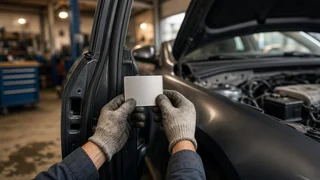
Lower driver-side corner of the dashboard, visible through the windshield from outside the vehicle. Driver-side door jamb or door edge, on the certification label. Vehicle title, registration and insurance documents. Service invoices and dealer records. On some vehicles, stamped or labeled on the frame, firewall or other body parts.
Read the VIN from the vehicle itself where possible, then compare it with your paperwork. A mismatch between the dashboard VIN, the door label and the title is a reason to stop and resolve the discrepancy before relying on any decoded information.
Step-by-step: decode the engine from the VIN
1) Write down the full VIN and confirm it has exactly 17 characters with no I, O or Q. Vehicles from before the 1981 model year use shorter, non-standardized VINs that require make-specific references. 2) Identify the model year from the 10th character. Year codes repeat in a 30-year cycle. For North American cars and light trucks, a numeric 7th character generally indicates the earlier cycle and a letter the later one, but confirm the year against the title or registration if there is any doubt. 3) Note the 8th character. For many North American-market vehicles, this is the engine designation. For other makes, the engine may be indicated by a different descriptor position or a combination of characters. 4) Run the full VIN through a VIN decoder. In the US, the National Highway Traffic Safety Administration (NHTSA) offers a free decoder based on information manufacturers submit. Commercial decoders and parts retailers' VIN lookups can also work. Enter the complete VIN rather than individual characters, because the meaning of each character depends on the make, model and year. 5) Find the engine fields in the results. Depending on the decoder and how much data the manufacturer supplied, these may include displacement, number of cylinders, fuel type, engine configuration, turbo or supercharging, and sometimes an engine model name. 6) If the decoder leaves the engine field blank or vague, ask a franchised dealer's parts or service department to look up the VIN. Dealers can usually access the vehicle's build data, which may show the manufacturer's specific engine designation. 7) Cross-check the decoded result against at least one other source on the vehicle, as described below.
How to verify the result
The decode is reliable when it agrees with the physical vehicle and the paperwork. Check that the decoded displacement, cylinder count and fuel type match these sources.
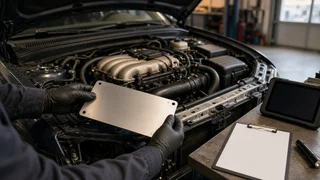
Underhood emissions label: usually on the underside of the hood, a strut tower or the radiator support. It typically lists the engine displacement and emissions engine family. The engine itself: count the cylinders or ignition coils where visible, look for displacement markings on the engine cover, and locate any stamped number or label on the block. Its location varies widely between engines. Build or option labels: some vehicles carry a label listing factory option codes, often in the glove box, trunk or door area. Some GM vehicles, for example, have a Service Parts Identification label listing RPO codes, including the engine. Window sticker, build sheet or original sales documents, if available. Service records showing engine-specific parts such as spark plugs, filters or timing components.
If these sources disagree with the VIN decode, the engine may have been replaced, or a label may belong to a different vehicle or engine. For parts purchases or repairs, identify the engine that is actually installed, usually from the block marking, rather than relying on the VIN alone.
When the VIN is not enough
Engine swaps or replacement engines: the VIN still describes the original factory engine. Multiple variants under one VIN code: a single VIN engine character may cover engine versions that differ in output, emissions calibration or internal parts. Parts catalogs sometimes ask additional questions for this reason. Vehicles built for other markets: many vehicles designed primarily for Europe or Asia do not encode the engine in the VIN. The engine code may instead appear on a vehicle data label, in the service booklet or on the engine block. Pre-1981 and imported vehicles: older vehicles and some imports use non-standard VIN formats that general decoders may not interpret correctly. Incomplete decoder data: free decoders depend on what the manufacturer reported, so some fields may be missing or generalized.
Choosing your next step
If you only need to know which engine a vehicle was built with, for example when evaluating a used car, a VIN decoder confirmed by the emissions label is usually sufficient. If you are ordering engine parts, use a parts catalog that accepts the full VIN and confirm the result against the engine itself. If the vehicle may have had an engine replacement, or the codes do not agree, a dealer parts department or a qualified technician can identify the installed engine from its markings and the vehicle's build records.