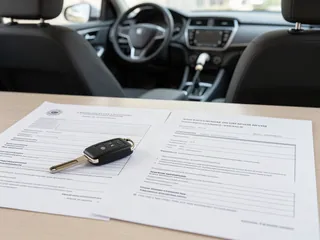
How to Check a Vehicle Title for Liens
To check a vehicle title for liens, compare the vehicle identification number (VIN) on the car with the VIN on the title, read the title's lienholder section, and then confirm the current ownership record with the motor vehicle agency in the state where the vehicle is titled. A lien is a lender's legal claim against the vehicle, usually because it secured a loan. Until the lien is released, the lienholder can have rights to the vehicle even if it is sold. The paper title alone is not always enough. Many states now record liens electronically, and a title can be outdated, duplicated or altered. The state record is the most reliable confirmation.
Key terms
Lien: a legal claim against the vehicle that secures a debt, most often an auto loan. Lienholder: the bank, credit union, finance company or other party that holds the lien. Lien release: a signed document or electronic notice from the lienholder stating that the debt is satisfied and the claim is removed. Registered owner: the person or business the vehicle is registered to. This is not always the same as the titled owner. Registration certificate: proof that the vehicle is registered for road use. It is not proof of ownership and usually does not show liens. Electronic lien and title (ELT): a system in which the lien and sometimes the whole title is held electronically by the state rather than printed on paper.
Before you start
The full 17-character VIN, taken from the vehicle itself rather than only from an advertisement. The state, or jurisdiction, where the vehicle is currently titled. The seller's name exactly as it should appear on the title, and their photo identification if you are buying privately. The physical title, or the seller's explanation of why there is no paper title, such as an electronic title or a title held by a lender. Any lien release letter or payoff statement the seller says they have.
Step-by-step lien title check
1) Confirm the VIN on the vehicle
Find the VIN on the vehicle in at least two places. It is commonly visible through the windshield on the driver's side of the dashboard and on a label in the driver's door jamb. Write it down carefully. Make sure the plates and labels look original and have not been tampered with. Stop if the VIN locations do not match each other or appear altered. That is a serious warning sign that goes beyond liens.
2) Match the VIN to the title and registration
Compare the VIN on the vehicle character by character with the VIN on the title and the registration certificate. A single mismatched character means the documents may belong to a different vehicle. Do not continue until the discrepancy is resolved through the state agency.
3) Read the title's lienholder section
Most state titles have a field for the first lienholder and sometimes a second. If a lienholder is named, the title should also show that the lien was released. This can be a signature or stamp in the release area, or a separate lien release document. A blank lienholder field is a good sign, but it does not prove the vehicle is free of liens. A lien may have been recorded after the title was printed, or the paper title may not be the current one.
Also look for signs of a problem title. These include erasures, white-out, mismatched ink, a duplicate or replacement title issued recently, or brand words such as salvage, rebuilt or flood. A recently issued duplicate is not proof of fraud, but it is a reason to rely on the state record rather than the paper.
4) Request the official ownership record from the state
Contact the motor vehicle agency in the state where the vehicle is titled. This may be called the DMV, BMV, MVD or a department of revenue, depending on the state. Ask for a title or lien status check by VIN. States handle these requests differently. Some offer an online title status lookup. Others require a written record request using their application documents, proof of identity, a stated permissible purpose under federal driver privacy rules, and a fee. Ask specifically whether any active lien is recorded and whether the title is held electronically.
If the vehicle was recently moved from another state, the lien may still be recorded in the previous state. In that case, check both jurisdictions if you can.
5) Run a national title history check
In the United States, the National Motor Vehicle Title Information System (NMVTIS) collects title and brand data that states, insurers and salvage businesses report. Reports are sold through approved providers. An NMVTIS report or a commercial vehicle history report can reveal title brands, total-loss history and the states where the vehicle has been titled. These reports are helpful background, but they are not a substitute for the state's own lien record. Coverage of active liens varies, and some reports do not show lien status at all.
6) If a lien exists, verify it with the lienholder
An existing lien does not have to end the deal, but it changes how the sale must be handled. Ask the seller to authorize the lienholder to give you a payoff amount, or call the lender together with the seller. Get the exact payoff and the process the lender uses to release the lien and deliver the title. The safest arrangements usually pay the lienholder directly, often at the lender's branch or through a dealer or escrow service, so that the release is issued in the same transaction. Do not pay the full price to a private seller on the promise that they will pay off the loan later.
7) Confirm the release before transfer
Once the loan is paid, the lienholder sends a release to the owner or to the state, depending on the state and whether the title is electronic. Before you finalize the purchase, or as soon as possible after a supervised payoff, confirm that the release is recorded. This means a signed release on the title or on a release letter, or an updated state record showing no active lien.
Where to look and what each source shows
Source | What it can show | Limits; Paper title | Owner name, VIN, lienholder field, release signature, title brands | May be outdated, duplicated or altered; Registration certificate | Registered owner, VIN, plate | Usually not proof of ownership; often omits liens; State motor vehicle agency record | Current titled owner and recorded liens | Access rules, fees and turnaround vary by state; NMVTIS or vehicle history report | Title history, brands, states of title | Not a complete or official lien record; Lienholder | Payoff amount and release status | Requires the owner's authorization
How to know the check is complete
The VIN matches on the vehicle, the title and the state record. The seller's name matches the owner on the state record and their identification. The state record shows no active lien, or every listed lien has a documented release. If a payoff was involved, you have the lienholder's release or confirmation that it was sent to the state. The title, paper or electronic, can be transferred into your name without further action by a lender.
Limits of a lien check
A title lien check shows liens that have been recorded against the title. It may not show every claim. Repair shops and storage facilities can have possessory or mechanic's liens that are not yet on the title. Other types of liens, such as those tied to unpaid taxes or court judgments, may or may not attach to a vehicle record depending on state law. State databases can also lag behind recent loans or payoffs by days or weeks. Laws on lien recording, electronic titles and buyer protections differ by state. For a high-value vehicle, a disputed lien or a title with irregularities, a title service, the state agency or an attorney familiar with that state's vehicle law can help you resolve the issue before money changes hands.
When to walk away
The seller cannot produce a title and cannot explain who holds it. The seller's name is not on the title or the state record, and there is no documented authority to sell. The VINs do not match or appear tampered with. A lien is recorded and the seller refuses a direct payoff to the lienholder. The seller pressures you to pay before you can verify the record.