How to Check CVT Transmission Fluid Level and Condition
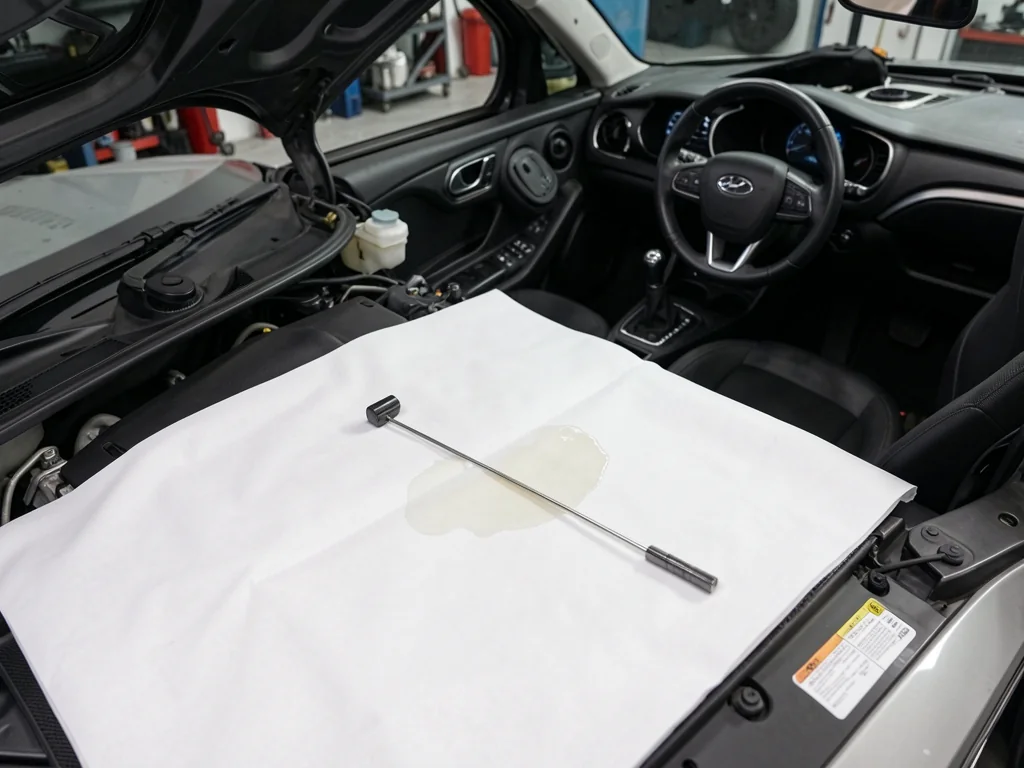
CVT transmission fluid color is not a single shade, and checking the level depends on whether the unit has an owner-accessible dipstick or a sealed transmission that uses a service procedure. Before you check CVT transmission fluid, confirm the vehicle-specific method, including fluid temperature and engine status. Healthy appearance, dark discoloration, and a burnt fluid odor each need careful interpretation rather than a snap conclusion about the transmission.
Confirm the Correct Fluid Check Procedure for Your CVT
How to check CVT transmission fluid starts with the owner's manual or matching service information for that powertrain, not a generic transmission-fluid habit. The documented CVT transmission fluid check usually specifies whether the vehicle sits level, what fluid temperature range applies, whether the engine is running or off, and any selector sequence through Park, Neutral, or Drive. Those conditions exist because CVT fluid specification, pump flow, and belt-and-pulley geometry move fluid between the sump and internal circuits as temperature and load change.
The same documents establish whether you have a transmission fluid dipstick you can use or a sealed transmission that requires a shop procedure. Many modern CVTs hide the fill path or omit an owner-readable stick entirely, so a missing handle is not a defect by itself. Checking under the wrong conditions can produce a misleading reading: cold fluid occupies less volume, a running pump can pull the sump down, and a slope can shift the apparent level. Treat an off-procedure glance as incomplete rather than as a confirmed overfill or shortage.
Read a CVT Dipstick Safely and Accurately
A CVT transmission dipstick, when present, is not always the first tube you see under the hood. Confirm the label, routing, and service information so you are not reading engine oil, a conventional automatic, or a fill-only tube with no usable stick. Where the vehicle's documented procedure permits an owner check, wipe the stick, fully reinsert it to the stop, then withdraw it and read the film against the specified fluid level markings. A partial insertion or a reading taken from residual drips on the wrong face of the stick can look like a shortage that is not there.
Interpret those markings only under the required check conditions. Hot and cold ranges are not interchangeable: expanded fluid at operating temperature can sit in a different band than the same volume when cold, and using the wrong band can hide a real shortage or suggest a top-off that is not needed. Keep clear of hot exhaust, fans, and belts while the engine is running if the procedure requires it. If the dipstick is hard to reach, the reading stays smeared or contradictory, or access feels unsafe, stop and have a technician perform the CVT transmission fluid check.
Check Options When the CVT Has No Dipstick
Checking CVT transmission fluid level on a sealed unit remains a maintenance question even when there is no stick. The absence of a dipstick does not mean the fluid never needs checking; it means the factory check is a service procedure rather than an under-hood glance. Some of those checks require a measured fluid temperature, a scan tool or dedicated gauge, and access to a level port so the technician can confirm the height at the specified condition. That work is not a casual driveway task.
When the procedure involves plugs, under-vehicle access, or hot-fluid handling, leave it to a shop that has the lift, temperature data, and the correct CVT fluid specification on hand. Owners still have useful observations that do not replace a level reading. Fresh spots on pavement after the vehicle has been parked, wetness around axle seals or the pan, and a transmission-related dashboard warning all justify a professional inspection. Those signs can point to transmission fluid leaks or a control issue, but they do not establish whether the sump is high, low, or within range.
Understand What Healthy CVT Fluid Can Look Like
What color is CVT transmission fluid depends on the specification, not on a single factory shade that every car shares. Dye packages and base formulations differ, so the color of CVT transmission fluid when new may read as amber, green-tinted, or another documented hue in the service literature. Confirm the specified fluid and its documented fresh appearance before you interpret a sample. Comparing a used film to a memory of conventional automatic fluid, or to a bottle of a different CVT fluid specification, invites a false impression of fluid discoloration.
CVT transmission fluid color also changes with how you look at it. A thin film on a dipstick under daylight can look paler than a thicker puddle on a dark pan, and shop lighting can shift amber toward brown. Those viewing effects matter because color alone cannot establish whether the fluid is compatible, how much service life remains, or whether the transmission is healthy. A sample that still matches the documented fresh range is encouraging, but it does not replace a correct level check or a review of how the vehicle shifts and sounds.
Interpret Dark Fluid, Burnt Odors, and Contamination
Darkening can accompany heat cycles, use, and oxidation, so a brown film of CVT transmission fluid does not identify a failed belt, pulley, or valve body and does not by itself set a service interval. Compare the sample with the documented fresh appearance and with how the vehicle behaves, rather than treating every shift toward brown as a verdict. A noticeable burnt fluid odor differs from a faint warm-oil smell and is a reason for further evaluation, because overheating or belt slip can cook the fluid. It is still not proof that the transmission has failed.
Cloudiness, persistent foam on the stick, or visible particles also warrant professional assessment. Coolant mixing, aeration from a low or overfilled sump, and wear debris can look similar in a small sample, and visual inspection cannot sort those causes. Pair the fluid observations with driving clues such as delayed engagement, judder on takeoff, or unusual noise, but do not assign a diagnosis from symptoms or color alone. A technician can confirm fluid temperature, level, and contamination with the tools the sealed or dipstick procedure actually requires.
Choose the Next Step After Checking the Fluid
An abnormal level on a first look needs a second check under the correct vehicle position, fluid temperature, engine status, and selector sequence before anyone adds or drains fluid. If the reading remains high or low, investigate transmission fluid leaks, a recent service filling error, or a procedure that was not followed, rather than topping off from a general-purpose bottle. Any permitted correction must use the exact vehicle-approved CVT fluid specification. Appearance, a generic CVT label, or conventional automatic fluid do not establish suitability, and the wrong chemistry can change friction behavior in the belt and pulleys.
Speculative top-offs, aftermarket additives, and flushes based solely on color or a burnt fluid odor can create new problems, including aeration and seal stress from overfilling. Color and odor are clues for evaluation, not a license to change the fluid on the driveway. Seek prompt professional assessment for persistent delayed engagement, judder, unusual noise, suspected contamination, or active leaks. If the vehicle loses drive or a warning instructs you to stop, pull over safely and arrange assistance rather than continuing with an unknown fluid level.