CVT Transmission Fluid: Why It Is Different and When to Change It
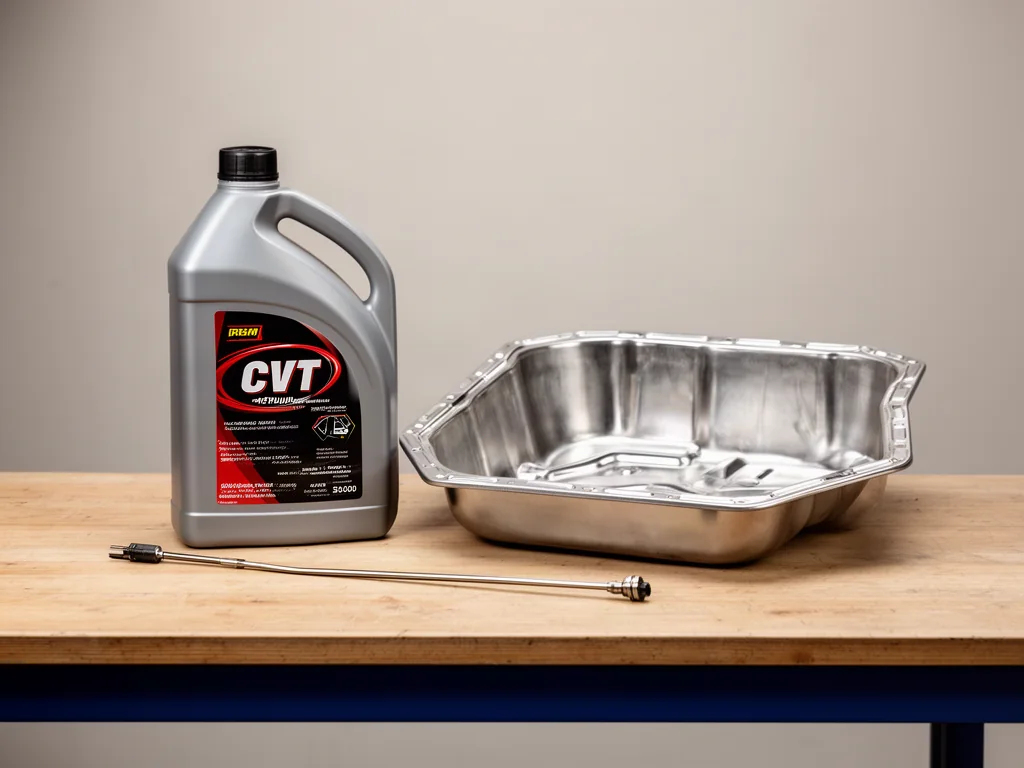
From the driver's seat, a continuously variable transmission feels like any other automatic. Inside, it works in a completely different way, and its fluid is designed around that difference. The wrong fluid, skipped changes or a leak-sealing additive can turn a smooth, efficient drivetrain into a source of shudder and costly wear. Here is what CVT fluid does, how to choose it and how to service it sensibly.
What CVT fluid does and why regular ATF is not a substitute
A conventional automatic sends power through fixed planetary gearsets and clutch packs. Its fluid lubricates those gears and lets the clutches engage smoothly. A CVT instead uses a steel belt or chain squeezed between two pulleys whose diameters change continuously. Torque passes through the contact between the belt and the pulley faces, so the fluid must form a thin film that actually carries force through metal-on-metal friction. It also supplies the hydraulic pressure that clamps the pulleys against the belt, it cools the unit and, in many designs, it feeds a torque converter.
Because of that friction requirement, the question of whether CVT fluid is the same as transmission fluid has a yes-and-no answer. Both are transmission fluids, and people use CVT oil and continuously variable transmission fluid to mean the same thing. However, CVT fluid is not interchangeable with conventional ATF. The friction modifiers in regular ATF are tuned for smooth clutch engagement and can let a belt slip slightly. That can cause shudder on take-off, a whine that rises with speed, hesitation or a slipping feel. Other faults cause these symptoms too, so a professional diagnosis should come first.
Choosing the right CVT fluid: OEM specs, synthetic and brand-specific fluids
The correct fluid is whatever specification the manufacturer calls for. You will usually find it in the owner's manual and sometimes on the dipstick or fill cap. That designation matters far more than the brand name on the bottle. OEM fluid from a dealer is sure to match, while aftermarket multi-vehicle CVT fluids claim to cover many transmissions. When shopping, check that the label names the exact specification your vehicle requires. A vague claim of compatibility with most CVTs is not enough, and neither is wording that only says the fluid is recommended for a specification rather than meeting it.
A full synthetic label describes the base oil, which can resist heat and oxidation well. A synthetic base alone does not give a particular belt and pulley set the friction behavior it needs. Mitsubishi shows why the details matter: the brand has its own CVT fluid designations, and the right one depends on model year and transmission. Check the exact designation instead of assuming one bottle fits every Mitsubishi CVT. The best CVT fluid is simply the one that meets your vehicle's stated specification. Never mix fluid types or top up with whatever happens to be in the garage.
How often CVT fluid should be changed
No single mileage figure applies to every CVT. The interval should come from the owner's manual or the manufacturer's maintenance schedule for your exact vehicle. Many manufacturers publish both a normal schedule and a severe-service schedule, and the severe one often fits more drivers than they expect. Towing, frequent short trips that never fully warm the fluid, heavy stop-and-go traffic, mountain driving and long stretches of extreme heat all raise fluid temperature or mechanical stress. That breaks down friction additives faster, and conditions like these typically put a vehicle on the shorter interval.
Some schedules call the fluid lifetime or list no interval at all. Many owners and technicians still change it periodically because lifetime may reflect an expected ownership period, not the life of a car kept for many years. To judge timing, review the service records and see whether the manual describes a dipstick or inspection procedure. Treat dark color or a burnt smell only as rough hints that a technician should confirm. Changing fluid earlier rather than later is generally the lower-risk choice, although fresh fluid cannot undo wear that has already happened.
Drain-and-fill versus CVT transmission flush
A drain-and-fill removes only the fluid that gravity pulls from the pan and then replaces that same amount. A significant portion stays in the torque converter, valve body and cooler circuit, so the new fluid mixes with the old. That is why some owners do two or three drain-and-fills a short time apart, gradually raising the share of fresh fluid. A machine flush, also called a fluid exchange, connects to the transmission cooler lines. It pushes old fluid out while feeding new fluid in, replacing a much larger share in a single visit.
Many manufacturers and shops urge caution with pressurized or solvent-based flushes on CVTs. This applies especially to high-mileage units with unknown history, where loosened deposits or altered friction behavior can cause new problems. Follow the guidance for your specific transmission. Before agreeing to a flush, ask whether the machine is suitable for CVT fluid, whether a cleaning additive goes in first and whether the exact specified fluid will be installed. Neither method repairs a CVT that already slips or shudders. Those symptoms need a diagnosis before any fluid service is done.
What a CVT fluid change service involves and what drives the cost
A typical CVT fluid change starts with draining the old fluid. The technician replaces the pan gasket or drain plug washer where applicable, sometimes changes a filter or strainer, refills with the specified fluid and checks the level using the manufacturer's procedure. That last step is where many CVTs differ from older automatics. The correct fill level often depends on temperature, so it must be checked within a set fluid temperature range, which may require a scan tool. Some vehicles also have a fluid degradation counter that must be reset afterward, a key reason owners often leave the job to a shop.
Cost depends on how much fluid the transmission holds, the price of the required fluid, whether a filter or strainer is replaced, local labor rates and whether a flush machine is used. Doing the job yourself is possible in principle, since the basic sequence is drain, refill and check the level. However, supporting the vehicle safely, handling hot fluid and reaching the correct level all carry real risk, so follow the factory service procedure rather than a generic guide. Keep the receipt and note the fluid specification and mileage, because a documented fluid history helps with warranty claims and resale.
Why stop-leak additives are risky in a CVT
Stop-leak products generally work in one of two ways: they swell rubber seals with a seal-swell additive, or they thicken the fluid so it escapes more slowly. In some systems that might buy time. A CVT, though, depends on precise friction properties and viscosity to keep the belt or chain gripping and to control how hard the pulleys clamp. Changing either one can cause slipping, shudder or erratic ratio changes. Many manufacturers state that additives are not approved for their CVTs, and using one can complicate warranty claims and make later diagnosis harder.
Common leak sources include pan gaskets, axle seals, transmission cooler lines and the case or pump seal, but only an inspection can confirm the actual source. You can safely note the fluid's color, which varies by fluid type, and where drips land under the car. A small seep is not necessarily urgent, but a steady drip can quickly lower the fluid level and cause internal damage. If the level is low, a warning light comes on or the car drives differently, stop driving and have a professional find the leak rather than reaching for an additive.