How to Check Automatic Transmission Fluid
The essential answer
Checking automatic transmission fluid means confirming that the fluid is at the level the manufacturer specifies and that its appearance and odor still look serviceable. Automatic transmission fluid (ATF) is the oil inside an automatic gearbox. It lubricates gears and bearings, carries heat away from clutches, and supplies the hydraulic pressure that applies those clutches so the vehicle can shift.
The correct method is vehicle-specific. Many older and some current automatics have a dipstick in the engine bay. Many later units are sealed, with a fill or check plug on the case and a procedure that depends on fluid temperature. Some dual-clutch and continuously variable transmissions use a different fluid and a different check. Use the owner’s manual or factory service information for that model year, market, engine, and transmission. Mixing another model’s Park-versus-Neutral rule, engine-running rule, or temperature window can produce a false reading and can leave the unit overfilled or underfilled.
What you need before you start
A fluid check is an inspection. Adding fluid is a separate decision and is only appropriate when the published procedure says the level is low and you have the exact fluid specification for that transmission.
Owner’s manual or factory service procedure for the exact vehicle, including whether the engine runs during the check, which gear to select, and whether the reading is taken cold or at operating temperature; A level, paved surface so the fluid sits evenly in the pan; Parking brake applied; wheel chocks if the engine will be running; A clean, lint-free cloth and a flashlight; The specified ATF only if the procedure allows a top-up after a low reading; fluid type is model-specific and is printed in the manual or on a under-hood label when one is provided; For sealed cases: a way to hold the vehicle level and, in many procedures, a scan tool or infrared thermometer to confirm fluid temperature—work that often belongs in a workshop
Safety that applies to every check
ATF and the exhaust system can be hot enough to burn skin. On a running-engine check, keep hands, clothing, and the cloth clear of the cooling fan, belts, and pulleys. Keep the vehicle in the specified gear with the brake pedal held and the parking brake set. If you cannot identify the transmission dipstick with certainty, stop; pulling the engine-oil dipstick and treating that reading as transmission level will mislead you.
How to check a dipstick automatic
Follow this sequence only when the vehicle has a transmission dipstick and the manual describes an owner-level check. At each step, the manufacturer’s selector position, idle time, and hot-or-cold instruction override the generic order below.
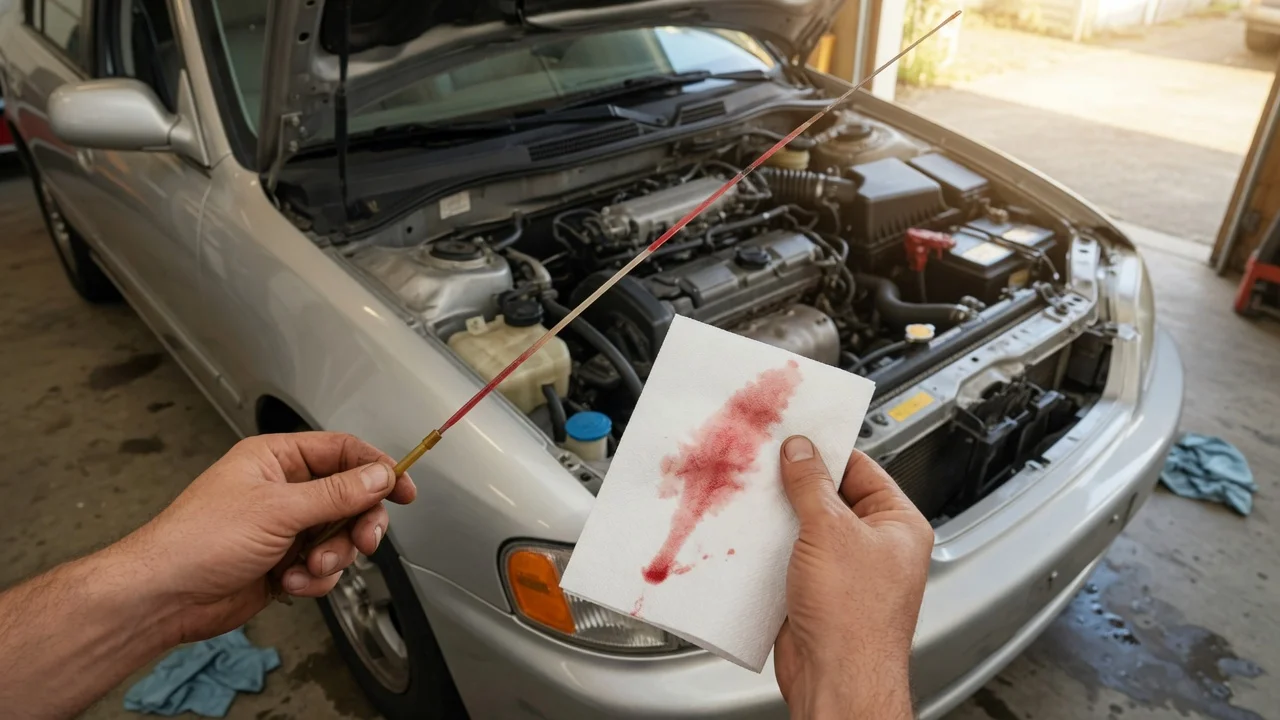
Park on level ground, set the parking brake, and chock a wheel if the engine will remain running. Identify the transmission dipstick. It usually sits farther back in the engine bay than the engine-oil dipstick and may have a different handle color or a transmission label. If there is no transmission dipstick, go to the sealed-case section. Bring the fluid to the temperature state the procedure requires. A cold check is done after the vehicle has sat long enough for the fluid to cool. A hot check is done after a drive that brings the transmission to normal operating temperature. Exact temperature bands, when published, belong in the service information for that model; guesswork here is a common source of a wrong level. Set the engine to the running or shut-off state the manual requires. Move the selector through the published gear sequence if one is given, then leave it in the specified position, commonly Park or Neutral, for the stated number of seconds so fluid can settle. Pull the dipstick, wipe it clean, push it back in until it seats fully, then pull it again. Read the wet mark against the scale that matches the current temperature (often marked HOT and COLD, or FULL and ADD). Note color, clarity, and odor, and look for metal flakes, grit, or varnish on the stick. Push the dipstick back in until it is fully seated so dirt and water stay out of the tube.
Completion check: the level sits in the specified band for the temperature you actually had; the stick is seated; there is no fresh drip onto the exhaust; and you have a written note of level, color, and smell. If the level is below the add mark and the manual permits filling through the dipstick tube, add the specified ATF in small amounts and recheck, because overfill can aerate the fluid and damage the unit. If the type is unknown, leave the level as found and have the vehicle serviced.
How to read condition as well as level
Level answers whether the pan is filled to the design height. Condition is a separate observation. Fresh ATF is often dyed red or pink, though some specified fluids are amber, green, or another color. Compare what you see with new fluid of the correct specification when you can. A burnt smell, opaque brown or black fluid, a milky appearance, or metal on the stick are reasons to stop DIY topping-up and have the transmission inspected.
What you see or smell What it commonly indicates; Fluid in the specified band and close in color to new fluid of the correct spec, with a mild petroleum odor Level and appearance are consistent with a normal inspection; Level below the add or cold mark after a correct hot or cold procedure Possible leak, consumption, or an incomplete prior fill; inspect for drips at the pan, cooler lines, and axle seals; Level above the full mark Possible overfill or fluid expansion outside the published temperature window; extra fluid can foam and overheat; Dark brown or black fluid with a burnt odor Aged or overheated fluid; clutch material may already be in the pan; Milky, foamy, or coffee-colored fluid Possible coolant in the fluid or air drawn in through a leak; Glitter, flakes, or grit on the stick Internal wear; this is a stop condition for continued guesswork at home
Sealed transmissions without a dipstick
If there is no transmission dipstick, the owner’s manual may say the unit is filled for life or that level is a dealer or workshop item. On those designs the check is usually a plug in the case that is opened only when the vehicle is level and the fluid is inside a narrow temperature window. Opening that plug on a cold or overheated unit can drain a large amount of fluid or give a meaningless drip test.
That work requires the published temperature, the correct plug torque, and the specified fluid. Treat it as qualified service unless you have the service information, a safe lift or ramps that keep the vehicle level, and a way to measure fluid temperature. You can still inspect the ground and the underside for red or brown drips, check that cooler lines are dry, and pay attention to late, harsh, or slipping shifts—those findings belong with the shop even when you never open the case.
Stop conditions and work that belongs in a shop
No transmission dipstick and no owner-level procedure in the manual; You cannot tell the transmission stick from the engine-oil stick; The published check needs a scan-tool temperature reading, a fill plug at a set height, or a lift; Fluid is burnt, milky, metal-flecked, or far below the mark; The selector will not hold Park or Neutral as the procedure requires; The transmission already slips, flares, bangs into gear, or will not engage; a level reading still helps the technician, but driving on as a test is unsafe; Any top-up would require a fluid whose specification you do not have
Limits of this check
A correct level and a clean appearance do not prove that clutches, a valve body, or a torque converter are healthy. Shift quality, leak history, and diagnostic trouble codes remain part of the picture. Service intervals, “lifetime fill” language, and the approved fluid name vary by model year and market; those figures are in the manufacturer’s maintenance schedule for that vehicle. Where this guide is silent on a temperature in degrees, a wait time in minutes, or a fluid part number, the gap is intentional: those settings have to come from the applicable service information rather than a generic rule.