Honda Civic EGR Valve: Location, Symptoms, Cleaning and Replacement
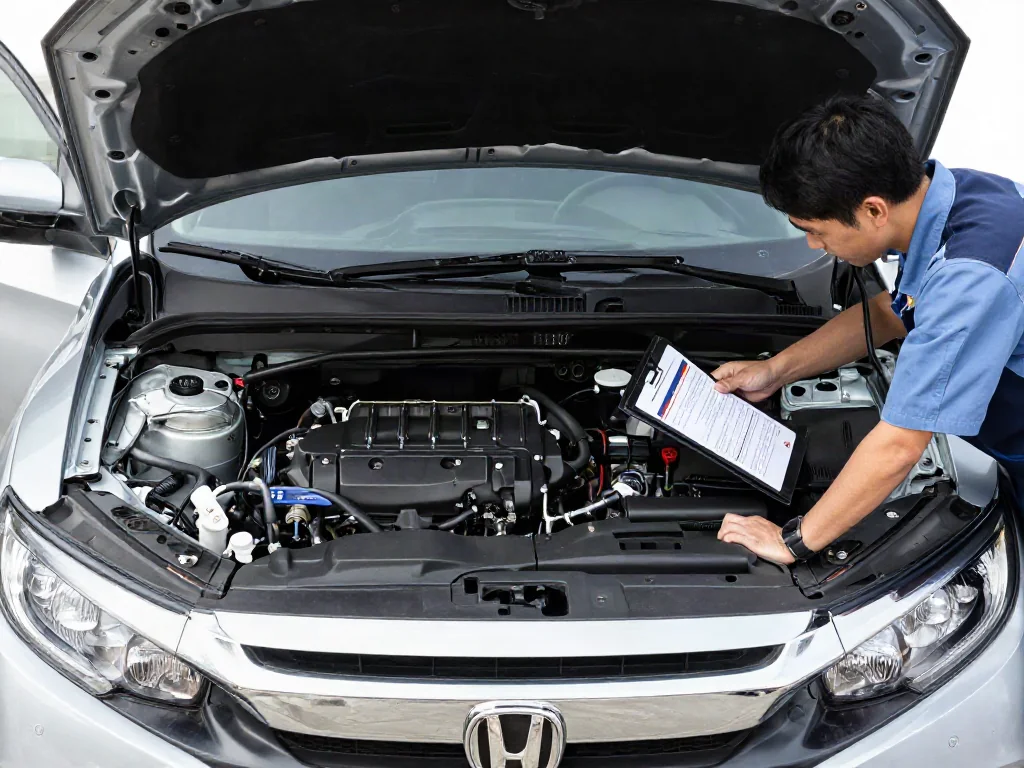
Choosing an EGR valve for a Honda Civic starts with the vehicle itself. Exhaust gas recirculation hardware varies with engine identification, market, and the underhood emissions label, so a Honda Civic EGR valve that fits one car may be wrong for another. Confirm the installed system before considering location, cleaning, or replacement on a 2003, 2004, or 2005 Civic.
Identify Your Civic’s EGR System Before Choosing a Valve
Exhaust gas recirculation meters a controlled amount of exhaust into the intake so combustion temperatures stay lower during conditions the engine control strategy allows. Where a Honda Civic uses a separate EGR valve, that valve opens and closes the path between the exhaust side and the intake, regulating EGR flow rather than acting as a simple on-off plug. The valve connector, pintle or diaphragm, and nearby EGR passages all belong to that circuit. Without confirming that your Civic actually uses this discrete valve layout, shopping an EGR valve Honda Civic listing can send you toward hardware the engine never had.
The Civic badge covers many engines, markets, and emissions packages, so the name alone cannot tell you whether a particular EGR valve for Honda Civic service applies. Establish model year, engine identification, and the emissions configuration printed on the underhood label before discussing location or ordering a replacement. Those details decide whether a separate valve is even fitted, which passage layout is used, and which electrical connector belongs on the assembly. A catalog line that says only Honda Civic EGR valve is a starting filter, not proof of fitment for the car in the driveway.
Confirm EGR Details for a 2003, 2004, or 2005 Civic
A 2003 Honda Civic EGR valve, an EGR valve Honda Civic 2004, and a 2005 Honda Civic EGR valve are not interchangeable by year alone. Each of those cars still needs engine identification and emissions configuration confirmed on that vehicle. A 2003 Civic and a 2005 Civic can use different engines and different recirculation layouts even when the body looks similar, and a 2004 Civic is no exception. Do not assign one valve design or mounting location to every Civic within these model years.
Use the VIN, the underhood emissions label, and the service information that matches those identifiers to confirm the installed EGR arrangement. The label records the engine family and emissions equipment the vehicle was certified with, while the VIN and engine identification help a parts catalog or workshop procedure select the correct circuit. Documented application details must exist before anyone states that a valve fits a 2003, 2004, or 2005 Civic. Visual similarity between two valves is not a substitute for that confirmation, especially when markets and calibrations differ.
Locate the EGR Valve Using the Correct Engine Diagram
An engine-specific component diagram is the reliable way to locate a Honda Civic EGR valve once the engine and emissions configuration are known. The diagram shows where the valve sits relative to the intake, exhaust routing, and nearby brackets, and it identifies the valve connector and passage connections that belong to that circuit. Compare those landmarks with what you can see, but treat appearance alone as a clue rather than confirmation. Different engines can place similar-looking housings in different spots, so matching the wrong diagram will send the inspection to the wrong hardware.
Limit owner observations to an accessible visual inspection with the engine off and cool, and do not remove covers, hoses, or fasteners to chase a better view. Look only at visible housings, the valve connector if it is in sight, and any passage connections the diagram places in that area. If heat shields, intake plumbing, or crowded packaging block a clear match, or if two nearby components could both be the valve, stop and have a technician complete the identification. Uncertain location is a reason to pause, not a reason to pry parts aside.
Understand Symptoms and the Limits of EGR Fault Codes
A Civic with an EGR concern may show rough idle, stalling, hesitation, or a check engine light, yet those complaints do not establish that the valve has failed. Idle quality and drivability also depend on air metering, ignition, fuel delivery, and vacuum integrity, so the same symptoms can appear with a healthy recirculation circuit. An EGR-related code is evidence to interpret, not proof a part has failed. The stored message may point to EGR flow, restricted EGR passages, electrical control through the valve connector, or a feedback signal rather than a defective valve body.
Verify the code definition for the exact vehicle before interpreting it, because manufacturer-dependent codes do not share one meaning across every Honda Civic. Generic scan text is a hint, not a parts list. Professional scan-data review, together with electrical or flow testing specified for that engine, is needed when the code, the symptoms, and the identified hardware do not line up. If the engine stalls in traffic or drivability becomes severe, stop the vehicle in a safe place and arrange a tow rather than continuing to drive while hunting for an EGR cause.
Determine Whether EGR Cleaning Is Appropriate
Carbon deposits can restrict EGR passages or slow valve movement, reducing the recirculation the control strategy expects. That mechanism is real, but deposits do not explain every EGR-related complaint on a Civic. Confirm first that the identified assembly is a serviceable valve and that the service information for that engine and emissions package actually permits cleaning. Some designs are treated as replaceable units, and some passage restrictions sit inside manifolds or remote galleries that cleaning the valve face will not reach. Until those facts are documented, cleaning is a guess rather than a plan.
Cleaning is also the wrong path when the fault is electrical, when the valve body or pintle is damaged, or when restricted passages are inaccessible without major disassembly. Those conditions need diagnosis and, if confirmed, replacement or technician-level passage service rather than solvent on a still-installed housing. Keep the decision at that level: if service information allows cleaning of the identified valve, a qualified technician should handle removal, chemical handling, and any passage work. Do not improvise solvents, scraping, or gasket disturbance on a hot exhaust path without the procedure that applies to that Civic.
Plan EGR Valve Replacement and Verify the Repair
Replacement belongs after diagnosis supports it and after the part is documented for that Civic's engine and emissions configuration. An EGR valve for Honda Civic catalogs still has to match the connector, mounting, and passage layout confirmed earlier, including a replacement gasket or other seals the procedure specifies. A repair estimate may include diagnostic labor, access work, those seals, and passage service if carbon has blocked the circuit the new valve feeds. Those extras matter because a new valve cannot restore EGR flow if the passages feeding it remain blocked.
A technician should install the valve using the service procedure for that engine, seating the replacement gasket correctly and reconnecting the valve connector so control and feedback can operate. Specified post-repair checks may include leak inspection around the passages, confirmation that the valve responds as commanded, and a road or idle evaluation of the original complaint. Clearing a fault code alone does not demonstrate success, because a light that stays off for one key cycle can return if EGR flow or sealing is still wrong. Verification has to address symptoms, leaks, and relevant system operation together.