Honda Accord Inner CV Joint
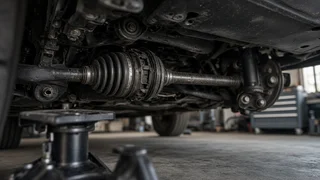
A clicking or rumbling sensation from the front of a Honda Accord often points toward the inner CV joint, a critical part of the axle shaft that transfers power while allowing suspension movement and joint articulation. Because the inner joint operates under varying drivetrain loading and angles, wear can cause noise, vibration, or looseness that changes under acceleration or deceleration. For owners and buyers researching the Honda Accord inner CV joint, identifying symptoms, inspecting the protective boot, and confirming spline fit and retaining clip condition all help determine whether a replacement axle assembly or a serviceable joint is the more appropriate next step.
The direct answer
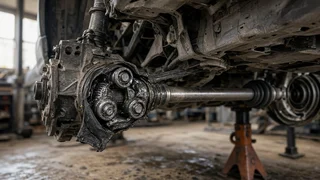
A worn Honda Accord inner CV joint commonly produces a clunk when transitioning between acceleration and deceleration, a shudder under hard acceleration, or a vibration that feels strongest near the floor and steering column rather than at the steering wheel. The inner joint sits inboard on the axle shaft, where it handles plunge travel and angle changes as the suspension moves. Because it operates closer to the transmission or intermediate shaft, symptoms can sometimes resemble a failing engine mount or worn differential bearing, but a rhythmic noise that changes with load and speed often points more directly to the joint itself.
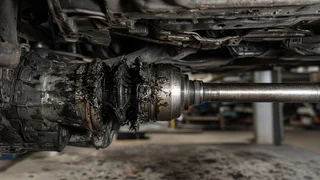
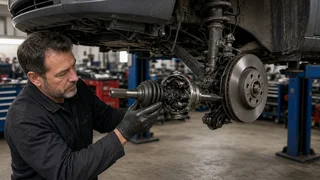
The condition of the protective boot is usually the first thing to inspect. A torn or displaced boot allows grease to escape and dirt or moisture to enter, which accelerates wear at the bearing races and cage. If the boot is intact and the joint is quiet, replacement may not be needed. When noise, looseness, or vibration is already present, many owners choose a complete remanufactured or new axle shaft assembly because it includes both joints, fresh grease, new boots, a verified spline fit, and a new retaining clip, reducing the labor and uncertainty of rebuilding only the inner joint.