Holden Service Intervals: How Maintenance Schedules Work for Holden-Built Vehicles
The Short Answer
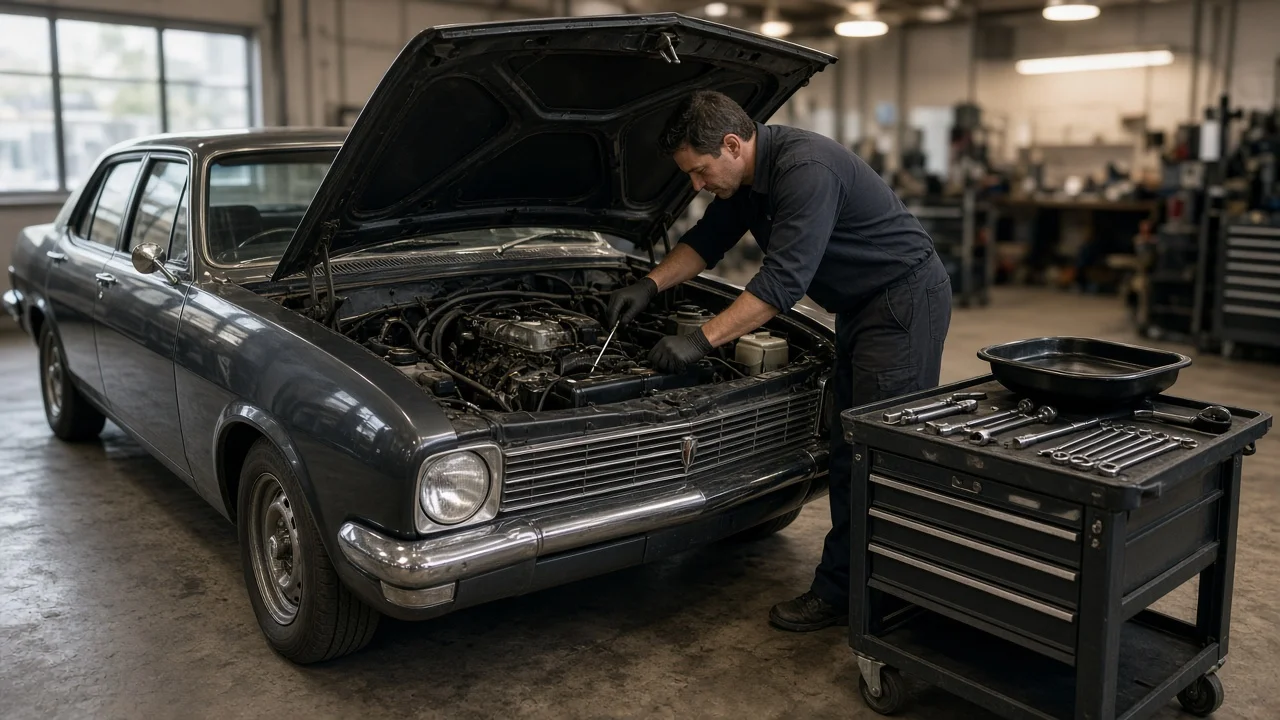
Holden never used a single service interval across its lineup. The schedule for a given vehicle depends on its model, generation, engine, fuel type and the market it was originally sold in. Most Holden schedules combine a time limit and a distance limit, and the service is due at whichever comes first. The reliable figure for your car is the one in the owner's handbook or service booklet for that specific vehicle, adjusted for how the car is actually driven.
For US readers there is an extra qualification. Holden was General Motors' Australian brand and was never sold under its own name in the United States. Holden-engineered or Holden-built cars did reach US buyers under other badges, and those cars generally follow the maintenance schedule printed for the US market, which is not necessarily the same as the Australian Holden schedule for the equivalent model.
Which Vehicles This Applies To
Holden sold a mix of locally developed vehicles and models sourced from other GM divisions and partners. That history matters, because a sourced model usually inherited the maintenance approach of the company that designed it.
Locally developed rear-wheel-drive cars, chiefly the Commodore family and its derivatives such as the Ute, Caprice and Statesman, built in Australia until local manufacturing ended in 2017. US-market derivatives of those cars, including the Pontiac GTO of the mid-2000s, the Pontiac G8, the Chevrolet SS and the Chevrolet Caprice police vehicle. Imported models sold under the Holden badge, such as vehicles sourced from Opel, GM Korea, GM Thailand and other GM operations, whose schedules typically reflected their source design. The final imported Commodore generation, which was based on an Opel design rather than the earlier Australian platform.
GM announced the retirement of the Holden brand in 2020, and new-vehicle sales wound down after that. Existing Holden vehicles still require maintenance, so the schedules remain relevant to current owners, buyers of used examples and enthusiasts who import or restore them.
How a Service Interval Is Defined
A service interval is the gap between scheduled maintenance visits. Holden, like most manufacturers, expressed it in two ways at once: an elapsed-time limit in months and a distance limit. The service is due when either limit is reached. A car driven very little still needs servicing on time, because engine oil, brake fluid and coolant degrade with age, moisture and heat cycles even when mileage is low.
Australian Holden documentation states distances in kilometers. If you are reading an Australian schedule for a car used in the US, convert carefully and round toward the shorter interval rather than the longer one. Where a US-market schedule exists for the same vehicle, that version is the more appropriate reference.
Fixed Schedules Versus Oil Life Monitoring
Many Holden models used a fixed schedule, meaning the maintenance points were set in advance regardless of driving style. Some GM vehicles, including many sold in North America, instead rely on an oil life monitoring system. This is software that estimates remaining oil life from factors such as engine revolutions, operating temperature and trip patterns, then alerts the driver when a change is due.
If your Holden-derived vehicle displays an oil life percentage, the monitor typically governs the oil change timing, while other items such as fluids, filters and inspections still follow their own time or distance points in the schedule. Most systems also impose a maximum time between oil changes even if the percentage has not dropped to the reset point. Resetting the monitor after each oil change is essential; otherwise its estimate is meaningless.
Normal Versus Severe Operating Conditions
Maintenance schedules generally assume normal use. Many manufacturers, Holden and GM included, define harsher conditions that call for shorter intervals or more frequent inspections. If your driving matches these descriptions, the shorter schedule is the appropriate one to follow.
Frequent short trips where the engine rarely reaches full operating temperature. Heavy stop-start traffic or extended idling. Towing a trailer or carrying heavy loads regularly. Driving on dusty, sandy or unsealed roads. Sustained high-speed or high-load driving, including track use. Operation in very hot or very cold climates. Fleet, police, delivery or rideshare duty.
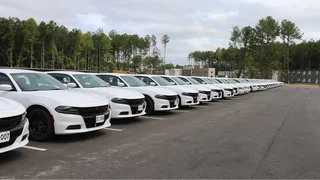
This distinction is particularly relevant for ex-police Chevrolet Caprice units and work-use utes, which often spent much of their lives in conditions that fall outside a normal-use schedule.
What Changes the Schedule From One Holden to Another
Factor | Why it matters; Model and generation | Different platforms and model years were published with different schedules, and later updates sometimes revised them. Engine | V8, V6, four-cylinder petrol, turbocharged and diesel engines have different oil, filter and ignition requirements. Powertrain hardware | Manual or automatic transmissions, all-wheel drive and limited-slip differentials may add fluid service points. Source of design | Vehicles sourced from other GM divisions or partners usually followed their source maintenance plan. Market | Australian, New Zealand and US documentation can differ for otherwise similar vehicles. Operating conditions | Severe-use driving shortens recommended intervals or adds inspections.
What a Scheduled Service Usually Covers
The exact checklist varies by vehicle and by which service in the sequence is due, but Holden-style schedules typically alternate between basic services and more comprehensive ones. A basic visit centers on the engine oil and filter plus a general inspection. Larger services add replacement items that wear more slowly.
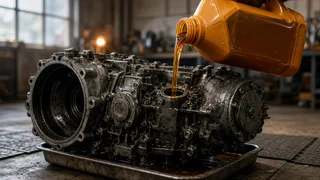
Engine oil and oil filter replacement using the grade and specification listed for the engine. Inspection of brakes, tires, steering, suspension, exhaust, lights and wipers. Checks of coolant, brake fluid, power steering fluid where fitted, and transmission fluid where a check is specified. Air filter and cabin filter inspection or replacement. Periodic brake fluid replacement on a time basis. Spark plug replacement on petrol engines at the specified point. Coolant replacement at its longer specified interval. Timing belt replacement on engines that use a belt rather than a chain. Fuel filter service on diesel engines, which tends to be more frequent than on petrol models.
Timing belt service deserves particular attention on any belt-driven engine. It is usually a one-off item at a long interval, so it is easy to overlook on a used car, and a failure on some engine designs can cause serious internal damage. Many Commodore V6 and V8 engines use timing chains instead, but this should be confirmed for the exact engine rather than assumed.
Finding the Correct Schedule for Your Vehicle
Start by identifying exactly what you have: the model year, the market the car was built for, and the engine code. The vehicle identification number and the build or compliance plate help with this, especially on imported or re-badged examples. With that information, the owner's handbook or service booklet for that specific configuration gives the applicable intervals.
For US-market derivatives such as the Pontiac G8 or Chevrolet SS, GM dealer service departments can generally look up the schedule by VIN. For Australian-market Holdens brought into the US, a technician familiar with GM performance and Australian-market vehicles is useful, since parts numbers and specifications may differ from US equivalents. Keeping a written record of every service, with dates and odometer readings, makes it easier to see what is due next and supports resale value.
Practical Takeaways
There is no universal Holden interval; the schedule depends on model, generation, engine and market. Service is due at the time limit or distance limit, whichever arrives first. US-badged Holden-built cars should follow their US-market schedule and, where fitted, the oil life monitor. Use the severe-service schedule if your driving involves towing, short trips, extreme climates, dust or fleet duty. On a used Holden-derived vehicle with incomplete records, treating overdue items as due now is the safer starting point.