Highway safety corridors
A safety corridor on a highway is a designated segment where crash history and traffic exposure justify stricter enforcement, increased fines, and more prominent signage. Rather than changing the road surface itself, the designation changes how drivers encounter that stretch. The goal is to reduce severe collisions by focusing attention on sight lines, stopping distance, and driver behavior in areas already proven to carry elevated risk.
Essential answer
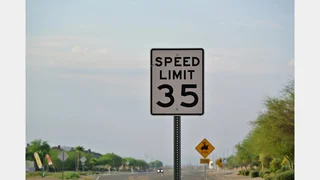
A highway safety corridor is a formally identified portion of roadway where traffic collisions, injuries, or fatalities occur at a higher rate than comparable roads. The classification allows transportation and law enforcement agencies to concentrate resources such as additional patrols, warning signs, and public awareness campaigns on that specific stretch. Drivers passing through may see lower posted speeds, doubled fine zones, or electronic message boards reminding them that they are entering an area with an elevated crash history.
The designation does not mean the road is fundamentally different from the highway before or after it. Instead, it signals that the combination of traffic volume, roadway geometry, and past incidents makes ordinary driving riskier there. A safety corridor may be several miles long and can include interchanges, curves, or segments where limited sight lines and merging traffic create more exposure. Its purpose is to change driver expectations before entering a location where mistakes become severe quickly.
How it works
A safety corridor works by pairing visible cues with stronger enforcement. Signs at the corridor entry prepare drivers for a stretch where following distance and lane discipline matter more. Because stopping distance increases with speed, reinforcing a lower limit gives drivers more time to react to sudden braking or a vehicle entering from an on-ramp. The continuous presence of markers along the route keeps the warning active rather than allowing attention to fade after a single sign.
The operational effect is also psychological. When drivers understand that fines are higher or enforcement is more frequent, they tend to moderate speed and pass with more caution. The corridor uses that behavioral response to reduce the probability of a crash reaching a barrier, shoulder, or opposing lane. It does not eliminate blind spots or geometric flaws, but it lowers the energy and reaction burden that can turn a near miss into a severe collision.
Strengths, limitations and suitability
The main strength of this approach is that it can be deployed without rebuilding the roadway. Agencies can mark a corridor, adjust enforcement, and measure results using existing infrastructure. For drivers, the benefit is clearer awareness of where extra caution is justified. Long rural interstates and high-volume urban freeways both use the concept, especially where crash protection is limited by narrow medians, fixed objects, or older roadside barrier designs.
A limitation is that signs alone do not fix poor sight lines or inadequate merge areas. The designation depends on driver compliance, and its effect can fade for local commuters who see the corridor daily. It is most suitable for segments where data show that speed and inattention are contributing to crashes rather than solely mechanical or weather-related causes. In those locations, even modest behavior changes can reduce the frequency of the most damaging events.
Procedure
When you encounter a safety corridor, adjust your driving before you reach the first sign. Check your following distance and reduce speed to match the posted limit, even if surrounding traffic is moving faster. Avoid lane changes near curves or interchanges where another vehicle can hide in a blind spot. Scan farther ahead than usual, because a stopped queue or debris beyond the next rise will require more stopping distance than casual highway driving provides.
Continue the same discipline through the entire corridor, not just near visible patrol cars. Keep both hands positioned for quick steering corrections and avoid interactions with a phone or center screen. As you exit, resume speed only after you have a clear view of the road ahead and normal conditions return. This completion check is simple: you should feel unhurried, aware of the vehicles around you, and able to stop within the visible distance.
Diagnosing a problem
If you repeatedly observe near misses or hard braking in a corridor, consider the interaction between speed and available sight distance. A driver may be entering a curve at a limit that is legal but still too high for the clear view ahead. When the roadway narrows or an entrance ramp merges without an acceleration lane, that blind spot can force last-second braking. The corridor designation often exists because those conflicts already produced crashes.
Single-vehicle departures in these zones may point to roadside hazards rather than driver error alone. A vehicle leaving the travel lane can strike a barrier, culvert, or treeline where crash protection is limited. If you are investigating such an incident, look at the path the vehicle traveled, the available reaction distance, and whether warning signs were visible before the point of departure. The corridor status helps explain the area, but the specific cause requires checking the scene and vehicle evidence.