Highway Code tailgating
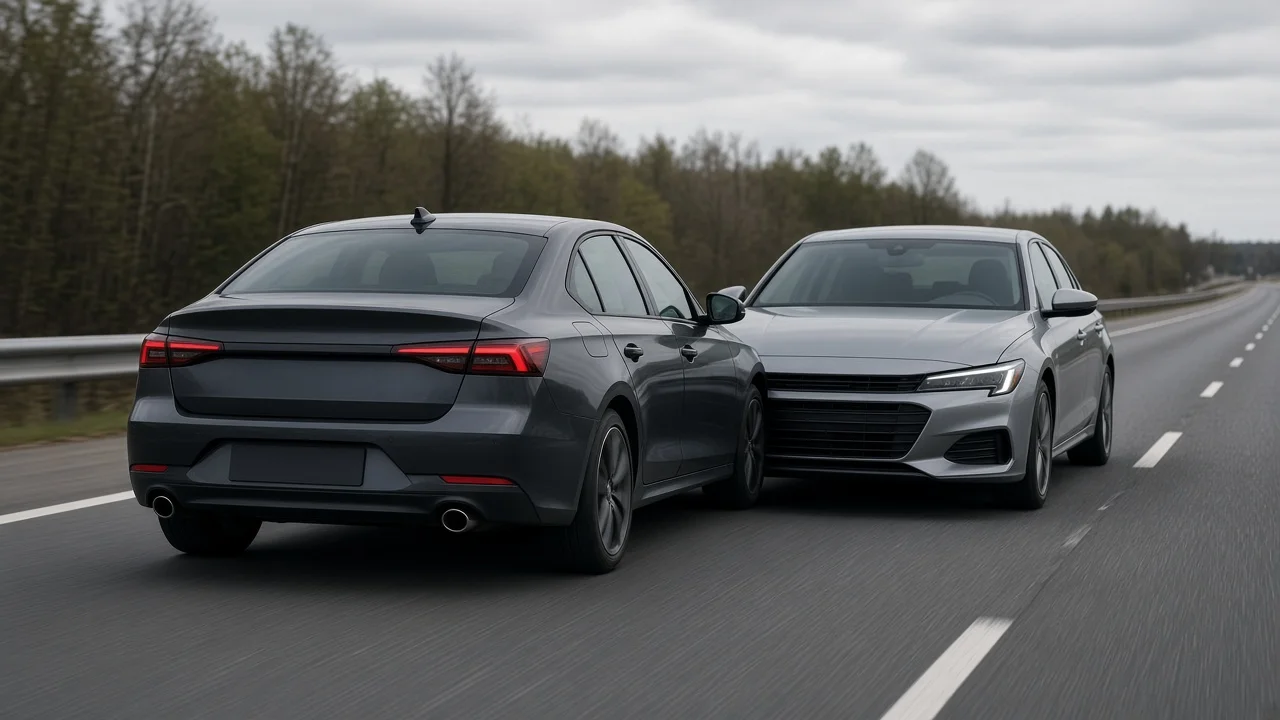
Tailgating is the act of following another vehicle too closely for the current road and traffic conditions. On a highway, where speed and limited escape paths raise the stakes, that gap becomes a critical safety margin. A following driver needs enough distance to recognize brake lights, interpret the closure rate, and still slow or change lanes without forcing the vehicle ahead to react. This overview explains what tailgating means in everyday driving, how the Highway Code frames the behavior, and why the rule depends on speed, visibility, road classification, and lane layout.
Essential answer
At its core, tailgating is a following distance that removes your ability to stop safely if the car in front brakes hard. The Highway Code treats this as a moving hazard rather than a fixed measurement. On faster route segments, the accepted gap grows because your vehicle covers much more ground during perception and braking time, while an access restriction or sudden queue can force the lead driver to slow abruptly.
The key distinction is that a safe gap is not a single car length. It changes with travel conditions such as wet pavement, downhill grades, and reduced visibility from spray or low sun. A two-second interval on a clear highway is a common starting reference, but heavy traffic, poor lane layout, and changing traffic signs require a larger buffer. Tailgating occurs when that buffer disappears and the following driver is relying on luck or the other car's next decision instead of retaining control.