Harley Sportster 883 Transmission Oil: What It Takes and What to Check
The short answer
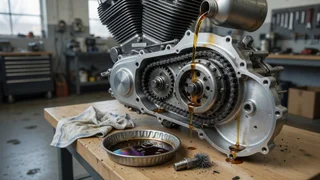
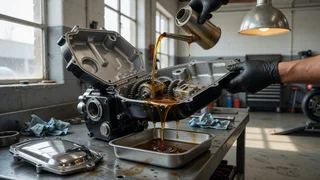
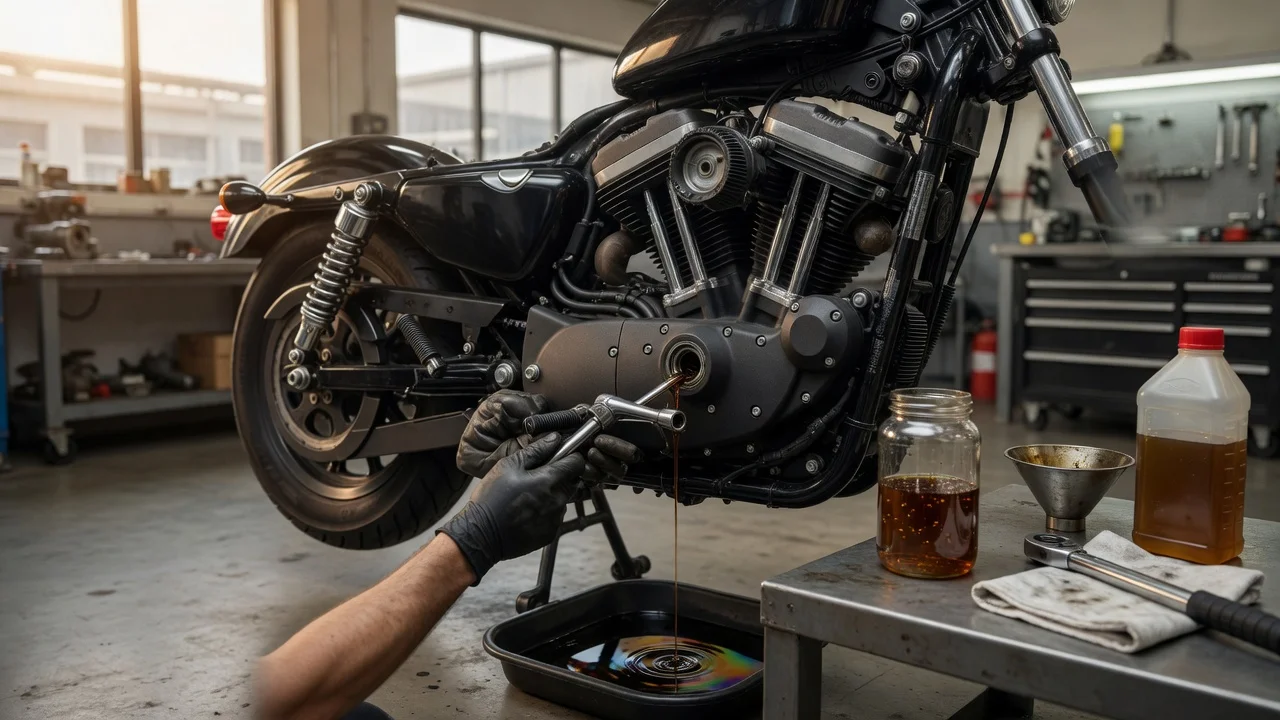
On most Evolution-engine Sportster 883 models, the transmission does not have its own separate oil. The gearbox, primary chain and clutch share one oil compartment. That compartment is separate from the engine oil. Harley-Davidson's own lubricant for this job is its Formula+ Transmission and Primary Chaincase Lubricant. Harley has also listed its SYN3 20W-50 full synthetic as suitable for this compartment. Either way, the oil you choose has to suit a wet clutch as well as gears and a chain.
No source documents came with this brief. The specifications below are commonly published figures, not values checked against a Harley-Davidson service manual for a specific year. Confirm the lubricant, capacity and service interval in the owner's or service manual for your exact model year before you buy or fill.
Why the Sportster is different from Big Twins
The Sportster uses unit construction, meaning the engine and transmission share one set of cases. Harley's larger touring and Softail models typically have three separate oils: engine, transmission and primary chaincase. On the Sportster, the transmission and primary share one supply. In practice, this means there is one transmission and primary oil change, not two.
Because the clutch sits in that same oil, the lubricant must let the clutch plates grip properly. As a general principle, avoid car engine oils labeled as energy conserving or containing friction modifiers. Those additives can make a wet clutch slip. This is general mechanical guidance, not a Harley-Davidson test finding.
Capacity and level check
For rubber-mounted Sportster 883 models (2004 onward), the shared compartment is commonly listed at about one US quart (roughly 0.95 liters). A routine drain usually takes slightly less than a dry fill because some oil stays inside.
Earlier five-speed models (1991 to 2003) and four-speed models (through 1990) may use different figures and procedures. Their figures were not confirmed here.
Rather than relying on a set volume, set the final level by inspection:
Hold the motorcycle upright, not on the side stand. Remove the clutch inspection cover on the primary cover. This is the left side of the bike. On 2004-and-later models, the oil is generally expected to reach the bottom of the clutch diaphragm spring. Add oil slowly in small amounts and recheck. If your service manual gives a different reference point for your year, follow the manual.
Change interval
Harley-Davidson typically schedules a first change at the initial break-in service, then periodic changes after that. Published intervals differ across model years and maintenance schedules, and no verified interval was available for this guide. Use the maintenance table in your owner's manual. Change the oil sooner if it looks dark or contaminated, or if you notice clutch slip or harsh shifting.
Choosing between factory and aftermarket oil
Harley's own primary and transmission lubricants are the simplest choice, because they are specified for this shared, wet-clutch compartment. Many aftermarket brands sell products labeled for Sportster primary and transmission use.
If you choose aftermarket oil, check that the label names the Sportster's combined compartment and is approved for wet clutches. A general gear oil without that labeling is not a safe substitute. This is editorial guidance; no comparative test data was supplied.
Gaps to confirm
Exact fill capacity for your specific model year, especially for pre-2004 models; The current Harley-Davidson service interval for the transmission and primary oil; Any Harley-Davidson service bulletins that change the recommended lubricant; Torque values for the drain plug and inspection cover, which are not covered here